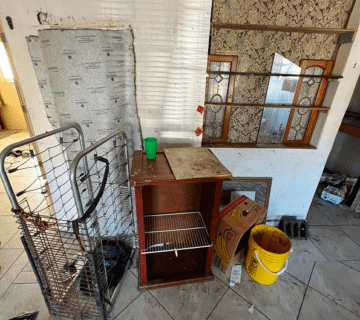
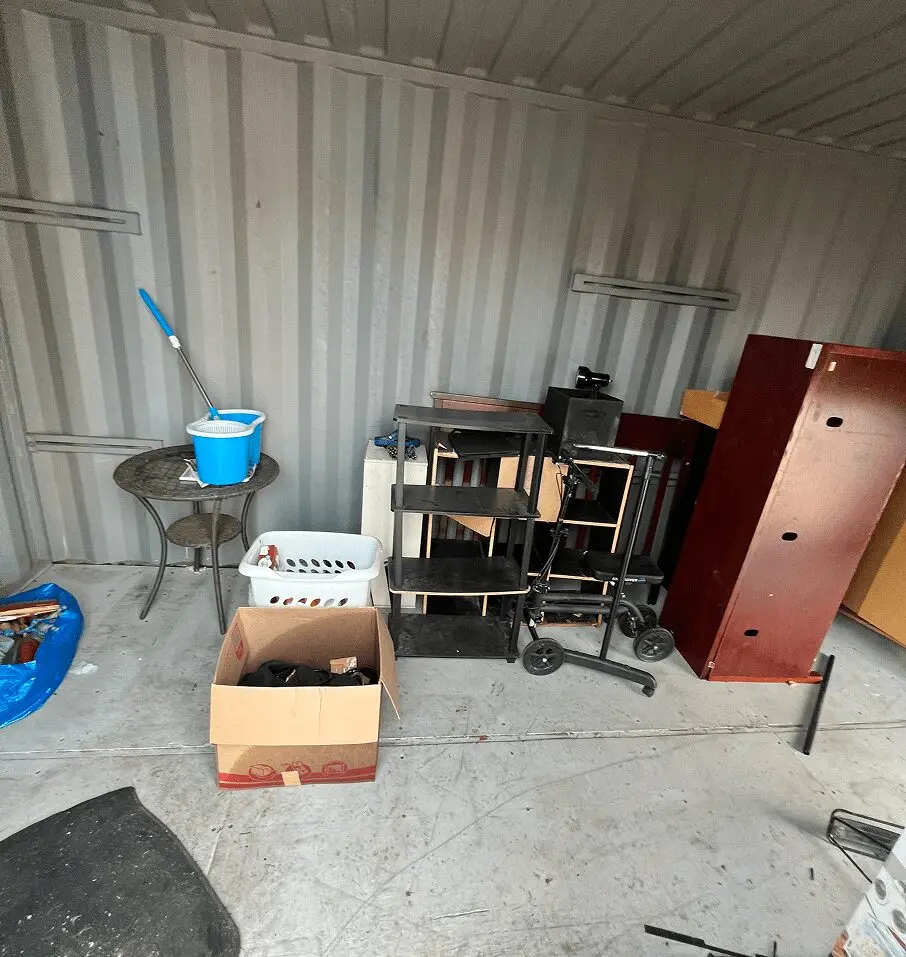
Your lease is up in 30 days, the staff has packed their personal items, and now you’re staring at a 12,000-square-foot office full of cubicles, filing cabinets, outdated servers, and a break room fridge nobody wants to open. Sound familiar? With Sacramento’s office vacancy rate hovering around 18.7% — one of the highest in recent memory — more businesses than ever are facing exactly this scenario.
Whether you’re downsizing, relocating across town, or shutting your doors for good, a commercial office cleanout in Sacramento doesn’t have to be a logistical nightmare. This guide breaks down the entire process into 10 manageable steps so you can hand back the keys on time, get your deposit back, and avoid expensive penalties.
Key Takeaways
- A structured, step-by-step cleanout protects you from lease violations and surprise disposal fees
- IT equipment requires certified data destruction — California law takes data privacy seriously
- Donating usable office furniture and supplies can earn you a tax deduction and keep items out of landfills
- Professional office cleanout services can handle a full commercial space in as little as one to two days
- Sacramento-specific regulations (CalRecycle, AB 1383) affect how certain commercial waste must be handled
1. Inventory Everything and Create a Complete Asset List
Before a single desk gets moved, you need to know exactly what you’re dealing with. Walk through every room — private offices, conference rooms, cubicle farms, storage closets, server rooms, the break room — and create a detailed inventory of every asset in the space.
This isn’t just organizational busywork. Your asset list serves multiple purposes:
- Lease compliance: Your property manager may require proof of what was in the space versus what’s being removed
- Tax documentation: Donated items need documented fair market values for write-offs
- Insurance records: If anything is damaged during the move, you’ll have a paper trail
- Cost estimation: A professional commercial junk removal Sacramento team can give you a much more accurate quote when you have a clear inventory
Use a simple spreadsheet with columns for item description, quantity, condition (good, fair, poor), location, and intended disposition (keep, donate, recycle, dispose).
Pro Tip: Take timestamped photos of every room before you begin. These protect you during the final walkthrough with your property manager and are invaluable if there are disputes about the condition of the space. Your phone’s camera roll metadata is usually enough — no need for anything fancy.
[INTERNAL LINK: /commercial-junk-removal/]
2. Separate What’s Staying, Going, Donating, and Recycling
Now that you have your inventory, it’s time to sort. Set up four clear categories and tag everything in the office accordingly — colored stickers or tape work great for this at scale.
- Staying: Items that belong to the building or that the next tenant has agreed to purchase. Check your lease — some built-in shelving, window treatments, or fixtures may be considered part of the premises.
- Relocating: Anything moving to your new location. Coordinate this with your moving company separately from your cleanout.
- Donating: Functional furniture, office supplies, and electronics in decent shape. Sacramento-area organizations like Habitat for Humanity ReStore, Goodwill Sacramento Valley, and the Sacramento Food Bank & Family Services accept commercial donations. Many will even arrange pickup for large quantities.
- Disposing/Recycling: Broken items, outdated technology, and anything that can’t be donated or reused.
This sorting step is where you’ll save the most money. The more you can donate or recycle, the less you’ll pay in disposal fees — and Take Care Junk donates or recycles a good share of what we haul, so choosing a responsible office cleanout service matters.
[INTERNAL LINK: /about/]
3. Handle IT Equipment Properly — Data Destruction Is Non-Negotiable
This is the step most businesses underestimate, and it’s arguably the most important. You cannot just toss old computers, hard drives, and servers into a dumpster. California’s data privacy laws — including the California Consumer Privacy Act (CCPA) — make your company liable for data breaches even after equipment leaves your possession.
Here’s what needs to happen with IT equipment:
- Hard drives and SSDs: Must be wiped using DoD-standard software or physically destroyed (shredded or degaussed)
- Servers and networking equipment: Work with your IT department or a certified ITAD (IT Asset Disposition) vendor
- Printers and copiers: Modern office printers have internal hard drives that store copies of everything printed — these need to be wiped too
- Phones and mobile devices: Factory reset at minimum; physical destruction for high-sensitivity environments
- Backup tapes and USB drives: Shred them
Request a Certificate of Data Destruction from whatever vendor handles this. Keep it on file for a minimum of seven years.
Did You Know? Under California law, businesses that fail to properly dispose of customer data can face fines of up to $7,500 per violation under the CCPA. For an office full of old hard drives, that exposure adds up fast. Don’t cut corners here.
Sacramento has several certified e-waste recyclers, and a commercial volume of electronics should go to one of them directly. Take Care Junk can take a small amount of e-waste along with a cleanout, but large-scale and commercial e-waste is outside what we handle. [INTERNAL LINK: /e-waste-disposal/]
4. Remove Cubicles and Modular Office Furniture
Cubicle systems are the backbone of most office spaces — and they’re also one of the most labor-intensive items to remove. Modular workstations from manufacturers like Steelcase, Herman Miller, and Haworth are designed to be assembled in place, which means disassembly requires tools, planning, and usually a crew of at least three or four people.
Here’s what makes cubicle removal tricky:
- Panels are heavy — a standard 6-foot cubicle panel can weigh 50–80 pounds
- Components are interconnected — removing one station often means partially dismantling adjacent ones
- Wiring runs through the panels — electrical and data cables need to be disconnected safely
- They take up massive volume — a 20-cubicle office can fill multiple truck loads
If your cubicle systems are less than 10 years old and in good condition, office furniture liquidators may purchase them or remove them for free. For older or damaged systems, professional office furniture removal is the way to go.
Need help clearing out a full office? Take Care Junk handles commercial office cleanouts across Sacramento — from downtown high-rises to the business parks along the Highway 50 corridor in Rancho Cordova. [INTERNAL LINK: /contact/] for a free estimate.
5. Deal With Break Room and Kitchen Appliances
The break room is the unsung challenge of every office decommissioning project. It’s easy to focus on desks and computers and forget about the refrigerator, microwave, dishwasher, coffee machines, vending machines, and water coolers hiding in the kitchen area.
A few things to keep in mind:
- Refrigerators and freezers must be emptied and cleaned before removal. Freon-containing appliances require proper handling under EPA Section 608 regulations — don’t just wheel them to the curb.
- Commercial coffee machines and espresso systems (Keurig commercial, Bunn, etc.) may have value for resale or donation.
- Vending machines — if leased, contact the vendor to schedule pickup. If owned, they’re heavy (typically 400–800 lbs) and require specialized equipment to move.
- Small appliances like toasters, blenders, and microwaves in decent shape can be donated to local Sacramento shelters and nonprofits.
Pro Tip: Clean out the break room fridge at least a week before the cleanout crew arrives. Nobody wants to discover a science experiment in the back of a fridge that’s been running on borrowed time. Defrost freezers 24 hours in advance to prevent water damage during removal.
[INTERNAL LINK: /appliance-removal/]
6. Clear Storage Rooms and Supply Closets
Every office has them: the storage rooms crammed with seven years of archived files, surplus office supplies, promotional materials from a 2019 trade show, and boxes of things nobody can identify. These hidden spaces often contain more volume than expected and can significantly impact your cleanout timeline if you don’t address them early.
Here’s how to tackle it:
- Paper files: If you’re past the legally required retention period, schedule secure document shredding. California requires businesses to shred documents containing personal information. Mobile shredding services in Sacramento (like Shred-It or Iron Mountain) can come on-site.
- Office supplies: Unopened supplies — paper, pens, binders, toner cartridges — can be donated to local schools. Sacramento City Unified School District and smaller charter schools are often grateful for bulk supply donations.
- Old marketing materials: Recycle outdated brochures, banners, and signage. Large-format items can go through commercial recycling.
- Mystery boxes: Open them. Sort them. Don’t pay to move or store things you’ll never use.
Under California’s AB 1383, commercial businesses are required to separate organic waste and recyclable materials from landfill-bound trash. Your office cleanout needs to comply — and a professional commercial junk removal Sacramento team like Take Care Junk handles that sorting for you. [INTERNAL LINK: /commercial-junk-removal/]
7. Remove Signage, Fixtures, and Tenant Improvements
Before you turn in the keys, check your lease carefully for restoration clauses. Many Sacramento commercial leases — especially in the downtown and Midtown office corridors along J Street, K Street, and Capitol Mall — require tenants to return the space to its original condition.
That could mean removing:
- Interior and exterior signage — including lobby signs, suite number plates, window graphics, and monument signs
- Custom lighting fixtures — if you installed anything beyond the building standard
- Built-in shelving or cabinetry — unless the landlord agrees in writing to leave it
- Wall-mounted TVs and AV equipment — plus patching the holes left behind
- Security systems and access control hardware — cameras, card readers, keypads
Negotiate with your property manager before the cleanout begins. Sometimes landlords prefer to keep certain improvements rather than have you rip them out and patch drywall. Get any agreements in writing to avoid disputes later.
Did You Know? In Sacramento’s current office market, many landlords are offering tenant improvement (TI) allowances to attract new renters. Your outgoing fixtures and furniture might actually have value to the next tenant. Ask your property manager if the incoming tenant wants to purchase anything before you haul it all away.
8. Deep Clean or Coordinate Professional Cleaning
An office cleanout and an office cleaning are two different things — but they need to happen in sequence. Remove everything first, then clean. Most commercial leases require the space to be returned in “broom-clean” condition at minimum, but many Sacramento property management companies expect more.
Your cleaning checklist should include:
- Carpet cleaning or replacement — depending on condition and lease terms
- Hard floor stripping, waxing, or polishing
- Window cleaning — interior and exterior if accessible
- Restroom deep cleaning and sanitization
- HVAC vent and return cleaning
- Patching nail holes, scuff marks, and minor wall damage
- Light fixture lens cleaning or replacement
For a standard office, expect to budget $0.15–$0.35 per square foot for professional commercial cleaning in the Sacramento area.
Feeling overwhelmed by the whole process? Take Care Junk offers complete office cleanout services that handle the heavy lifting so you can focus on coordinating the final details. [INTERNAL LINK: /contact/] to learn more about our commercial services.
9. Conduct a Final Walkthrough With the Property Manager
Do not skip this step. The final walkthrough is your opportunity to confirm that the space meets lease requirements, document its condition, and protect your security deposit.
Here’s how to make the walkthrough work in your favor:
- Schedule it formally — email confirmation with date, time, and attendees
- Bring your original move-in condition report if you have one
- Take photos and video of every room — ceilings, floors, walls, inside closets, restrooms, everything
- Walk through the space together — don’t let the property manager do it alone and send you a list of deductions later
- Note any pre-existing damage versus wear and tear
- Get written sign-off that the space is accepted — a simple email confirmation works, but a signed checklist is better
In Sacramento’s competitive commercial real estate market, landlords are motivated to get spaces tenant-ready quickly. A clean, well-documented handoff can make the difference between getting your full deposit back and facing thousands in deductions.
[INTERNAL LINK: /services/]
10. Obtain a Certificate of Completion for Lease Compliance
The final piece of the puzzle: documentation that proves your tenant move out cleanout is fully complete. This isn’t always a formal “certificate” — the format varies — but you need written confirmation from the property manager or landlord that:
- All tenant property has been removed from the premises
- The space has been restored per lease requirements
- Any required cleaning has been completed to satisfaction
- Keys, access cards, parking passes, and security codes have been returned
- No outstanding charges or obligations remain related to the physical space
Keep this documentation for at least three years after lease termination. It protects you from future claims, supports your security deposit refund request, and provides closure for your accounting team.
If you used professional office cleanout services, request a receipt and itemized summary from your vendor as well. Take Care Junk provides detailed documentation for every commercial job — including what was removed, what was donated, and what was recycled. [INTERNAL LINK: /commercial-junk-removal/]
What Does a Commercial Office Cleanout Cost in Sacramento?
One of the most common questions we get is about pricing. The honest answer: it depends on the size of the space and what’s in it. Here’s a general guide for the Sacramento area in 2026:
| Office Size | Typical Contents | Estimated Cost Range |
| Small office (under 2,000 sq ft) | Desks, chairs, small break room, filing cabinets | $800 – $2,500 |
| Mid-size office (2,000 – 5,000 sq ft) | Cubicle systems, conference room, server closet, full break room | $2,500 – $6,000 |
| Large office (5,000 – 15,000 sq ft) | Multiple cubicle pods, executive offices, large storage, commercial kitchen | $6,000 – $15,000 |
| Full floor / building (15,000+ sq ft) | Complete decommissioning including fixtures and signage | $15,000+ (custom quote) |
These ranges cover labor, hauling, disposal fees, and recycling processing. Costs can vary significantly based on factors like floor level (elevators vs. stairs), parking/loading dock access, timeline urgency, and the amount of recyclable versus landfill-bound material.
Pro Tip: Get your quote before you start the cleanout yourself. Many Sacramento businesses try to DIY the first phase and end up spending more on dumpster rentals, employee overtime, and disposal fees than a professional commercial junk removal Sacramento team would have charged for the whole job. Take Care Junk offers free, no-obligation estimates — we’ll walk the space with you and give you a firm price. [INTERNAL LINK: /pricing/]
Ready to Clear Out Your Sacramento Office?
Closing an office is stressful enough without wrestling cubicle panels into a freight elevator at 10 PM. Take Care Junk handles complete commercial office cleanouts across Sacramento — from the high-rises downtown to the office parks in Rancho Cordova, Roseville, Folsom, and everywhere in between.
We’re locally owned, licensed and insured, and we donate or recycle a good share of everything we remove. Whether you’re cleaning out a single suite or an entire building, our crew shows up on time, works efficiently, and leaves the space move-out ready.
Ready to get started? Call Take Care Junk today at (916) XXX-XXXX for a free, no-obligation estimate. We offer same-day service across Sacramento and surrounding areas.
[INTERNAL LINK: /contact/]
Frequently Asked Questions
How long does a commercial office cleanout take in Sacramento?
Most small to mid-size offices (under 5,000 square feet) can be fully cleaned out in one day. Larger spaces or multi-floor offices typically take two to three days. Timeline also depends on elevator access, loading dock availability, and whether items need special handling (like IT equipment with data destruction requirements). Take Care Junk can usually accommodate rush timelines when needed.
Can office furniture be donated instead of thrown away?
Absolutely — and we encourage it. Desks, chairs, conference tables, and filing cabinets in good to fair condition can be donated to Sacramento-area nonprofits, schools, and organizations like Habitat for Humanity ReStore and Goodwill Sacramento Valley. Take Care Junk coordinates donations as part of our office cleanout services, and we can provide donation receipts for your tax records. [INTERNAL LINK: /donation-receipts/]
Do I need to be on-site during the office cleanout?
Not necessarily. Many of our commercial clients designate a point of contact who meets us for the initial walkthrough and then gives us access to complete the work independently. We’ll coordinate with building management for elevator reservations, loading dock access, and after-hours scheduling as needed. We do recommend being available by phone in case questions come up.
What happens to electronics and computers removed during the cleanout?
All electronics are processed through certified e-waste recycling facilities in compliance with California’s Electronic Waste Recycling Act. Hard drives and storage media can be wiped or physically destroyed, and we provide certificates of destruction upon request. Nothing ends up in a landfill. [INTERNAL LINK: /e-waste-disposal/]
Is there anything you can’t remove from a commercial office?
We handle the vast majority of office contents — furniture, electronics, appliances, supplies, files, fixtures, and general debris. Items we don’t handle include hazardous materials (asbestos, chemical solvents, biological waste) and structural elements (load-bearing walls, permanent HVAC systems). For hazardous materials, we can recommend certified Sacramento-area abatement companies.
How do I get a quote for my office cleanout?
The easiest way is to schedule a free on-site estimate. We’ll walk through the space, assess the volume and type of items, note any access challenges, and give you a firm, all-inclusive price — no hidden fees. You can also send us photos and a floor plan for a preliminary estimate. Call us or visit [INTERNAL LINK: /contact/] to get started.