

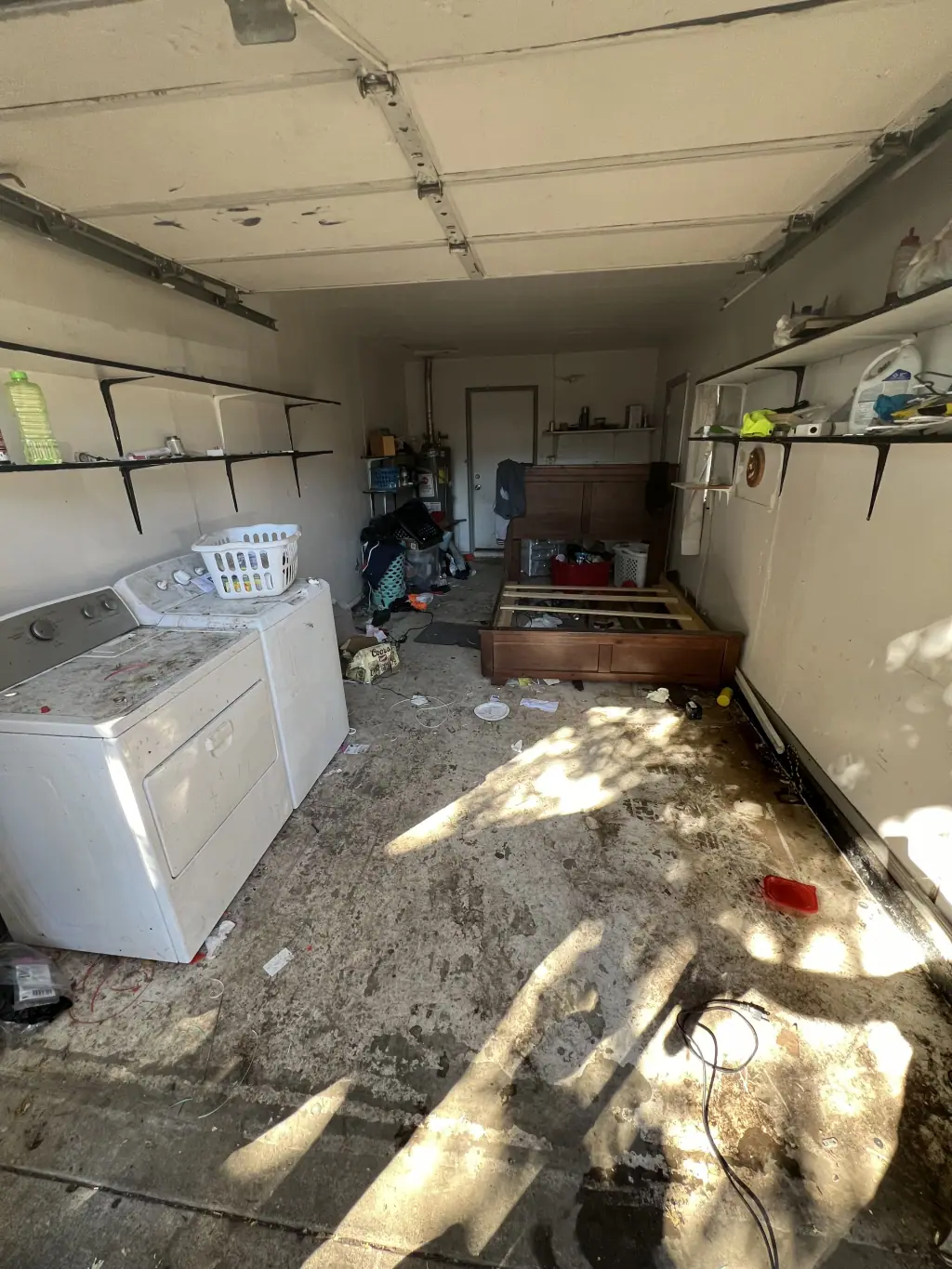
The funeral was two weeks ago. Now there is a key in your hand, a house that still smells like them, and a closet of belongings nobody has touched. Someone has to decide what happens to the recliner, the forty years of photographs and the drawer of mismatched silverware. This is not house cleaning. It is taking apart a life, one cupboard at a time, while you are already worn down.
It helps to have a plan, a pace, and some patience with yourself. You will decide what to keep, what to give away, and how to physically clear the property.
This guide covers both halves: the emotional work of sorting and the family conversations, and the practical steps of organizing the house, donating, and clearing what is left. The last step, hauling, is ours when you want it, so you can finish managing the estate without the heavy lifting.
The Emotional Toll of Emptying a Family Home
Before the first box, name what this is. Sorting a parent’s or spouse’s possessions puts their absence in your hands. Every object has a story attached.
Allowing Time to Grieve
Do not start clearing the house right after the funeral unless a legal or financial deadline forces it. Give the family a little room to absorb the loss. Jumping into heavy physical work too soon tends to push grief aside, and it comes back later, harder.
If the home is a rental or must go on the market soon, the timeline may be tight. Even then, schedule specific days and build in breaks. Step outside, walk, and let a particular item stop you for a minute when it does.
Avoiding Decision Fatigue
Clearing a house means hundreds of small decisions an hour. Keep this book? Does anyone want this chair? What about the silverware? The choices pile up and drain you.
Work in sessions of two or three hours, then stop for the day. If you are staring at a box unable to choose, that is the signal to quit. Decisions made exhausted are the ones you regret.
Preparing for the Clean-Out Process
A good estate clean-out starts before any sorting. A little setup keeps the project moving.
Gathering Essential Supplies
Buy heavy-duty trash bags, sturdy moving boxes, packing tape, bubble wrap and permanent markers before you start, so a supply run never breaks your momentum. Have these items at the house.
Bring protective gear too: comfortable clothes, closed-toe shoes, dust masks and gloves. Attics and garages in older homes hold dust, mold and allergens.
Securing Important Documents
Before any furniture or clothing moves, find and secure the paperwork. Check desks, filing cabinets, the home safe, and the odd places: shoeboxes, under the mattress. The executor needs these documents to settle the estate.
Look for the will, life insurance policies, bank statements, real estate deeds, vehicle titles and tax returns, plus Social Security cards, birth certificates and passwords for digital accounts. Put all of it in a fireproof box and keep it off-site so it cannot be thrown out by accident.
A Step-by-Step Guide for Organizing the Process
The whole house at once is too much. Break it into small, finishable pieces.
Start with the Easiest Areas
Begin in the rooms with the least emotional weight: the garage, the laundry room, a guest bathroom. They hold practical things like cleaning supplies, tools and old towels.
A couple of cleared rooms builds momentum and gets you used to the sorting before you reach the bedroom or living room where the memories live.
Sorting Items Systematically
Use the same system in every room: staging areas for each of the categories of items, as labeled boxes or corners of the room:
- Keep: what family members want, for sentiment or use.
- Sell/Donate: good-condition items with value or useful to a charity.
- Recycle: paper, plastics, electronics and metal that can be recycled locally.
- Dispose: broken, soiled or obsolete items.
Handle each item once. Decide, place, move on. If you truly cannot decide, keep one small “undecided” box and keep it small, so the decisions still get made.
Dealing with Sentimental vs. Practical Items
Practical things, everyday clothes, standard kitchenware, basic furniture, are easy to donate or discard.
Sentimental things, photographs, handwritten letters, heirlooms, a favorite piece of jewelry, need more thought. You cannot keep everything they owned without moving their clutter into your own home. Choose a few pieces that really hold their spirit and let the rest go. Photographing an item before you donate it keeps the memory without the shelf space.
Navigating Family Dynamics and Inheritance
Several relatives, several ways of grieving, one house. Tension is normal, and avoidable with a few ground rules.
Fostering Open Communication
Meet before the clean-out begins. Cover expectations, the timeline, who does what, and who has the final say, usually the executor. Transparency prevents resentment.
Keep a shared list where each person can ask for specific items. When two people want the same thing, settle it calmly before anyone is standing in the house holding it.
Handling Disputes Over Heirlooms
Disputes happen. When one starts, step back and remind everyone that the relationship outlasts the furniture.
A lottery works well: draw numbers and pick in order. Or hire an independent estate appraiser to value the pieces so the split stays fair and matches the will.
Managing the Logistics of Disposal and Donation
Sorting done, the house still has to be emptied. This part is coordination, heavy lifting and local disposal rules.
Donating Usable Goods
Donation honors the person and helps someone else. Sort the clothing, usable furniture and household goods, and find the local charities that take them. Several will pick up large furniture for free, which saves a truck rental.
Give only clean, working items. Charities spend real money disposing of what they cannot sell. Pack small things in labeled boxes for the volunteers.
Holding an Estate Sale
If the house holds antiques, valuable pieces or quality furniture, an estate sale can offset the costs of the property and the funeral.
You can run it yourself, but a professional liquidator who handles pricing, advertising and the sale days is often worth the fee. Either way, plan now for what will be left when it ends.
How Professional Junk Removal Alleviates the Physical Burden
Keepsakes claimed, donations collected, sale over: what remains is old mattresses, broken appliances, dead electronics and plain trash, and it adds up fast.
Reclaiming Your Time and Energy
Doing that part alone means renting a truck, recruiting strong friends and making trip after trip to the landfill, on top of weeks of emotional work.
Hiring a crew lets you step back. Instead of dragging a broken couch through a doorway on a Saturday, you point at what goes. The crew lifts, loads and disposes.
City pickup can handle a few small items. Full home cleanouts after a loss usually mean heavy furniture, old appliances, garage debris and more than one truckload, which curbside collection cannot take. Full-service junk removal replaces the rental, the lifting and the repeated dump trips.
Safe and Efficient Removal Services
Clearing a house has physical risks: back injuries from lifting, trips and falls in cluttered rooms. A hauling crew moves items without damaging walls or floors.
They also know the disposal rules for e-waste, appliances with Freon and hazardous materials, and they sort each load so usable waste stays out of the landfill.
“TCJ was a real gem to have found! He was on time and very strong! I was expecting two men, but he handled everything on his own with minimal effort. He was super patient with us. His prices were reasonable too! I highly recommend and would use his services again.”
Ulysha R., YelpLocal Help for Estate Cleanouts
If clearing the home has become a larger project than the family can carry, we take the final stage. No truck rental, no dump runs, no heavy lifting on your side, and the house is ready for sale, transfer or whoever lives there next.
We work with families, homeowners, landlords and property managers across Sacramento and the surrounding counties on estate cleanouts, furniture removal, appliance hauling and full property cleanups. Bulky furniture, old appliances, garage overflow or years of accumulation: the aim is the same. Clear the property without it becoming a second job.
Conclusion
Cleaning out a family home after a loss tests everyone in the family. Acknowledge the grief, plan the work, break it into small steps, and talk to each other. Look after yourself through it.
You do not have to carry all of it. When the sorting is done and the last of it needs to go, Take Care Junk is the local crew Sacramento families call for a respectful, reliable estate cleanout.
Contact us to talk through your situation. We handle the lifting so you can focus on your family.


