Life can feel overwhelming when your home is filled with clutter. For busy homeowners, finding time to tackle clutter can feel nearly impossible. You juggle work, family, and personal commitments, leaving little time or energy for a massive home organization project. This is where the minimalist decluttering method comes in. It’s not about getting rid of everything you own; it’s about making intentional choices to live with less, creating a more peaceful and functional living space.
A simpler approach to decluttering works better when your schedule is already full. Focusing on small, consistent actions makes it possible to clear out your space without setting aside large blocks of time. Over time, these small efforts add up, making it easier to stay organized, make better decisions about what you keep, and maintain a home that feels manageable.
Understanding Minimalism for the Modern Homeowner
Minimalism is often misunderstood. It isn’t a stark, empty aesthetic reserved for design magazines. At its core, minimalism is a mindset focused on intentionality. It’s about consciously choosing which items deserve a place in your home and life based on their utility, beauty, or sentimental value. For a busy homeowner, this means less stuff to clean, less to organize, and less stress. It translates to more time and mental energy for the things that truly matter.
The Benefits of a Minimalist Approach
Adopting minimalist principles can transform your home and your daily life. The advantages go far beyond a tidy-looking space.
- Reduced Stress and Anxiety: A cluttered environment can contribute to feelings of stress and being overwhelmed. Visual chaos often translates into mental chaos. By simplifying your surroundings, you create a calming sanctuary where you can relax and recharge.
- More Time and Freedom: The less you own, the less time you spend cleaning, organizing, and searching for things. Imagine the hours you could get back each week. This newfound freedom allows you to pursue hobbies, spend quality time with loved ones, or simply rest.
- Financial Savings: When you become more intentional about your purchases, you naturally spend less on things you don’t need. You’ll also save money by avoiding the need for extra storage solutions or even larger homes to accommodate your possessions.
- Easier Home Management: A decluttered home is significantly easier to maintain. Daily tidying becomes a quick, simple task rather than a monumental chore. This is especially beneficial for homeowners with busy, active schedules, where an active lifestyle leaves little room for extensive housekeeping.
The Busy Homeowner’s Minimalist Decluttering Strategy
The key to success is to avoid burnout. You can’t declutter an entire house in one weekend, and you shouldn’t try. The following strategy is built around short, focused bursts of activity that fit into even the most hectic schedules.
Rule 1: Start Small, Win Big
The most common mistake is trying to tackle too much at once. Looking at an entire cluttered room can be paralyzing. Instead, focus on one tiny, manageable area.
- The 15-Minute Rule: Set a timer for just 15 minutes. Pick one small zone—a single drawer in the kitchen, a shelf on your bookcase, or the top of your nightstand. Work quickly and without distraction for that short period. When the timer goes off, you’re done for the day. You’ll be amazed at what you can accomplish in these short sprints.
- One Drawer a Day: Commit to decluttering one drawer each day. It’s a small goal that feels achievable. Over a month, you could clear out every drawer in your kitchen, bathroom, and bedroom dressers. This gradual progress builds momentum and motivation.
- Focus on Hotspots: Identify the “clutter hotspots” in your home. These are the surfaces where things naturally accumulate—the kitchen counter, the entryway table, or that one chair in the bedroom. Dedicate your 15-minute sessions to keeping these specific areas clear.
Rule 2: The Four-Box Method
This is a classic and highly effective sorting technique. Before you start a session, grab four boxes or bins and label them:
- Keep: Items that you love, use regularly, or hold significant sentimental value. These are the things that earn their place in your home. Be honest with yourself.
- Relocate: Items that belong in another room. This box prevents you from getting sidetracked by running around the house putting things away. Set it aside and deal with it after your sorting session.
- Donate/Sell: Items that are in good condition but no longer serve you. Someone else could find value in them.
- Dispose/Junk: Items that are broken, expired, or otherwise unusable. This is your junk pile.
This method forces you to make a decision about every single item, preventing the common habit of shuffling clutter from one spot to another.
Rule 3: Ask the Right Questions
As you pick up each item, you need a framework for deciding its fate. Minimalist philosophy encourages you to move beyond “What if I need this someday?” and ask more intentional questions.
- “Do I use this regularly?” If the answer is no, it’s a strong candidate for removal. For seasonal items like holiday decorations, the answer might still be yes, but for that old bread maker you haven’t touched in five years, it’s likely a no.
- “Does this item bring me joy?” This question, popularized by Marie Kondo, is powerful. Your home should be filled with things that make you happy, not things that make you feel guilty or burdened.
- “Do I have more than one of these?” Duplicates are a major source of clutter. How many black spatulas or half-used notebooks do you really need? Keep the best one and let the rest go.
- “If I were shopping right now, would I buy this?” This question helps you evaluate an item’s current value to you, separate from the money you originally spent on it.
Room-by-Room Minimalist Decluttering for Busy People
Applying the principles above, let’s create a practical, step-by-step plan for decluttering your entire home. Remember to use the 15-minute rule and the four-box method.
The Kitchen: The Heart of the Home
The kitchen is a high-traffic area prone to clutter. A minimalist kitchen is not only more pleasant to be in but also more efficient to cook in.
- Countertops: Your goal is clear countertops. The only things that should live on them are items you use every single day, like the coffee maker or a knife block. Everything else should have a designated home in a cabinet or drawer.
- The Pantry: Pull everything out. Yes, everything. Discard expired food. Group like items together—pastas, canned goods, baking supplies. You’ll likely find duplicates you forgot you had. Invest in clear containers to make items visible and easily accessible.
- Drawers and Cabinets: Tackle one at a time. Be ruthless with gadgets you never use. How many mugs do you realistically need? Do you need a separate tool for every conceivable task? Simplify your collection of pots, pans, and food storage containers. Many homeowners in communities like Roseville find that decluttering the kitchen makes daily meal prep faster and more enjoyable.
- The Junk Drawer: Every home has one. Dump it out completely. Sort the contents using your four boxes. Be honest about what you truly need to keep. Find logical homes for the “Keep” items and discard the rest.
The Living Room: Creating a Space for Relaxation
The living room should be a place of calm and connection, not a storage unit for random items.
- Surfaces: Clear off coffee tables, side tables, and media consoles. Keep decor intentional and minimal. A few favorite books, a plant, and a candle are often enough.
- Media Collection: In the age of streaming, physical media like DVDs, Blu-rays, and CDs can become obsolete clutter. Digitize what you can or decide if you truly need to keep the physical copies. Old electronics that are no longer in use—VCRs, old gaming consoles, tangled cords—are prime candidates for junk removal.
- Decor and Knick-Knacks: Decorative items can quickly turn into clutter. Evaluate each piece. Does it add beauty and personality to your space, or is it just collecting dust? Rotate seasonal decor instead of displaying everything at once.
- Furniture: Sometimes the biggest source of clutter is the furniture itself. Do you have too many pieces for the room? Is there a bulky armchair that no one ever sits in? Removing a single large item can completely transform a space, making it feel larger and more open. Residents in spacious suburban areas like Elk Grove can especially benefit from assessing if their furniture truly fits their lifestyle.
The Bedroom: Your Personal Sanctuary
Your bedroom should be the most peaceful room in the house, dedicated to rest and rejuvenation.
- The Wardrobe: This is often the most daunting task. Break it down.
- One Category at a Time: Don’t try to do your whole closet at once. Start with just your shirts. The next day, do your pants. Then shoes. This makes the process far less intimidating.
- The Hanger Trick: Turn all the hangers in your closet so the hooks face backward. After you wear an item, return it to the closet with the hanger facing the correct way. In six months, you’ll have a clear visual of what you actually wear. Donate anything still on a backward-facing hanger.
- The Nightstand: This should be a clutter-free zone. Keep only the essentials: a lamp, your current book, a glass of water. Clear away old magazines, medications you no longer need, and random chargers.
- Under the Bed: This area can become a black hole for forgotten items. Pull everything out and be critical. It should be used for intentional storage (like out-of-season clothing in sealed bins), not as a hiding place for clutter you don’t want to deal with.
The Bathroom: A Functional and Serene Space
Bathrooms are small spaces that can get cluttered very quickly with half-empty bottles and expired products.
- The Medicine Cabinet: Empty it completely. Safely dispose of expired medications and prescriptions. Get rid of old skincare or makeup you never use. Products have a shelf life, and using them past their prime can be ineffective or even harmful.
- Linens: How many towels do you really need? A good rule of thumb is two sets per person in the household. Get rid of old, frayed, or mismatched towels. The same goes for washcloths and hand towels.
- Shower and Tub Area: Minimize the number of bottles. Consider multi-purpose products or decanting shampoos and soaps into uniform, refillable bottles for a cleaner look. Throw away those nearly empty conditioner bottles you’ve been meaning to finish for months.
- Under the Sink: This is another hotspot for clutter. Pull everything out, clean the area, and only put back the cleaning supplies and extra products you use regularly.
The Final Step: Removing the Clutter for Good
You’ve done the hard work of sorting and deciding. Your “Dispose/Junk” boxes are full. Now what? For a busy homeowner, this final step can be a major hurdle. Making multiple trips to the dump, figuring out recycling center rules, or trying to coordinate a charity pickup can be time-consuming and stressful.
This is where a professional junk removal service becomes an essential partner in your minimalist journey.
Why Professional Junk Removal Complements Minimalism
A professional junk removal service is often the simplest way to handle the final step. We handle the heavy lifting so you can focus on enjoying your newly decluttered space.
- Time and Convenience: Your time is valuable. Instead of spending a weekend loading up a truck and driving to various disposal sites, you can make one simple phone call. A professional team arrives, quickly and efficiently removes all your unwanted items, and is gone. This is the ultimate time-saver for busy schedules.
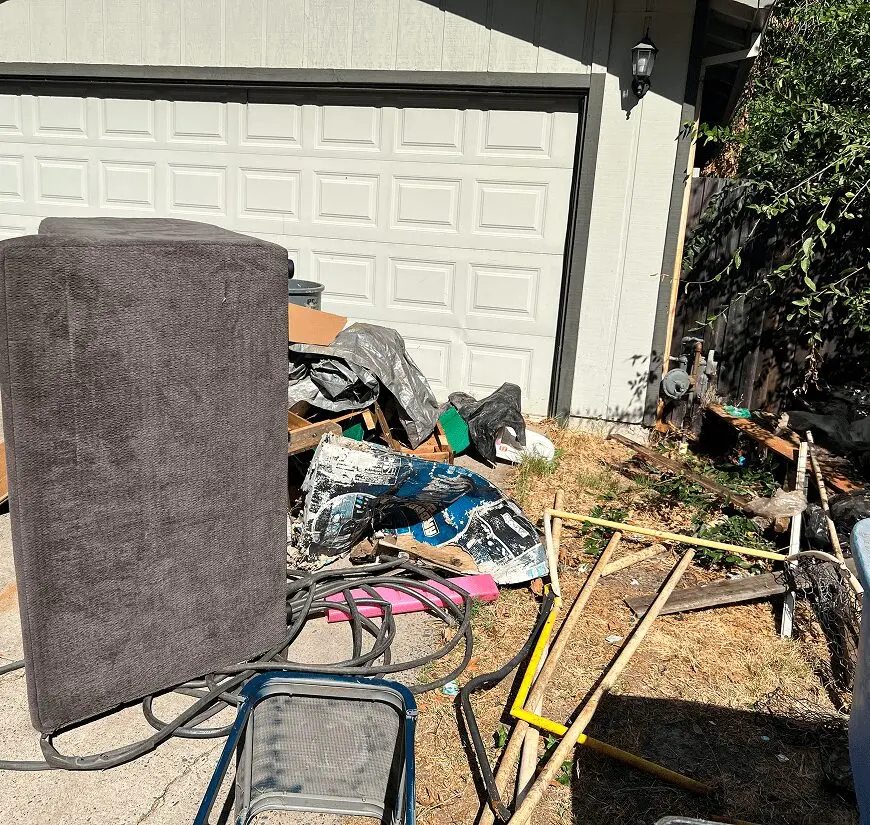
- Handling Large and Awkward Items: That old mattress, broken treadmill, or dilapidated bookshelf in the garage can be difficult and dangerous to move on your own. Our trained crews have the equipment and expertise to safely remove large, bulky items without damaging your property. Whether you’re in a dense urban area or a suburb like Folsom, professional help makes disposing of big junk effortless.
- Proper and Responsible Disposal: A reputable junk removal company is committed to environmentally responsible disposal. We sort your items to ensure that anything recyclable is sent to the proper facility and items suitable for donation are diverted from the landfill. You get the peace of mind that comes from knowing your old belongings are being handled correctly.
- The All-in-One Solution: You don’t need to separate your junk into different piles for different disposal methods. We take it all—old furniture, broken electronics, yard waste, construction debris, and general household clutter. One service handles everything, making the final stage of your decluttering project straightforward.
Imagine finishing a decluttering session, pointing to a pile of junk, and watching it disappear without any further effort on your part. That is the freedom and efficiency that professional junk removal offers. It’s the final, satisfying step that solidifies your progress and instantly transforms your space.
Maintaining Your Minimalist Home
Decluttering isn’t a one-time project; it’s the start of a new lifestyle. The key to long-term success is to build simple habits that prevent clutter from creeping back in.
- The “One In, One Out” Rule: This is the golden rule of maintenance. For every new item you bring into your home, one similar item must leave. Buy a new pair of shoes? Donate an old pair. Get a new book? Give one away. This keeps your possessions at a manageable level.
- Create a “Maybe” Box: If you’re struggling to let go of certain items, place them in a “maybe” box. Seal it, date it, and store it out of sight. If you haven’t needed to open the box in six months (or a year), you can confidently let the contents go without ever looking inside again.
- Be a Conscious Consumer: Before making a purchase, pause and ask yourself if you truly need it and where it will live in your home. Avoid impulse buys. Unsubscribe from marketing emails that tempt you to shop.
- Schedule Regular Mini-Declutters: Just as you schedule regular cleaning, schedule a 15-minute “clutter sweep” once a week. Quickly walk through your home and put away anything that is out of place. This small habit prevents small messes from turning into big ones.
A minimalist home is within your reach, even with a busy schedule. By starting small, being consistent, and asking intentional questions, you can systematically reduce the clutter that weighs you down. And when you’re ready to clear out the old to make way for the new, remember that help is just a phone call away.
Let us handle the final, heavy part of the process. If you need help clearing out unwanted items, professional junk removal can handle the process efficiently. We’re here to help you complete your transformation.