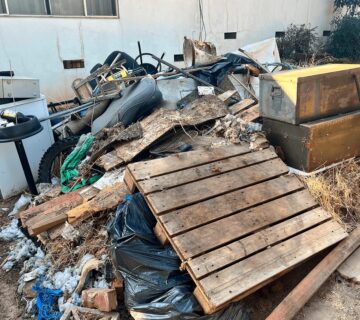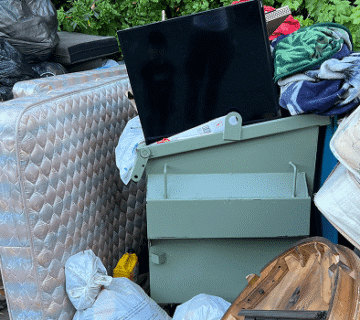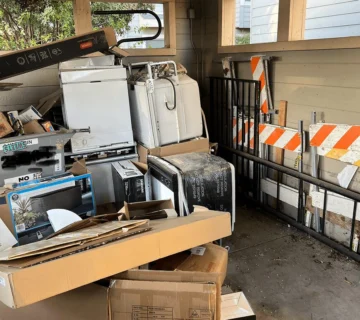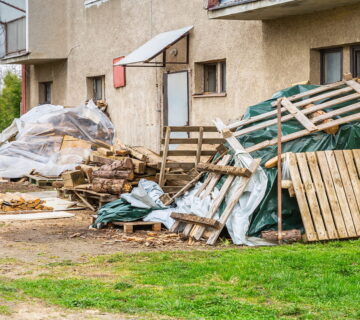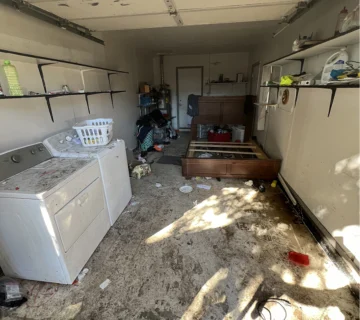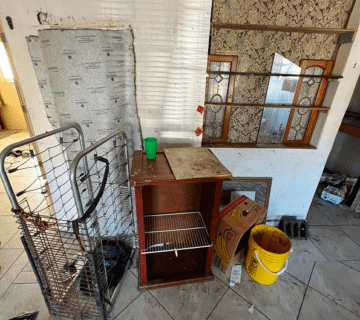
A bank just handed you the keys to a foreclosed property on Stockton Boulevard, and when you swing the door open, the scene tells a familiar story: abandoned furniture in every room, a garage stuffed with rusted tools and broken appliances, overgrown landscaping hiding code violations, and a smell that suggests the plumbing gave up months ago. Now the lender wants it broom-clean and market-ready — yesterday.
If you’re an REO agent, asset manager, or property preservation contractor working Sacramento’s foreclosure inventory, you already know that banks and government-sponsored enterprises don’t just want these properties “cleaned up.” They have specific, documented standards that must be met before a property can be listed, inspected, or sold. Miss a requirement, and you risk compliance violations, charge-backs, or costly delays that eat into already-thin margins.
This guide breaks down the 8 key requirements banks and lenders demand for a foreclosure cleanout in Sacramento, including timelines, compliance standards from HUD, Fannie Mae, and Freddie Mac, and how local California regulations add extra layers to the process. Whether you’re managing one REO property or a portfolio of bank-owned homes across the Sacramento metro, this is your go-to checklist.
Key Takeaways
- Banks require broom-clean condition — not just “mostly empty” — with strict documentation standards
- California law mandates a 15-day notice period before disposing of a former occupant’s personal property
- HUD, Fannie Mae, and Freddie Mac each have slightly different compliance requirements for REO property cleanouts
- Sacramento’s climate means winterization and pest control are year-round concerns, not just seasonal tasks
- Photo documentation (before, during, and after) is non-negotiable for every foreclosure cleanout
- Partnering with a licensed, insured junk removal company can keep you compliant and on schedule
1. Complete Debris Removal to Broom-Clean Standards
The single most important phrase in foreclosure property preservation is “broom-clean.” It sounds simple, but this standard is precisely defined by lenders and is the number one reason cleanout jobs get rejected and sent back for rework.
Broom-clean means:
- All rooms completely emptied of furniture, personal items, trash, and debris
- Floors swept or vacuumed — free of dust, dirt, and stains (though deep carpet cleaning may be a separate line item)
- Countertops, shelves, and built-ins wiped down and clear of all items
- Closets, cabinets, and drawers emptied entirely
- Garage, attic, basement, and crawl spaces cleared of all stored items and debris
- No items left on the property — including the yard, driveway, and side gates
Fannie Mae’s Servicing Guide (Section D2-3.2-07) explicitly states that properties must be maintained in a “clean, safe, and habitable condition.” Freddie Mac’s requirements mirror this under their property preservation guidelines. HUD properties (FHA-insured foreclosures) follow the HUD Management and Marketing (M&M) Contractor requirements, which include detailed checklists for each room.
In Sacramento, foreclosed homes in neighborhoods like Del Paso Heights, North Highlands, Valley Hi, and South Sacramento often have significant accumulations after extended vacancy periods. It’s not uncommon for a standard 3-bedroom home to produce 5–10 cubic yards of debris — sometimes more if the property was occupied by multiple tenants or used for storage.
Pro Tip: Always order a larger truck or dumpster than you think you’ll need. Sacramento foreclosures frequently have hidden debris in sheds, under decks, and in overgrown yard areas that aren’t visible during the initial walkthrough. It’s far cheaper to overestimate capacity than to schedule a second haul. [INTERNAL LINK: /residential-junk-removal/]
2. Proper Personal Property Handling (California’s 15-Day Notice Requirement)
This is where Sacramento-area foreclosure cleanouts get legally complicated — and where inexperienced crews can create serious liability for the bank and the servicing agent.
Under California Civil Code Section 1174 and related statutes, personal property left behind by a former occupant after a foreclosure cannot simply be thrown away. The property owner or their agent must:
- Inventory the personal property left on-site
- Serve a written Notice of Right to Reclaim abandoned property to the former occupant at their last known address
- Store the property for at least 15 days (or 18 days if the notice is mailed) to allow the former owner to claim it
- If the combined value of personal property exceeds $750, it must be stored and potentially sold at public auction rather than disposed of
Only after the notice period expires and proper procedures are followed can the property be removed and disposed of.
What counts as personal property?
- Clothing, documents, photos, and personal records
- Electronics and small appliances
- Furniture that was clearly brought by the occupant (not fixtures)
- Vehicles left on the property (these have separate DMV notification requirements under California Vehicle Code)
Banks like Wells Fargo, Bank of America, and Nationstar (Mr. Cooper) all have internal policies requiring their preservation contractors to document compliance with state personal property laws. Failure to follow these rules can result in lawsuits, and in California’s tenant-friendly legal environment, courts tend to side with the former occupant.
Did You Know? California’s AB 1393 strengthened protections for former occupants of foreclosed properties, requiring purchasers at foreclosure sales to provide additional notice and relocation assistance in some cases. Always verify current requirements before beginning any cleanout — rules can change, and Sacramento County may have local ordinances that add further protections.
[INTERNAL LINK: /estate-cleanouts/]
3. Hazard Identification and Remediation
Banks and lenders won’t list a property — and buyers’ agents won’t show one — if there are environmental or health hazards on-site. As part of any foreclosure cleanout in Sacramento, the property must be assessed and remediated for:
Common Hazards in Sacramento Foreclosures
| Hazard | Where It’s Found | Sacramento Context |
| Mold & mildew | Bathrooms, kitchens, basements, under sinks | Vacant homes with shut-off HVAC in Sacramento’s hot summers develop mold fast |
| Asbestos | Insulation, floor tiles, popcorn ceilings | Common in pre-1980 homes throughout Land Park, Curtis Park, Arden-Arcade |
| Lead paint | Walls, trim, doors, windows | Required disclosure for all homes built before 1978 |
| Chemical waste | Garages, sheds, under sinks | Pesticides, paint, solvents, automotive fluids |
| Biohazards | Bathrooms, bedrooms, throughout | Properties with extended vacancy or hoarding situations |
| Pest infestations | Attics, walls, crawl spaces | Sacramento’s mild winters mean year-round termite and rodent activity |
HUD requires that hazardous materials be addressed by licensed, certified professionals — not general cleanup crews. Fannie Mae’s guidelines specifically note that mold remediation must be completed before the property can be conveyed.
For Sacramento properties, lead-based paint is a particularly important consideration. The EPA’s Renovation, Repair, and Painting (RRP) Rule requires that any work disturbing lead paint in pre-1978 homes must be performed by EPA-certified renovators. Many Sacramento neighborhoods — including Oak Park, Midtown, East Sacramento, and the older parts of Carmichael and Fair Oaks — are dominated by homes built in the 1940s–1970s.
Pro Tip: Sacramento County Environmental Management Department (EMD) offers resources for hazardous materials disposal. For smaller quantities of household hazardous waste, the North Area Recovery Station on Roseville Road and the Sacramento County Household Hazardous Waste Facility accept items from property owners and their authorized agents. [INTERNAL LINK: /hazardous-waste-disposal/]
4. Yard Maintenance and Exterior Cleanup
Curb appeal matters for resale, but for banks, exterior maintenance is also about code compliance and liability reduction. Sacramento’s municipal code enforcement is active in neighborhoods with high foreclosure concentrations, and the city will issue violations — with fines attached — for properties that don’t meet standards.
Lender requirements for exterior cleanup typically include:
- Lawn mowing and edging — grass must be kept below 6 inches (Sacramento Municipal Code 8.04.070)
- Tree and shrub trimming — branches cut back from structures, sidewalks, and utility lines
- Weed removal — especially important during Sacramento’s fire season (May–October)
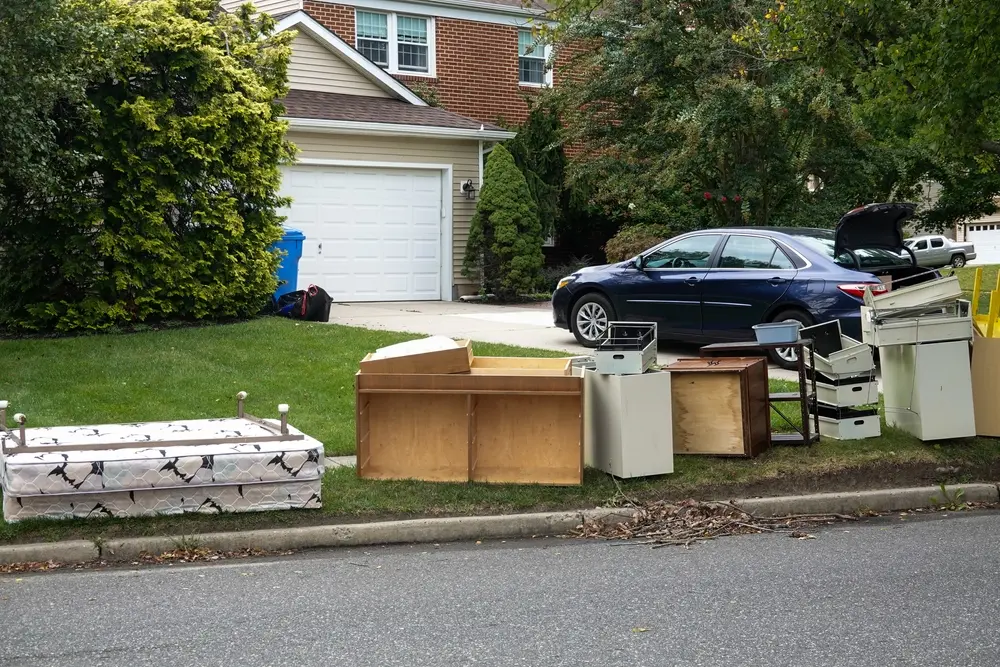
- Removal of all exterior debris — furniture, appliances, tires, and construction materials
- Fence and gate repair — enough to secure the property, even if cosmetic repairs wait
- Driveway and walkway clearing — remove tripping hazards and accumulated debris
- Pool/spa maintenance — if applicable, must be drained or treated to prevent mosquito breeding (Sacramento-Yolo Mosquito & Vector Control District actively monitors)
Fannie Mae requires that landscaping be maintained to neighborhood standards, which in Sacramento’s more established neighborhoods like Natomas, Elk Grove, and Roseville means well-kept front yards are the baseline expectation.
Need help clearing out a property’s yard and exterior? Take Care Junk handles yard waste removal, shed demolition, hot tub removal, and full exterior cleanouts across Sacramento and surrounding areas. [INTERNAL LINK: /contact/] for a free estimate — we can often provide same-day service.
[INTERNAL LINK: /yard-waste-removal/]
5. Winterization and Property Preservation
Despite Sacramento’s reputation for warm weather, winterization is a year-round requirement for vacant foreclosed properties. Banks and servicers mandate winterization to prevent costly damage from plumbing failures, HVAC issues, and weather exposure — damage that can easily exceed the cost of the entire cleanout.
Standard winterization tasks required by lenders:
- Drain all water supply lines and blow out with compressed air
- Add non-toxic antifreeze to all toilets, sinks, tubs, and P-traps
- Shut off the main water supply and tag the valve
- Turn off the water heater and drain the tank
- Set the HVAC system to a minimum temperature (typically 55°F in winter) or shut down and drain if utility service is discontinued
- Inspect the roof for leaks, missing shingles, or damaged flashing
- Check windows and doors for broken seals or glass
Why this matters in Sacramento specifically: While hard freezes are rare in the valley floor, Sacramento does experience occasional overnight lows in the mid-20s to low-30s during December through February. A single burst pipe in a vacant home can cause $10,000–$50,000+ in water damage — damage that comes out of the bank’s bottom line and the asset manager’s performance metrics.
Fannie Mae’s property preservation guidelines require winterization to be completed within 5 days of securing a vacant property in cold-weather months. HUD’s M&M requirements include similar timelines with specific documentation of each winterization step.
Did You Know? SMUD (Sacramento Municipal Utility District) and PG&E both offer property preservation accounts that allow banks and their contractors to maintain minimum utility service at reduced rates during the preservation period. This keeps the HVAC running and prevents the cascading damage that comes from a fully de-energized vacant property.
6. Secure the Property (Board-Up, Rekey, and Access Control)
An unsecured foreclosed property in Sacramento is an open invitation for vandalism, squatters, theft, and liability claims. Banks require that properties be locked down immediately upon taking possession, and the requirements are specific:
Property securing requirements include:
- Rekeying all exterior locks — new deadbolts and knob locks on every entry door
- Securing sliding glass doors with pins or bar locks
- Board-up of broken windows and doors using HUD-standard plywood (minimum ½-inch, painted to match or neutral color)
- Installing a lockbox for authorized access (Fannie Mae and Freddie Mac specify approved lockbox brands)
- Posting “No Trespassing” signs — required by California Penal Code Section 602 to support prosecution of trespassers
- Securing outbuildings — sheds, detached garages, and pool equipment rooms
In Sacramento neighborhoods with higher vacancy rates — such as parts of Meadowview, Florin, Fruitridge, and North Sacramento — squatter occupation of foreclosed homes is a well-documented issue. California’s squatter protections under AB 1210 (2024) have been modified to help property owners, but prompt securing of the property remains the first line of defense.
HUD requires board-up to be completed within 24-48 hours of the initial property inspection. Fannie Mae’s timeline is similar, with rekeying required before any other preservation work begins.
Pro Tip: Keep a log of every lockbox code, key assignment, and authorized entry. Banks frequently audit access records, and in Sacramento’s active real estate market, REO properties can have multiple agents, inspectors, appraisers, and contractors visiting within a short timeframe. Documenting who accessed the property and when protects everyone involved.
7. Photo Documentation (Before, During, and After)
If there’s one rule that applies universally across every bank, servicer, and government agency involved in foreclosure property preservation, it’s this: if it isn’t documented with photos, it didn’t happen.
Photo documentation requirements typically include:
- Before photos: Every room, every angle, plus exterior shots from all four sides of the property. Include close-ups of damage, hazards, and items to be removed.
- During photos: Progress shots showing work in process — especially important for large-scale cleanouts, hazard remediation, and securing tasks.
- After photos: Matching angles to the “before” set, showing completed work. Each room photographed clean and empty. Exterior shots showing maintained landscaping and secured entry points.
HUD compliance is especially strict. The HUD M&M program requires photos to be date-and-time-stamped, geotagged, and uploaded to the contractor’s management system within specific timeframes (typically 3-5 business days after work completion). Fannie Mae’s Servicing Guide requires similar documentation submitted through their designated property preservation platforms (currently Aspen Grove Solutions/BKFS).
Minimum photo counts by property type:
| Property Type | Minimum Interior Photos | Minimum Exterior Photos | Total Minimum |
| 1-2 bedroom | 25-30 | 10-15 | 35-45 |
| 3-4 bedroom | 35-45 | 10-15 | 45-60 |
| 5+ bedroom / large property | 50+ | 15-20 | 65-70+ |
Struggling to keep up with REO property cleanouts and documentation in Sacramento? Take Care Junk works with property preservation companies and REO agents across the Sacramento metro to provide fast, compliant foreclosure cleanout services — including photo documentation of every job. [INTERNAL LINK: /contact/] to discuss your portfolio needs.
[INTERNAL LINK: /commercial-junk-removal/]
8. Ongoing Maintenance Until Sale
The cleanout isn’t the end — it’s the beginning of an ongoing maintenance obligation that lasts until the property closes escrow with a new buyer. In Sacramento’s current market, REO properties can sit for 30–120 days or more depending on condition, location, and pricing. During that entire period, the bank requires regular maintenance to keep the property in showing condition and compliant with local codes.
Ongoing maintenance requirements include:
- Bi-weekly lawn mowing during growing season (March–November in Sacramento)
- Monthly interior inspections to check for new damage, leaks, pest activity, or unauthorized entry
- Seasonal pool maintenance if applicable — Sacramento summers make untreated pools a health hazard within days
- Snow/debris removal — while rare, Sacramento occasionally experiences storm debris from valley windstorms
- Re-securing after any break-in or unauthorized entry
- Utility monitoring — ensuring power, water, and gas remain in the required state
- Updating documentation — monthly condition reports with fresh photos
Freddie Mac’s Single-Family Seller/Servicer Guide (Section 9205.6) requires servicers to inspect the property at least monthly and perform maintenance as needed to protect the property’s value. Fannie Mae has similar requirements, and HUD properties require even more frequent check-ins.
For asset managers handling multiple Sacramento-area foreclosures, this ongoing maintenance is often the most time-consuming part of the process. Partnering with a local, reliable junk removal and property maintenance team ensures nothing falls through the cracks — especially when you’re managing properties spread across Elk Grove, Rancho Cordova, Folsom, and Roseville simultaneously.
Did You Know? Sacramento County has a Vacant Property Registration ordinance that requires owners of vacant residential properties to register with the county and pay an annual fee. Failure to register can result in fines, and properties on the registry are subject to more frequent code enforcement inspections. Make sure your bank clients are aware of this requirement. [INTERNAL LINK: /about/]
Putting It All Together: Your Foreclosure Cleanout Timeline
Here’s a realistic timeline for a standard foreclosure cleanout in Sacramento from the moment the property is secured to market-ready status:
| Phase | Timeline | Key Tasks |
| Day 1 | Property securing | Rekey, board-up, initial inspection, utility check |
| Days 1-3 | Documentation & assessment | Full photo documentation, hazard assessment, personal property inventory |
| Days 3-18 | Personal property notice period | Serve notice, store belongings per California law, begin non-intrusive exterior work |
| Days 18-21 | Full cleanout | Complete debris removal, junk hauling to broom-clean standard |
| Days 21-25 | Remediation & repairs | Hazard remediation, winterization, minor repairs |
| Days 25-28 | Final prep | Yard cleanup, final photos, quality inspection |
| Day 28+ | Ongoing maintenance | Bi-weekly lawn care, monthly inspections, re-securing as needed |
This timeline can vary significantly based on property condition, the extent of personal property left behind, and whether hazardous materials are present. Properties in severely distressed condition — common in some older Sacramento neighborhoods — may require 6-8 weeks to reach market-ready status.
Ready to Tackle Your Next Foreclosure Cleanout?
Managing foreclosure cleanouts in Sacramento requires more than a truck and some muscle — it takes knowledge of lender requirements, California law, and the local regulatory landscape. Whether you’re an REO agent listing your first bank-owned property or a property preservation company managing a regional portfolio, having a reliable local partner makes all the difference.
Take Care Junk works with banks, asset managers, REO agents, and property preservation companies across the Sacramento metropolitan area. We’re locally owned, licensed and insured, and we understand the compliance requirements that come with bank-owned property cleanup. We donate and recycle a good share of what we remove, which helps meet the sustainability goals many lenders now include in their vendor requirements.
Ready to get your REO property broom-clean and market-ready? Call Take Care Junk today for a free, no-obligation estimate. We offer same-day service across Sacramento, Elk Grove, Folsom, Roseville, Rancho Cordova, West Sacramento, and surrounding areas.
[INTERNAL LINK: /contact/]
[INTERNAL LINK: /services/]
Frequently Asked Questions
How much does a foreclosure cleanout cost in Sacramento?
A typical foreclosure cleanout in Sacramento ranges from $500 to $3,000+, depending on the size of the property, the volume of debris, and whether hazardous materials are present. A standard 3-bedroom home with moderate contents usually falls in the $800–$1,500 range for the cleanout portion alone. Hazard remediation, winterization, and securing are typically billed separately. Take Care Junk provides free on-site estimates so you know the cost before any work begins. [INTERNAL LINK: /pricing/]
What is the “broom-clean” standard for bank-owned properties?
Broom-clean means the property is completely emptied of all personal belongings, trash, and debris. Floors are swept or vacuumed, countertops are wiped down, and all cabinets, closets, and storage areas are empty. It does not typically include deep cleaning, carpet shampooing, or paint touch-ups — those are usually separate line items in the property preservation work order.
How long does California require you to store personal property from a foreclosure?
California law requires a minimum 15-day notice period (18 days if notice is mailed) before personal property can be disposed of. If the total value of personal property exceeds $750, additional requirements apply, including potential public auction. Always consult with a real estate attorney familiar with California foreclosure law before disposing of any personal belongings.
Do Fannie Mae and Freddie Mac have different cleanout requirements?
Yes, though they overlap significantly. Fannie Mae uses the Aspen Grove/BKFS platform for work order management and has specific vendor approval requirements. Freddie Mac uses its own system and may have different timelines for certain tasks. HUD properties (FHA-insured) follow the M&M Contractor guidelines, which are often the most detailed and strict. Always verify the specific requirements for the entity that owns the loan before beginning work.
Can I handle a foreclosure cleanout myself, or do I need a professional?
While basic debris removal can be done by anyone with a truck, professional foreclosure cleanout services are strongly recommended for several reasons: proper handling of hazardous materials requires certification, California’s personal property laws create liability risk for untrained crews, and banks increasingly require that vendors carry specific insurance minimums ($1 million general liability is standard). Take Care Junk carries full insurance and understands the compliance requirements for bank-owned property cleanup in Sacramento. [INTERNAL LINK: /residential-junk-removal/]
What Sacramento neighborhoods have the most foreclosure activity?
Historically, Sacramento neighborhoods with higher foreclosure rates include parts of Meadowview, Valley Hi, Del Paso Heights, North Highlands, South Sacramento, and Florin. The outer suburbs — including areas of Elk Grove, Natomas, and Rancho Cordova that saw rapid development during the mid-2000s — also experience periodic spikes in foreclosure activity. Current foreclosure rates in Sacramento County can be checked through the Sacramento County Assessor’s Office or real estate data services like ATTOM Data or RealtyTrac.
[Image alt text suggestion: “Professional crew performing foreclosure cleanout at a Sacramento residential property, removing furniture and debris from the garage”]
[Image alt text suggestion: “Before and after photos of a bank-owned property cleanout in a Sacramento neighborhood showing broom-clean standard results”]
[Image alt text suggestion: “REO property exterior after complete yard cleanup and landscaping maintenance in Elk Grove, Sacramento area”]