

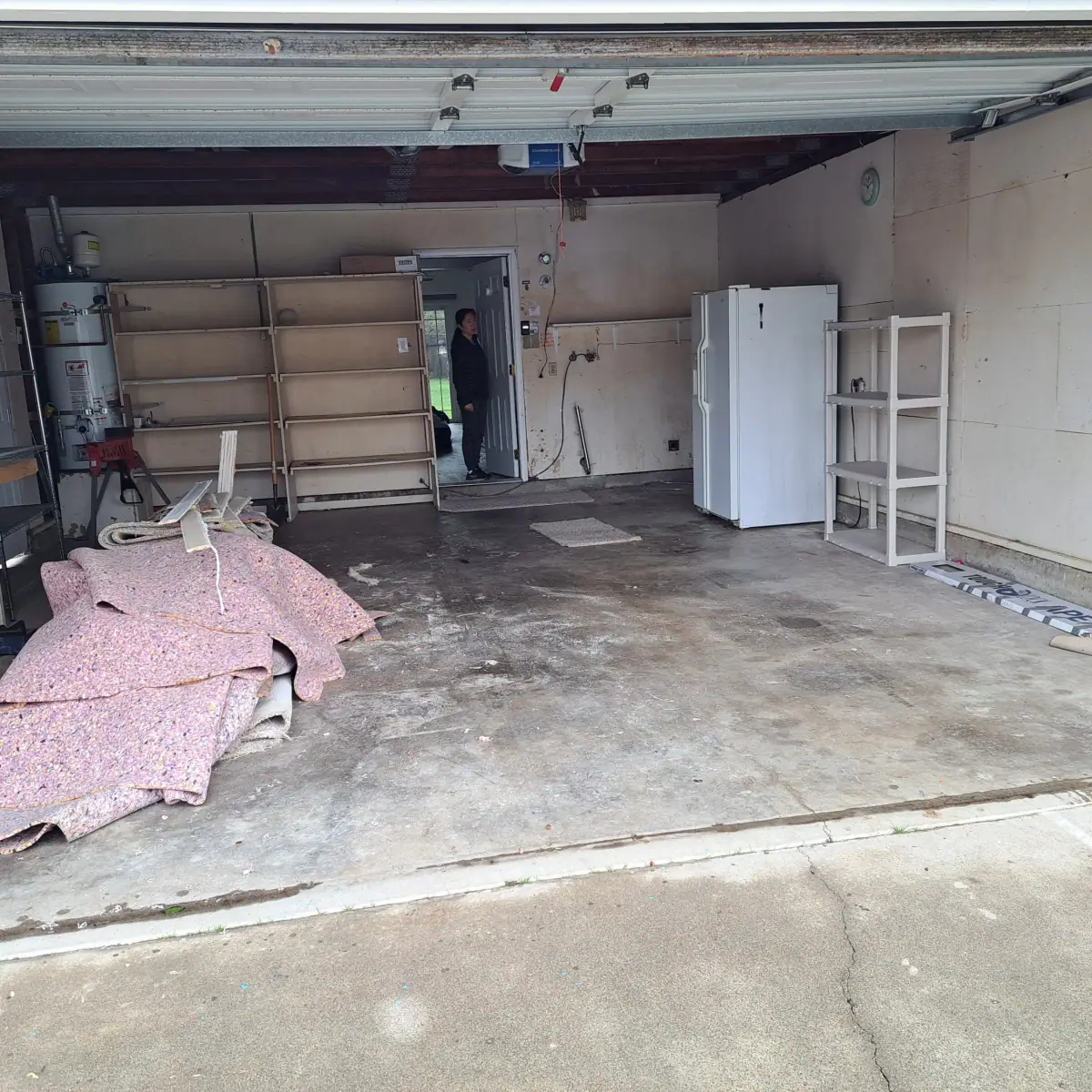
The crew is due at nine. It is eight-fifteen, and you are standing in the garage trying to remember whether the blue tote is Christmas lights or your daughter’s school papers. The paint cans are still on the shelf. The dog has already slipped out the side gate once. Booking professional junk removal was the right call; an hour of preparation the night before is what turns that morning from chaos into a twenty-minute job.
The crew does all the lifting, loading and hauling. What you do beforehand decides how fast they work, whether anything you meant to keep ends up on the truck, and sometimes what you pay. This guide covers how to sort, what to do with the items a hauler cannot take under California law, how to set up the day itself, and what to expect from us when we arrive.
Why Preparation is a Crucial First Step
You are paying for the heavy lifting, not for the crew to make decisions about your belongings. Setting the stage takes an evening and pays off five ways.
1. It Maximizes Efficiency and Saves Time
When items are pre-sorted and reachable, the crew starts loading the minute they arrive instead of asking “Does this go? What about this?” for every object. A prepared garage is often done in a fraction of the time, which matters if you are working from home or running a business around the pickup.
2. It Can Save You Money
Like most junk removal companies, we price by volume: how much of the truck your items fill. Our published junk removal pricing looks like this:
| Load | Typical price | What that looks like |
|---|---|---|
| Minimum | $99 to $150 | A chair, a few boxes or one appliance |
| Quarter truck | $180 to $280 | A couch and a loveseat, or a cleared-out closet |
| Half truck | $320 to $480 | Half a garage |
| Full truck | $850 to $1,000 | A whole garage or a small apartment |
Standard service includes removal from anywhere on your property. Some companies offer a discount for “curbside” or “driveway-ready” pickups, because consolidating everything in one reachable spot cuts labor time. Sorting thoroughly also tends to reveal you have less to haul than you thought. Booking online with us takes $20 off.
3. Ensures You Don’t Discard Valuables
In the rush of a cleanout, heirlooms, documents and forgotten photos get mixed into the junk. Sorting first is your last look at everything, and your chance to pull aside what you want to keep, sell or donate yourself. It prevents “declutter’s remorse,” that sinking feeling a week later.
4. It Streamlines the Disposal of Restricted Items
Haulers handle non-hazardous waste. By law and for safety, we cannot take chemicals, paint or asbestos. Separating those in advance means no surprises on the day, a plan for their proper disposal under California’s environmental rules, and a crew free to take everything else.
5. It Creates a Safer Work Environment
Scattered items hide trip hazards, sharp edges and unstable stacks of boxes. Clear pathways protect the crew and protect your walls, floors and door frames.
Step-by-Step Guide: What to Do Before the Crew Arrives
Give yourself a weekend, or a few evenings, to work through these five steps.
Step 1: Define the Scope: What Stays and What Goes?
Walk every room, the garage, the basement, the attic and the yard, and mark what is leaving. Three systems work:
- The sticker system: painter’s tape or brightly colored sticky notes. Green stays, red goes. The crew can read it from across the room, and there is no confusion.
- The consolidation method: pick one “junk zone,” a corner of a room, one side of the garage or a tarp in the yard, and move everything that is leaving into it. Anything in the zone is fair game.
- Lists: for a large or complicated cleanout, a one-page list per room lets you double-check your decisions and gives the crew a map.
Be decisive but not reckless. Unsure about something? Put it in a “maybe” pile and look at it once more the night before.
Step 2: Sort Items into Categories
We load and haul; we do not sort a load item by item. A little pre-sorting on your side makes the pickup faster, keeps more out of the landfill and shows you how much volume you really have.
- Donations: clothes, books, working small appliances and intact furniture (the kind our furniture removal services see every day) can find a new home. Drop them at a charity yourself, or point them out to the crew. Sacramento charities such as Goodwill, The Salvation Army, WEAVE and the Habitat for Humanity ReStore take clean, working pieces; call first, because they refuse stained, torn, broken or pet-damaged items. Items you set aside for donation go to a local charity when time and space allow.
- Recycling: group cardboard, metal and e-waste so the crew can take them to the right facility. That matters most with a mountain of moving boxes or a pile of scrap metal from a project.
- Hazardous waste (the “no-go” pile): the most important category. Paint, chemicals, solvents, asbestos, oil, propane, batteries beyond small quantities, fluorescent bulbs and pesticides cannot legally ride in a junk truck, and neither can medical waste or animal carcasses. See our list of prohibited items for the full picture.
- General junk: everything bound for the landfill: broken furniture, old mattresses, worn-out carpet, non-recyclable debris.
Step 3: Handle Restricted and Hazardous Items
California has strict laws against putting these items in the regular trash, so plan their disposal now:
- Find your county HHW site. Sacramento County runs Household Hazardous Waste drop-offs for residents, often free. In the Sacramento area that means the North Area Recovery Station or Kiefer Landfill, both equipped to handle chemicals safely.
- Check for collection events. Many communities host one-day HHW events through the year.
- Use specialty drop bins. Many hardware and home improvement stores take batteries and fluorescent bulbs in store.
Doing this before the appointment keeps the day on schedule and keeps you on the right side of the law.
Step 4: Consolidate Junk for Easy Access
- Best spots: the garage, the driveway or the front yard, where the truck can back up and load directly without a walk through the house.
- Clear pathways: if things have to stay where they are, make sure there is a wide path to the nearest exit. Move furniture, decor and vehicles out of the way. Measure doorways and hallways, and if a piece needs disassembly, tell us when you book.
- Ask about curbside: some companies price curbside pickups lower because it saves labor. Ask when you book; it may be worth moving things yourself.
Step 5: Secure Your Valuables and Pets
- Pets: doors will be propped open and strangers will be moving fast. Put dogs and cats in a closed room or a crate. It is safer for them and less stressful.
- Valuables: move anything fragile or valuable that is staying, including things on walls along the route a couch will travel. Crews are careful, but a precaution costs nothing.
Tips for a Faster and More Efficient Junk Removal Day
- Disassemble what you can. Bed frames, shelving units and playground equipment come out faster in pieces. If you cannot, no problem; mention it when you book so we bring the right tools.
- Bag loose debris. Heavy-duty contractor bags for small items, trash and yard waste like leaves and twigs. Bags carry; armfuls do not.
- Walk the crew through. Two minutes at the start pointing out what goes and what stays, and where your stickers or junk zone are, prevents every misunderstanding.
- Save a parking spot. The closer the truck gets to the pile, the faster the job. On a tight Midtown street or in an apartment lot, park your own cars to hold a space before we arrive, and let the office know a truck will be there for about an hour.
- Send a photo first. A picture of the pile, and of the stairs if there are any, is enough for us to price the job before we roll, so the number at the door matches the number on the phone.
- Watch the forecast. A soaked mattress or sofa weighs far more than a dry one. If rain is coming, throw a tarp over the pile.
What to Expect on the Day of the Appointment
- Confirmation call: we call when we are on the way, usually 15 to 30 minutes out.
- Arrival: the crew pulls up in a marked truck, introduces themselves and asks to see the items.
- Upfront quote: after looking at the volume, you get one firm, all-inclusive price covering labor, hauling and disposal. No obligation.
- The removal: once you give the go-ahead, they start, carrying everything out from wherever it sits on the property.
- Final sweep-up: the mark of good junk removal in Sacramento is a swept floor where the pile used to be.
- Payment and departure: you pay when you are satisfied, and the load goes to the facility that fits it.
“I called to pick up piles of junk in our yard. Based on the photos I provided they gave me a quote within minutes and arrived exactly when they promised. To have a company be so responsive and respectful of your time is a rarity these days, and I really appreciated it.”
Miriam M., YelpHow Take Care Junk Ensures a Smooth Experience
We serve the Sacramento region with crews that work for homeowners, renters, property managers and businesses, and a prepared customer is our favorite kind. What you get from us:
- Clear communication: we explain the pricing, answer your questions and give you a heads-up before we arrive.
- A trained, insured crew: safe lifting technique, tight corners handled without scuffing your floors and walls.
- Volume-based pricing: a free, on-site, no-obligation quote. The number we give is the number you pay, with no hidden fees.
- Donation and recycling: we donate what is usable and recycle what we can, and the rest goes to a licensed facility.
- Reliability: we show up in the window we promised, and same-day or next-day appointments are usually available.
An evening of preparation buys a fast, safe pickup and the most value for your money. Sort, pull the hazardous items, clear the path, and the pros do the rest. Ready to book junk removal in Sacramento? Text a photo of the pile to (916) 770-7619, or book online and save $20.


