

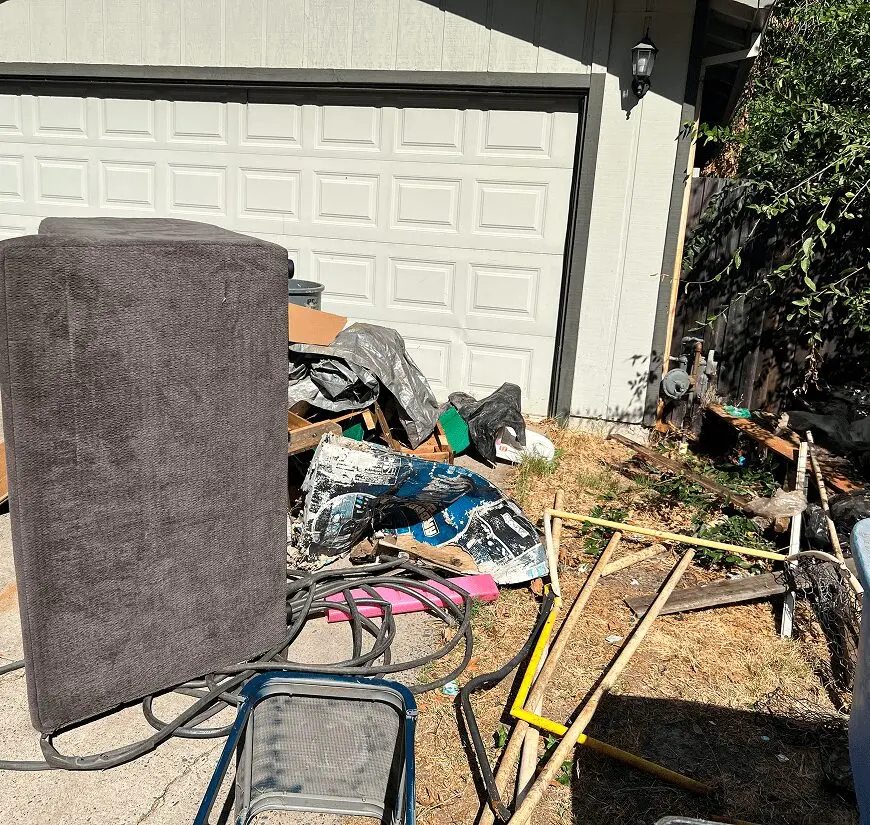
You just finished cleaning out the garage and you’re staring at a pile of old paint cans, dead batteries, and a cracked TV monitor. Your instinct? Toss it all in the bin and call it a day. Hold up — in California, that could cost you thousands of dollars in fines.
California has some of the strictest disposal laws in the country, and the list of things you can’t throw away in California keeps growing. From the universal waste rules enforced by the Department of Toxic Substances Control (DTSC) to the composting mandates under SB 1383, tossing the wrong item in your garbage bin isn’t just bad for the environment — it’s illegal.
In this guide, we’re breaking down the 15 most common items that are illegal to throw in the trash in California, why each one is banned, what fines you could face, and exactly where to dispose of them if you live in the Sacramento area. Whether you’re decluttering your Natomas townhouse or cleaning out a garage in Elk Grove, this is your go-to reference.
📋 Key Takeaways – California bans dozens of items from landfills under CalRecycle, DTSC, and SB 1383 regulations – Fines range from $50 per violation for organic waste to $70,000 per day for hazardous waste – Sacramento residents can use the North Area Recovery Station (NARS), the Sacramento Recycling & Transfer Station on Fruitridge Road, or PaintCare drop-off sites for free disposal – The easiest option? Call a junk removal company like Take Care Junk that handles sorting, hauling, and proper disposal for you
1. Batteries — Yes, ALL of Them (Even Your AAAs)
Here’s one that catches almost everyone off guard: every single battery type is banned from California’s trash. That includes the AAA batteries in your TV remote, the lithium-ion battery in your old laptop, and the lead-acid battery under your car’s hood.
Why it’s illegal: Batteries contain toxic heavy metals like lead, cadmium, mercury, and lithium. When crushed in garbage trucks or compacted at landfills, they leak these chemicals into soil and groundwater. Lithium-ion batteries are especially dangerous — they’re the #1 cause of fires at recycling and waste facilities across California.
The fines: Improper disposal of hazardous waste in California carries penalties of $250 to $1,000 per violation for a first offense under Penal Code 374.3. For businesses, DTSC penalties can reach $70,000 per day.
Where to dispose in Sacramento: – North Area Recovery Station (NARS) — 4450 Roseville Road, North Highlands (free drop-off) – Sacramento Recycling & Transfer Station — 8491 Fruitridge Road – Batteries Plus Bulbs in West Sacramento and other retail locations – Many Home Depot and Lowe’s stores accept rechargeable batteries
🔋 Did You Know? Starting January 1, 2026, California’s SB 1215 imposes a new 1.5% point-of-sale fee on products with embedded batteries to fund a statewide battery recycling program. That’s how serious the state is about keeping batteries out of landfills.
[INTERNAL LINK: /e-waste-disposal-sacramento/]
2. Electronics and E-Waste (TVs, Computers, Phones)
That old flat-screen collecting dust in your Carmichael spare bedroom? It’s classified as hazardous waste in California under the Electronic Waste Recycling Act of 2003 (SB 20).
Why it’s illegal: Electronics contain lead, mercury, cadmium, and flame retardants that contaminate landfills. A single CRT monitor can contain 4 to 8 pounds of lead. California was the first state to ban e-waste from landfills, and the rules cover TVs, monitors, laptops, desktop computers, printers, and more.
The fines: DTSC penalties for improper e-waste disposal can reach up to $70,000 per violation per day, with 300% penalty multipliers for intentional violations.
Where to dispose in Sacramento: – NARS Household Hazardous Waste Facility (free for residents) – Sacramento Recycling & Transfer Station on Fruitridge Road accepts e-waste – Many Best Buy locations accept small electronics for free recycling – Goodwill Sacramento locations accept working electronics
💡 Pro Tip: California charges a $6–$10 electronic waste recycling fee when you purchase a new covered device. That fee funds free e-waste recycling for consumers — so there’s zero reason to toss electronics in the trash.
[INTERNAL LINK: /e-waste-disposal-sacramento/]
3. Paint — Both Latex AND Oil-Based
This one surprises a lot of homeowners. You might think water-based latex paint is harmless, but all paint is banned from California’s trash and landfills — both oil-based and latex. CalRecycle explicitly prohibits paint disposal on land or in waterways.
Why it’s illegal: Oil-based paints are classified as hazardous waste due to their chemical solvents. Latex paint, while less toxic, creates liquid waste that landfills can’t handle and can contaminate groundwater. California’s Paint Stewardship Law (AB 1343) created the PaintCare program specifically to address this problem.
The fines: Disposing of paint in the trash falls under hazardous waste penalties — $250 to $1,000 for residential violations, and significantly more for commercial violators.
Where to dispose in Sacramento: – PaintCare drop-off sites — California has over 800 locations, including many Sacramento-area Sherwin-Williams, Kelly-Moore, and hardware stores – NARS and Sacramento Recycling & Transfer Station HHW drop-offs – The City of Sacramento also offers door-to-door HHW pickup for some items
🎨 Did You Know? PaintCare accepts interior and exterior paints, primers, stains, sealers, and clear coatings — all for free. They’ll even take up to 5 gallons at most retail drop-off sites. After a home renovation in Midtown or Land Park, swing by your nearest PaintCare location instead of risking a fine.
[INTERNAL LINK: /residential-junk-removal-sacramento/]
4. Motor Oil, Filters, and Automotive Fluids
If you change your own oil in the driveway — a common weekend activity across Sacramento’s suburban neighborhoods from Roseville to Rancho Cordova — you cannot throw used motor oil, oil filters, antifreeze, or brake fluid in the trash.
Why it’s illegal: A single gallon of used motor oil can contaminate one million gallons of drinking water. Motor oil, antifreeze, transmission fluid, and brake fluid are all classified as hazardous waste under California law. Used oil is also highly recyclable — CalRecycle’s Used Oil Program has collected billions of gallons since its inception.
The fines: Illegal disposal of motor oil can result in fines of up to $10,000 under California Water Code provisions, plus cleanup costs.
Where to dispose in Sacramento: – Certified Collection Centers (CCCs) — most AutoZone, O’Reilly Auto Parts, and Jiffy Lube locations accept used oil and filters for free – NARS and Fruitridge Road facility accept automotive fluids – Kiefer Landfill — free drop-off for Sacramento County residents
Need help clearing out an entire garage full of automotive supplies, old parts, and junk? Take Care Junk can handle the heavy lifting and make sure everything gets disposed of properly. [INTERNAL LINK: /contact/] for a free estimate.
5. Fluorescent Bulbs, CFLs, and Tubes
Those long fluorescent tubes in your kitchen or office? The compact fluorescent (CFL) bulbs you’ve been swapping out for LEDs? All banned from California’s trash under the state’s Universal Waste Rule.
Why it’s illegal: Fluorescent lights contain mercury — a potent neurotoxin. When these bulbs break in a garbage truck or landfill, mercury vapor is released into the air and mercury compounds leach into groundwater. Even LED lights shouldn’t go in the trash because they can contain arsenic, lead, and other toxic metals.
The fines: As universal waste, improper disposal falls under DTSC enforcement with penalties starting at $250 per violation and escalating significantly for repeat offenders.
Where to dispose in Sacramento: – NARS accepts up to 12 fluorescent tubes per month for free – Home Depot stores have free CFL recycling bins near the entrance – Batteries Plus Bulbs in West Sacramento – SMUD provides information on CFL recycling locations for their service area
6. Tires
You can’t toss old tires in your trash can or even drop them at most landfills. California’s Tire Recycling Act bans waste tires from solid waste disposal facilities entirely.
Why it’s illegal: Stockpiled tires create breeding grounds for mosquitoes (a real concern in Sacramento’s warm Central Valley summers), pose extreme fire hazards — tire fires are notoriously difficult to extinguish and release toxic smoke — and take up massive landfill space since they don’t decompose.
The fines: Illegal tire disposal in California carries fines of up to $500 per tire for individuals. Businesses face penalties of up to $10,000 per violation, and CalRecycle has issued fines exceeding $1.2 million against repeat commercial offenders.
Where to dispose in Sacramento: – Tire retailers — most shops that sell tires will accept old ones (usually for a small fee of $3–$5 per tire) – Sacramento County hosts periodic free tire drop-off events – Kiefer Landfill accepts tires in limited quantities for a fee
♻️ Pro Tip: When you buy new tires at a Sacramento-area shop, the California Tire Fee ($1.75 per tire) you pay at the register funds the state’s tire recycling infrastructure. Always ask the shop to take your old tires when you buy new ones — most do it automatically.
7. Mattresses
Trying to wrestle an old king-size mattress into a dumpster behind your Folsom apartment complex? That’s illegal in California. Under the Used Mattress Recovery and Recycling Act and AB 187, mattresses require special disposal.
Why it’s illegal: Mattresses are massive — they take up to 40 cubic feet of landfill space each. California processes millions of discarded mattresses annually, and the state mandates recycling through the Mattress Recycling Council’s (MRC) Bye Bye Mattress program. Mattresses contain recyclable steel, foam, fiber, and wood that shouldn’t go to waste.
The fines: Illegal dumping of mattresses falls under Penal Code 374.3 with fines of $250–$1,000 for a first offense, $500–$1,500 for a second, and $1,000–$3,000 for third or subsequent violations.
Where to dispose in Sacramento: – Bye Bye Mattress drop-off locations — find locations at byebyemattress.com – Sacramento County bulky item pickup (check your hauler’s schedule) – Retailers — under AB 187, if you buy a new mattress, the retailer must offer free haul-away of your old one
🛏️ Did You Know? Every new mattress sold in California includes a $16.00 recycling fee (as of 2025) that funds the Bye Bye Mattress program. You’ve already paid for proper recycling — use it!
Got multiple mattresses or a whole bedroom set to get rid of? That’s exactly what we do. Take Care Junk handles mattress removal across Sacramento, Elk Grove, Roseville, and beyond — and we make sure they get recycled, not dumped. [INTERNAL LINK: /furniture-removal-sacramento/]
[INTERNAL LINK: /mattress-removal-sacramento/]
8. Food Scraps and Yard Waste
This is the newest addition to California’s “banned from the trash” list, and it affects every single household and business in the state. Under SB 1383, it’s now illegal to throw food scraps, yard waste, and other organic materials in the regular garbage.
Why it’s illegal: Organic waste in landfills decomposes anaerobically, producing methane — a greenhouse gas 80 times more potent than carbon dioxide over a 20-year period. SB 1383 mandates a 75% reduction in organic waste disposal from 2014 levels. Sacramento implemented green bin collection to comply with this law.
The fines: Jurisdictions can fine violators $50–$100 for a first violation, $100–$200 for a second, and $250–$500 for third or subsequent violations. The City of Sacramento has been prioritizing education over enforcement so far, but fines are on the table.
What to do in Sacramento: – Use your green organics bin for food scraps, yard trimmings, food-soiled paper, and compostable materials – Sacramento County residents can request a green bin if they don’t have one – Consider backyard composting — the city occasionally offers free compost bin workshops
9. Prescription and Over-the-Counter Medications
Cleaning out the medicine cabinet is a regular part of any home declutter, but you cannot throw unused medications in the trash or flush them down the toilet in California. The state’s pharmaceutical waste regulations are among the toughest in the nation.
Why it’s illegal: Medications in landfills leach into groundwater. Flushed medications contaminate waterways — studies have found pharmaceutical compounds in the Sacramento and American Rivers. Improperly discarded opioids and controlled substances also create diversion and abuse risks.
The fines: While individual household disposal isn’t heavily enforced, California law requires pharmacies and healthcare facilities to provide take-back options. Improper commercial disposal carries standard hazardous waste penalties.
Where to dispose in Sacramento: – DEA National Prescription Drug Take Back events (held twice yearly) – Many CVS, Walgreens, and Rite Aid pharmacies have permanent drug take-back kiosks – Sacramento County HHW facilities accept pharmaceuticals – Kaiser Permanente Sacramento locations typically offer take-back programs
10. Needles, Syringes, and Medical Sharps
Since 2008, California law (Health and Safety Code Section 118286) has made it illegal to dispose of home-generated sharps waste in the trash or recycling bin. This covers needles, syringes, lancets, and any device that can puncture skin.
Why it’s illegal: Improperly discarded sharps endanger waste collection workers, recycling sorters, and the public. Needlestick injuries can transmit bloodborne pathogens like Hepatitis B, Hepatitis C, and HIV. California’s sharps stewardship program ensures safe collection at no cost.
The fines: Violations can be prosecuted under public health codes with fines and potential misdemeanor charges.
Where to dispose in Sacramento: – Free mail-back sharps containers from approved programs (visit CalRecycle’s sharps page) – Pharmacies — many Sacramento-area pharmacies participate in sharps take-back – Sacramento County HHW facilities – Doctors’ offices and hospitals often accept patient sharps
⚠️ Pro Tip: Place used sharps in a puncture-resistant container (like a laundry detergent jug) before taking them to a drop-off location. Never put loose needles in a bag or box.
[INTERNAL LINK: /hoarding-cleanup-sacramento/]
11. Household Cleaners and Chemical Products
That cabinet under your kitchen sink probably holds a small collection of hazardous waste. Bleach, ammonia, oven cleaners, drain openers, pool chemicals, and most concentrated cleaning products are banned from California’s trash.
Why it’s illegal: These products contain corrosive, toxic, reactive, or flammable chemicals that qualify as household hazardous waste (HHW) under DTSC regulations. When mixed in garbage trucks, they can create toxic fumes, cause chemical burns to workers, or even trigger explosions.
The fines: Standard hazardous waste disposal penalties apply — $250–$1,000 for individuals, with much higher penalties for commercial quantities.
Where to dispose in Sacramento: – NARS HHW Drop-Off Facility — free for Sacramento County residents (call 311 for hours) – City of Sacramento HHW door-to-door pickup — schedule through the city’s website – Sacramento Recycling & Transfer Station on Fruitridge Road
12. Propane Tanks and Compressed Gas Cylinders
Those small green Coleman propane canisters from your last camping trip to Folsom Lake? The larger propane tank from your backyard BBQ? Neither can go in the trash in California.
Why it’s illegal: Pressurized containers are explosive hazards in garbage trucks and at landfills. Even “empty” tanks retain residual gas that can cause fires or blasts when punctured or compacted. Non-empty aerosol cans containing hazardous materials (labeled TOXIC or FLAMMABLE) are also banned.
The fines: Hazardous waste disposal penalties apply — and if a discarded tank causes a fire or injury, you could face additional civil liability.
Where to dispose in Sacramento: – NARS accepts compressed gas cylinders – Blue Rhino and AmeriGas exchanges at grocery stores and hardware stores for standard BBQ tanks – Sacramento HHW facilities for small camping canisters – Starting in 2028, California bans the sale of single-use propane canisters entirely
🔥 Did You Know? California passed a first-in-the-nation law requiring all one-pound propane canisters sold in the state to be refillable and reusable by 2028. The law aims to eliminate the thousands of single-use canisters that end up in landfills and waste facilities every year.
13. Appliances Containing Refrigerants
Your old refrigerator, window AC unit, chest freezer, or dehumidifier contains refrigerant gases (like Freon/R-22 or R-410A) that are federally regulated under the Clean Air Act and banned from landfill disposal.
Why it’s illegal: Refrigerants are potent greenhouse gases and ozone-depleting substances. Releasing them into the atmosphere is a federal violation enforced by the EPA, in addition to California’s own hazardous waste rules. Proper disposal requires certified technicians to recover the refrigerant before recycling.
The fines: EPA fines for venting refrigerants can reach $44,539 per day per violation under Clean Air Act Section 608. California adds its own penalties on top.
Where to dispose in Sacramento: – SMUD has historically offered appliance recycling programs (check current availability) – PG&E and local utilities sometimes offer bounty programs for old refrigerators – Junk removal services like Take Care Junk handle appliance removal and ensure proper refrigerant recovery
[INTERNAL LINK: /appliance-removal-sacramento/]
14. Mercury-Containing Devices
Old thermostats, glass thermometers, barometers, and some antique switches contain liquid mercury — one of the most toxic substances found in households. These are classified as universal waste in California and are strictly banned from the trash.
Why it’s illegal: Mercury is a bioaccumulative neurotoxin. Even small amounts contaminate water supplies and enter the food chain. A single mercury thermostat contains roughly 3 grams of mercury — enough to contaminate a small lake. California’s Universal Waste Rule requires these items to go to certified handlers.
The fines: DTSC penalties for improper universal waste disposal start at $250 per violation and increase for businesses and repeat offenders.
Where to dispose in Sacramento: – NARS HHW Facility — accepts mercury-containing items for free – Thermostat Recycling Corporation (TRC) — many HVAC supply stores and hardware stores participate – Sacramento County HHW events held throughout the year
15. Treated Wood and Construction Debris
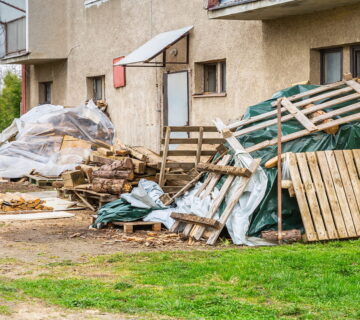
If you’ve torn down an old fence or deck in your Fair Oaks backyard, listen up. Pressure-treated wood, painted wood, and stained wood cannot go in the regular trash in California. The DTSC classifies treated wood waste as hazardous due to the chemical preservatives used to prevent rot and insect damage.
Why it’s illegal: Treated wood commonly contains arsenic (CCA-treated), copper, and chromium — all toxic heavy metals. Burning treated wood releases these toxins into the air. Landfilling it allows chemicals to leach into groundwater. California is one of the few states that regulates treated wood this strictly.
The fines: Treated wood falls under hazardous waste regulations. Improper disposal carries penalties from $250 to $70,000 per day, depending on the quantity and circumstances.
Where to dispose in Sacramento: – Class I hazardous waste landfills — treated wood requires special handling – GreenWaste Florin Perkins Resource Recovery Facility (4201 Florin Perkins Road) handles some construction debris – Kiefer Landfill — accepts certain construction and demolition waste with restrictions
🏗️ Pro Tip: If you’re doing a deck tear-down, shed demolition, or fence replacement, sorting treated from untreated wood is critical. Treated wood has to stay out of the green waste stream and go to a facility that accepts it — worth knowing before it ends up at the curb. [INTERNAL LINK: /construction-debris-removal-sacramento/]
[INTERNAL LINK: /shed-removal-sacramento/]
The Easy Solution: Let Take Care Junk Handle It
Reading through this list, you might be thinking: “How am I supposed to figure out what goes where?” You’re not alone. Between universal waste rules, HHW facilities with limited hours, and California disposal laws that seem to change every year, proper disposal is genuinely confusing.
That’s exactly why Take Care Junk exists.
When you call us for junk removal in Sacramento, we don’t just haul your stuff to the nearest landfill. We sort everything — recycling what we can, donating usable items, and ensuring hazardous materials get to the right facilities. We divert a good share of what we collect away from landfills through donations and recycling.
Ready to clear out your clutter the right way? Call Take Care Junk today for a free, no-obligation estimate. We offer same-day service across Sacramento, Elk Grove, Folsom, Roseville, West Sacramento, Rancho Cordova, Citrus Heights, and surrounding areas. No sorting, no trips to the dump, no worrying about fines — just a clean space and peace of mind.
[INTERNAL LINK: /contact/]
[INTERNAL LINK: /services/]
Frequently Asked Questions
What happens if I accidentally throw a banned item in the trash in California?
For most household violations, enforcement starts with education and warnings rather than immediate fines. However, repeated violations — especially under SB 1383 for organic waste — can result in fines starting at $50 per incident and escalating from there. For hazardous waste, penalties are more severe right from the start, ranging from $250 to $1,000 per violation for individuals.
Where is the closest household hazardous waste drop-off in Sacramento?
Sacramento County operates the North Area Recovery Station (NARS) HHW Facility at 4450 Roseville Road in North Highlands. The Sacramento Recycling & Transfer Station at 8491 Fruitridge Road also accepts HHW and e-waste. Both offer free drop-off for Sacramento County residents. Call 311 for current hours and accepted items.
Can I put old electronics in my recycling bin?
No. Electronics cannot go in your curbside recycling bin — they damage sorting equipment and contain hazardous materials that contaminate recyclable materials. E-waste must be taken to a certified e-waste recycler or an HHW facility. Most Best Buy stores and some Goodwill locations also accept electronics. [INTERNAL LINK: /e-waste-disposal-sacramento/]
Does California really fine you for throwing food scraps in the trash?
Yes, it’s technically enforceable. Under SB 1383, jurisdictions can fine residents $50–$500 per violation for failing to separate organic waste. Sacramento has been focused on education rather than penalties so far, but enforcement is ramping up statewide as California pushes to meet its 2025 organic waste reduction targets.
What items are considered “universal waste” in California?
California’s Universal Waste Rule covers batteries (all types), fluorescent lamps and bulbs, mercury-containing devices (thermostats, thermometers, switches), electronic devices, and non-empty aerosol cans containing hazardous materials. These items have special handling rules that are less strict than full hazardous waste regulations but still can’t go in the trash.
Can a junk removal company take hazardous waste?
Most junk removal companies — including Take Care Junk — can handle many items on this list, including electronics, batteries, mattresses, appliances, furniture, and construction debris. For items classified as hazardous waste (like chemicals, solvents, and motor oil), we’ll advise you on proper disposal channels. Give us a call — we’re always happy to help you figure out the right disposal method, even for items we can’t haul ourselves. [INTERNAL LINK: /contact/]
Serving Sacramento, Elk Grove, Folsom, Roseville, West Sacramento, Rancho Cordova, Citrus Heights, Carmichael, Davis, Woodland, Natomas, Rocklin, Fair Oaks, and surrounding communities. Licensed & insured. Call Take Care Junk for a free estimate today.
[INTERNAL LINK: /service-areas/]
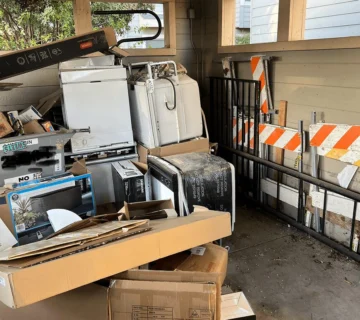
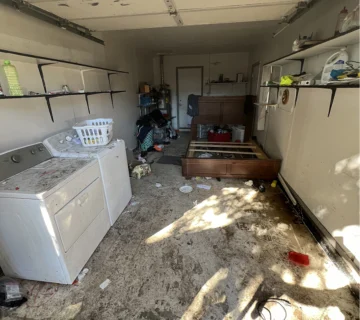
Suggested Image Alt Texts: 1. “Pile of household items that are illegal to throw in the trash in California including batteries, paint cans, and electronics” 2. “Sacramento County North Area Recovery Station household hazardous waste drop-off facility” 3. “Infographic showing 15 items banned from California landfills with disposal alternatives” 4. “Take Care Junk team sorting recyclable items from junk removal haul in Sacramento” 5. “Old mattress, tires, and electronics stacked for proper disposal in Sacramento California”
)