Renting a storage unit often begins with the best of intentions. You are moving to a new house, downsizing your living space, or navigating a complex life transition. You need a safe, temporary place to hold your belongings while you figure out your next steps. You pack up your boxes, load your furniture, lock the roll-up door, and promise yourself you will sort through everything next month.
Months quickly turn into years. The temporary solution slowly morphs into a permanent financial drain. Instead of a helpful holding zone, the storage unit becomes an expensive, out-of-sight junk drawer. Millions of people pay monthly fees to store items they no longer need, use, or even remember owning.
Understanding what sits inside these units and why we keep these items is the first step toward breaking the cycle. This comprehensive guide explores the psychology behind keeping unwanted items, the most common categories of junk found in storage facilities, and actionable strategies for clearing it all out. We will also look at how professional services from Take Care Junk can help you handle the heavy lifting and reclaim your peace of mind.
The Psychology Behind the Storage Unit
Before we open the boxes and examine the physical items, we must look at the emotional reasons we rent storage units in the first place. Storing junk is rarely a conscious, logical choice. It is usually the result of complex emotional attachments and cognitive biases that prevent us from letting go.
The Pull of Nostalgia and Memories
We are emotional creatures, and we frequently attach powerful memories to physical objects. When you look at an old chair, a box of childhood toys, or a collection of dusty vinyl records, you do not just see the items. You see the people, the places, and the periods of your life associated with them.
Throwing these items away can feel like discarding a piece of your personal history. Storage units offer an easy compromise. You do not have to throw the memory away, but you also do not have to find room for it in your active living space. Unfortunately, this means you end up paying thousands of dollars to store memories in a dark room you rarely visit.
The Illusion of Perceived Value
Another major reason people store junk is the belief that the items hold significant financial value. You might have an old bedroom set, a massive tube television, or a box of collectible magazines. You tell yourself that you will sell these items one day to recoup your investment.
This is the illusion of perceived value. While an item might have cost a lot of money when you originally purchased it, its current market value is often negligible. The time, effort, and energy required to sell these heavy or outdated items frequently outweigh any potential profit. Furthermore, the monthly storage fees quickly eat away at whatever small amount of money you might make from a future sale.
The Trap of Procrastination
Sometimes, the items in a storage unit are not sentimental or valuable. They are simply the result of delayed decisions. When you are packing up a house, you face extreme decision fatigue. Deciding what to do with a broken lawnmower, an ugly lamp, or a box of tangled cords feels overwhelming.
Instead of making a choice, you put the item in a box and move it to the storage unit. Procrastination is the silent engine that keeps the self-storage industry booming. You are paying a monthly fee simply to delay making a decision about your belongings.
The Most Common Junk Found in Storage Units
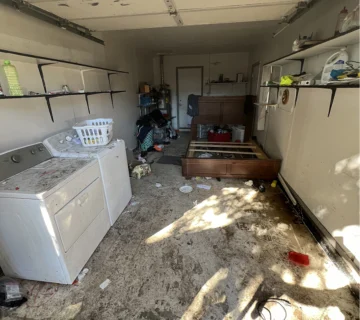
When you finally pull up the metal door and look inside a long-term storage unit, you usually find the same categories of items. While every person’s life is unique, the things we choose to store are remarkably similar. Here is a breakdown of the most common junk that takes up valuable space in storage facilities.
Bulky, Outdated Furniture
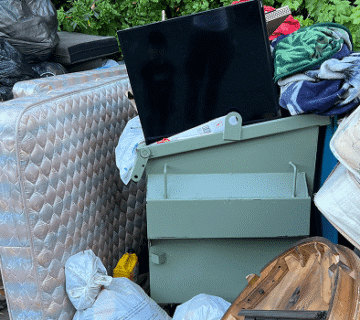
Furniture takes up more square footage in a storage unit than anything else. When people upgrade their living room sets, buy new mattresses, or inherit pieces from family members, the old furniture frequently ends up in storage.
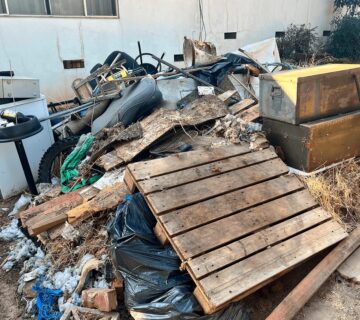
You will often find massive, heavy sleeper sofas from the 1990s, complete with outdated floral patterns and broken pull-out mechanisms. Solid wood entertainment centers designed for old, boxy televisions are incredibly common. Because these pieces are incredibly heavy and difficult to move, people simply leave them in storage to avoid the physical labor of hauling them to the local dump.
Obsolete Electronics and E-Waste
Technology moves at a blistering pace. The cutting-edge gadgets of yesterday are the bulky paperweights of today. Storage units are absolute treasure troves of obsolete electronics.
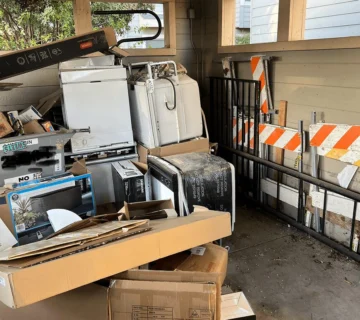
Inside these units, you will find massive desktop computer towers, tangled nests of mystery cables, old printers that no longer connect to modern networks, and thick monitors. People keep these items because they cost hundreds or thousands of dollars originally. They feel guilty throwing them away. However, these items are now classified as e-waste and require specialized disposal.
Broken or Aging Appliances
Major household appliances are a massive pain to dispose of properly. When a refrigerator stops cooling or a washing machine starts leaking, buying a new one is often cheaper than repairing the old one. But what do you do with the broken appliance?
Many people lack the truck or the muscle to haul a heavy washing machine to the recycling center. So, they drag it into a storage unit. You will find ancient chest freezers, dented dishwashers, and broken microwave ovens gathering dust. These items take up massive amounts of space and frequently contain hazardous materials like freon, making their eventual removal even more complicated.
Endless Boxes of Paperwork and Documents
Paper is incredibly heavy, and we accumulate mountains of it over a lifetime. Storage units are routinely filled with banker’s boxes packed full of outdated documents.
People store tax returns from twenty years ago, old utility bills, expired warranties, and college notebooks. While it is important to keep certain financial and legal documents for a specific number of years, keeping decades’ worth of everyday paperwork is unnecessary. These boxes attract pests, absorb moisture, and take up space that could be used for items that actually matter.
Unused Exercise Equipment and Sporting Goods
We all have aspirational goals. We buy a treadmill, an elliptical machine, or a complete set of free weights with the firm intention of getting into shape. When those items inevitably become clothes racks in the spare bedroom, we move them to the storage unit to hide our guilt.
Alongside the heavy exercise machines, you will find forgotten sporting goods. Old sets of golf clubs, deflated basketballs, broken bicycles, and camping gear that hasn’t seen the woods in a decade take up massive amounts of room.
Leftover Construction and Home Improvement Materials
After completing a home renovation project, you are usually left with extra materials. You might have half a gallon of paint, a few spare floorboards, some leftover bathroom tiles, or random pieces of lumber.
Instead of throwing these away, you put them in storage just in case you need to make a repair in the future. Over time, the paint dries out, the wood warps, and the tiles become obsolete. These leftover construction materials quickly turn into useless junk that clutters your unit.
Seasonal Items That Never See the Light of Day
Holiday decorations are a staple of the American storage unit. Fake Christmas trees, giant plastic pumpkins, and tangled webs of holiday lights are packed into plastic bins and stacked to the ceiling.
While storing seasonal items makes sense if you actually use them, many people forget what they have. They buy new decorations the following year because it is easier than digging through the storage unit. As a result, the unit fills up with duplicate holiday items that never actually leave the facility.
The True Cost of Storing Junk
Keeping all of this junk out of sight seems harmless until you look at the actual costs associated with it. The toll of a storage unit extends far beyond the items themselves.
Adding Up the Monthly Fees
Storage facilities charge a premium for their space. A medium-sized unit can easily cost between $100 and $200 per month, depending on your location. Over the course of a single year, that is $1,200 to $2,400.
If you keep that unit for five years, you will spend over $10,000 to house items that are likely worth less than $500 in total. This is a massive financial leak. By identifying the junk in your unit and clearing it out, you give yourself an immediate, tangible financial raise.
The Mental Burden of Clutter
Even if you can easily afford the monthly fee, the psychological cost of stored clutter is real. Knowing that you have a room full of unresolved decisions creates an underlying current of anxiety. Every time the monthly payment leaves your bank account, you experience a flash of guilt.
Emptying the storage unit frees up your mental bandwidth. It allows you to close an open chapter of your life, let go of the past, and move forward with a lighter, clearer mind.
How to Finally Clear Out Your Storage Unit
Deciding to clear out your storage unit is a huge milestone. However, showing up at the facility without a plan will quickly lead to overwhelm. You need a structured, systematic approach to conquer the clutter.
Take a Complete Inventory First
Your first trip to the storage unit should not involve moving any heavy items. Instead, go strictly for reconnaissance. Bring a flashlight, a notebook, and a pen.
Open the door and take a visual inventory. Write down the major items taking up space, such as the sleeper sofa, the old refrigerator, and the stack of tires. Estimate the number of boxes you have. Assessing the situation helps you determine exactly how much help you will need, whether you need to rent a truck, and how long the project will realistically take.
Adopt the Four-Box Method for Sorting
When you return to do the actual work, set up four distinct staging areas just outside your unit. Make sure you do not block the driveway for other tenants. Bring heavy-duty trash bags, sturdy boxes, and permanent markers.
You will use the four-category system: Keep, Sell, Donate, and Trash. Pick up each item once, make a firm decision, and place it in the corresponding zone.
- Keep: Only items you have an immediate use and space for in your current home.
- Sell: High-value items that are worth your time to list online.
- Donate: Clothing, books, and functional household goods in good condition.
- Trash: Broken furniture, obsolete electronics, and true junk.
Tackle the Easy Categories First
Do not start by sorting through a box of old family photographs. You will get bogged down in memories and lose your momentum. Start with the most obvious junk.
Toss the broken lamps, the old paperwork, the dry paint cans, and the useless construction debris. By clearing out the undeniable trash first, you create physical room to maneuver inside the unit. This makes tackling the harder, more sentimental decisions much easier later on.
Navigating the Logistics of Junk Removal
Once you have sorted your items, you face the final and most difficult hurdle: getting the junk off the property. Storage facilities have strict rules regarding trash disposal, and you cannot simply leave your items by the facility’s dumpster.
Why Doing It Yourself is Harder Than It Looks
Hauling heavy junk yourself is a massive logistical challenge. You have to rent a moving truck or borrow a trailer. You need to recruit strong friends or family members to help you lift the massive sleeper sofa and the ancient chest freezer.
Furthermore, you must navigate the complex rules of your local landfill. You cannot dump electronics, appliances containing freon, or hazardous materials in a standard dump. You have to drive these specific items to specialized recycling centers across the county. This takes hours of your time, costs money in dump fees, and puts you at risk of severe back injuries.
City dump trips work for small loads, but storage unit cleanouts usually involve heavy furniture, appliances, e-waste, and multiple trips that quickly turn into a full weekend project. Full-service junk removal saves time, labor, and disposal headaches
The Benefits of Professional Junk Hauling
Hiring a professional junk removal company is the easiest, most efficient way to handle a storage unit cleanout. It eliminates the heavy lifting, the truck rentals, and the landfill logistics.
When you hire a professional team, you simply unlock the storage unit and point to the things you want gone. The professionals handle all the lifting, loading, and sweeping. They understand local disposal regulations and ensure that your e-waste, appliances, and general trash are recycled or disposed of responsibly. This allows you to hand the keys back to the facility manager and stop your monthly payments immediately.
Local Help for Storage Unit Cleanouts
If you are dealing with a packed storage unit in Sacramento or the surrounding areas, professional junk removal can make the process much easier. Instead of renting trucks, coordinating dump runs, and handling heavy lifting yourself, our team helps clear storage units quickly and responsibly so you can close the unit and move on.
We help homeowners, renters, landlords, and families throughout Sacramento, Elk Grove, Roseville, Rocklin, Folsom, Davis, Woodland, Vacaville, and nearby communities with full-service storage unit cleanouts, appliance removal, furniture hauling, and large-item disposal.
Conclusion
A storage unit should be a temporary tool, not a permanent financial burden. By understanding the emotional psychology behind why we keep things and recognizing the most common types of junk that fill these spaces, you can finally break the cycle of endless monthly payments.
Clearing out a long-term storage unit is a demanding project, but the financial and emotional rewards are immense. Stop paying rent for obsolete electronics, broken furniture, and boxes of items you no longer use or love. Reclaim your money, your time, and your peace of mind by executing a clear, decisive cleanout strategy.
Remember, you do not have to tackle the final, exhausting phase of disposal alone. When you are ready to remove the heavy, awkward items from your unit, professional help makes the process seamless. If you are ready to finally close the door on your storage unit for good, contact us today to schedule a pickup. Let our team handle the heavy lifting so you can move forward with a lighter, clutter-free life.