

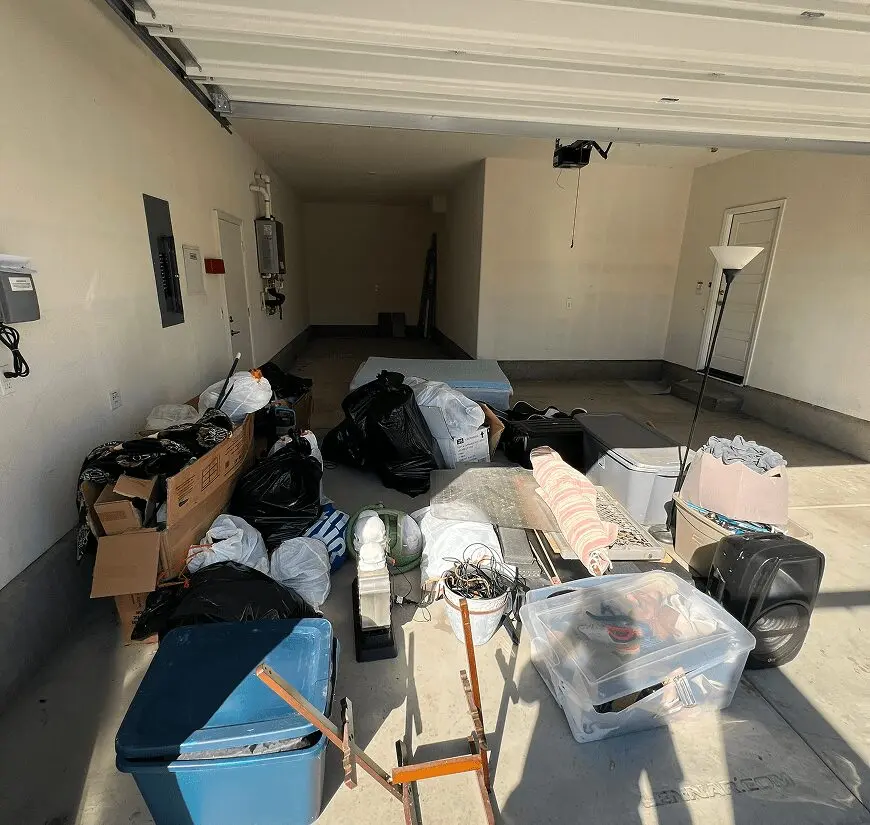
Key Takeaways – It’s illegal to throw most electronics in the trash in California — violators can face fines up to $25,000 per incident. – E-waste contains hazardous materials like lead, mercury, cadmium, and lithium that contaminate soil and groundwater. – Sacramento has multiple free drop-off options, including Sacramento County e-waste collection events, SMUD recycling programs, and retail take-back programs at Best Buy and Staples. – Take Care Junk picks up e-waste directly from your home or office and ensures it’s recycled responsibly — no hauling it yourself. – California’s SB 20 and AB 1383 specifically regulate how electronics must be handled and disposed of.
That old tube TV collecting dust in your garage? The drawer stuffed with dead cell phones and tangled chargers? The printer that jammed for the last time three years ago? You can’t just toss any of them in your Sacramento trash bin — and if you do, you could be breaking the law.
California has some of the strictest e-waste disposal regulations in the country, and for good reason. Electronic waste is the fastest-growing waste stream in the United States, with the average American household accumulating roughly 75 pounds of e-waste per year. Every one of those devices contains materials — from lead solder to lithium-ion batteries — that pose serious risks to human health and the environment when they end up in a landfill.
If you’ve been putting off dealing with that growing pile of old electronics, this guide is for you. Below, we’ll walk you through 9 common electronics you absolutely cannot throw in the trash in Sacramento, explain what makes each one hazardous, and show you exactly where to take them for safe, legal e-waste disposal in Sacramento. [INTERNAL LINK: /services/e-waste-disposal/]
1. TVs and Monitors — The Original E-Waste Problem
Old televisions and computer monitors are one of the most heavily regulated types of electronic waste in California, and they deserve that top spot. California’s Senate Bill 20 (SB 20), also known as the Electronic Waste Recycling Act, specifically targets these devices. When you buy a new TV or monitor in California, you pay a recycling fee at the register — that fee funds the system that collects and processes them responsibly.
Why they’re banned from the trash:
- CRT (cathode ray tube) TVs and monitors contain 4–8 pounds of lead per unit, along with barium, cadmium, and phosphor coatings. A single CRT can contaminate surrounding soil for decades.
- Flat-panel TVs and LCD monitors contain mercury in their backlighting systems (especially older models) and other heavy metals in their circuit boards.
Where to take them in Sacramento:
- Sacramento County Household Hazardous Waste (HHW) facility at North Area Recovery Station on Roseville Road
- Best Buy accepts TVs up to 50 inches for free recycling (limit 3 per household per day)
- Sacramento County e-waste collection events — typically held monthly at rotating locations across the county
- Take Care Junk — we pick up any size TV directly from your home, including those 200-pound CRTs you definitely don’t want to carry yourself
Did You Know? California was the first state to pass an e-waste recycling law. SB 20, signed in 2003, created a funded system specifically for TVs and monitors. That $4–$8 fee you pay on a new TV? It’s already paying for the recycling infrastructure — all you have to do is use it. [INTERNAL LINK: /services/tv-removal/]
2. Computers and Laptops
Whether it’s a beige desktop tower from the early 2000s or a sleek ultrabook that finally gave out, computers and laptops are packed with materials that make landfill disposal both illegal and dangerous in California.
Why they’re banned from the trash:
- Circuit boards contain lead, mercury, cadmium, and beryllium — all classified as hazardous under California law
- Hard drives and solid-state drives contain materials that leach into groundwater
- Laptop batteries are lithium-ion, which pose a serious fire risk in garbage trucks and landfills (more on this in item #5)
What to do before recycling:
- Wipe your data. Use a certified data destruction tool (like DBAN for hard drives) or physically destroy the drive. Simply deleting files isn’t enough — your personal information, financial records, and passwords can be recovered.
- Remove any external storage devices (USB drives, SD cards)
Where to take them in Sacramento:
- Best Buy offers free computer recycling at all Sacramento-area locations (Arden, Natomas, Folsom, Roseville)
- Staples accepts computers and laptops for recycling at no charge
- SMUD occasionally hosts electronic recycling events for Sacramento Municipal Utility District customers — check smud.org for current schedules
- Goodwill Sacramento accepts working computers and refurbishes them for resale, keeping usable tech out of the waste stream entirely
Pro Tip: If your computer still works but feels slow, consider donating it instead of recycling it. Organizations like Sacramento Area Computer Users Group and Computers for Learning refurbish donated machines for students and families in the Sacramento area who can’t afford new ones. Reuse always beats recycling. [INTERNAL LINK: /blog/donate-vs-dump/]
3. Printers and Copiers
That inkjet printer that costs more to refill than replace? The office copier that’s been “temporarily” out of service since last summer? Both are classified as e-waste and cannot go in your regular trash or curbside recycling bin.
Why they’re banned from the trash:
- Printers and copiers contain heavy metals in their circuit boards, including lead and chromium
- Ink and toner cartridges contain volatile organic compounds (VOCs) and, in the case of toner, fine carbon black particles that are a respiratory hazard
- Larger copiers may contain selenium drums and other toxic components
Recycling tips:
- Remove ink and toner cartridges separately — many office supply stores (Staples, Office Depot) have free cartridge recycling bins right at the front of the store
- Some printer manufacturers, including HP, Canon, and Brother, offer free mail-back recycling programs for both the printers and their cartridges
- For large commercial copiers or multi-function office equipment, professional removal is typically the easiest option
Did You Know? Americans throw away roughly 375 million empty ink and toner cartridges every year — and each one takes up to 1,000 years to decompose. Most cartridges can be refilled or remanufactured, saving both money and landfill space.
Dealing with a whole office cleanout in Sacramento? Take Care Junk handles commercial e-waste removal for offices across Sacramento, Rancho Cordova, and Folsom. We’ll sort, haul, and make sure everything is disposed of properly. [INTERNAL LINK: /services/office-cleanout/] Get a free estimate today. [INTERNAL LINK: /contact/]
4. Cell Phones and Tablets
The average American upgrades their phone every 2–3 years, which means most households have a graveyard of old smartphones and tablets tucked away in junk drawers. While they’re small, they’re still classified as e-waste and are illegal to throw in the trash in California.
Why they’re banned from the trash:
- Contain lithium-ion batteries that can ignite or explode when crushed or punctured in waste processing
- Circuit boards contain lead, mercury, and rare earth minerals like neodymium and tantalum
- Screens on older devices may contain small amounts of mercury or arsenic compounds
What to do before recycling:
- Perform a full factory reset to wipe personal data
- Remove your SIM card and any memory cards
- Deactivate the device from your carrier and unlink cloud accounts (iCloud, Google)
Where to take them in Sacramento:
- Best Buy and Target accept cell phones and tablets at in-store recycling kiosks
- ecoATM kiosks (found inside Walmart and other retailers in Natomas, Elk Grove, and Citrus Heights) will evaluate your phone and may even pay you for it
- Your wireless carrier — AT&T, Verizon, and T-Mobile all have trade-in or recycling programs at their Sacramento locations
- Call2Recycle drop-off bins are available at many Sacramento Home Depot and Lowe’s locations
Pro Tip: Don’t overlook trade-in value. Even phones several years old can be worth $20–$100 through carrier trade-ins, manufacturer programs (Apple Trade In, Samsung Trade-In), or ecoATM kiosks. Check before you recycle — your junk drawer might be hiding some cash.
5. Batteries — The Silent Fire Hazard
This one is critical for Sacramento residents to understand, because lithium-ion batteries are now the #1 cause of fires at waste processing facilities across California. Sacramento County waste officials have been increasingly vocal about the dangers of batteries ending up in curbside bins. [INTERNAL LINK: /blog/hazardous-waste-disposal-sacramento/]
Why they’re banned from the trash:
- Lithium-ion batteries (found in laptops, phones, power tools, e-bikes, and vapes) can ignite when crushed, punctured, or exposed to heat. Waste facility fires caused by lithium batteries have increased dramatically in recent years.
- Lead-acid batteries (car and marine batteries) contain sulfuric acid and lead — both extremely hazardous.
- Button cell batteries contain mercury, silver oxide, or lithium, all of which are toxic in landfill conditions.
- Even standard alkaline batteries (AA, AAA, 9V) are banned from trash disposal in California under AB 1509.
Where to take them in Sacramento:
| Battery Type | Drop-Off Locations |
| Lithium-ion (laptop, phone, power tool) | Best Buy, Home Depot, Lowe’s, Call2Recycle bins |
| Lead-acid (car, marine) | AutoZone, O’Reilly Auto Parts, NAPA — all Sacramento locations |
| Button/coin cell | Best Buy, many Sacramento pharmacies |
| Alkaline (AA, AAA, C, D, 9V) | Sacramento County HHW facility, many retail drop-offs |
| Rechargeable (NiCd, NiMH) | Call2Recycle bins at Home Depot, Lowe’s, Staples |
⚠️ Safety Warning: Never put lithium-ion batteries in your Sacramento curbside recycling bin. If a lithium battery is damaged, swollen, or leaking, place it in a non-flammable container (like a metal bucket with sand) and bring it directly to the Sacramento County HHW facility on Roseville Road. Do not store damaged batteries inside your home. If a battery is actively smoking or getting hot, call 911 — this is a fire hazard.
6. Fluorescent Bulbs and CFLs
You might not think of light bulbs as “electronics,” but fluorescent tubes and compact fluorescent lamps (CFLs) are classified as universal waste in California and have specific disposal requirements that Sacramento residents need to follow.
Why they’re banned from the trash:
- Every fluorescent tube and CFL bulb contains mercury vapor — typically 3–5 milligrams per bulb
- While that sounds small, a single broken CFL can release enough mercury to contaminate a small room above safe exposure levels
- When bulbs break in landfills, mercury leaches into groundwater and bioaccumulates in the food chain
Where to take them in Sacramento:
- Home Depot and Lowe’s — all Sacramento locations accept fluorescent tubes and CFLs at their front-of-store recycling centers, completely free
- Sacramento County HHW facility accepts all types of mercury-containing bulbs
- IKEA West Sacramento accepts compact fluorescent bulbs at their recycling station near customer returns
- Many ACE Hardware locations in the Sacramento area participate in bulb recycling programs
Handling tips:
- Transport fluorescent tubes in their original packaging or wrap in newspaper to prevent breakage
- If a CFL breaks at home, ventilate the room, carefully pick up fragments with stiff paper (not a vacuum), and seal them in a glass jar or zip-lock bag before taking them to a drop-off point
- LED bulbs, while still technically e-waste, do not contain mercury and are accepted in regular trash in most California jurisdictions — but recycling is still preferred
Switching to LEDs during a home cleanout? Take Care Junk can haul away your old fluorescent fixtures and bulbs safely during your renovation or declutter project. We serve Sacramento, Roseville, Folsom, and all surrounding areas. [INTERNAL LINK: /services/residential-junk-removal/]
7. Small Kitchen Electronics
Here’s one that catches a lot of Sacramento homeowners off guard: most small kitchen appliances are classified as e-waste because they contain circuit boards, wiring, and sometimes hazardous components.
What qualifies:
- Toasters and toaster ovens
- Microwave ovens (contain a magnetron tube with beryllium oxide, which is toxic if broken)
- Coffee makers and espresso machines
- Blenders, food processors, and stand mixers
- Air fryers and Instant Pots
- Electric kettles
Why they’re banned from the trash:
- Circuit boards contain lead solder and other heavy metals
- Microwaves contain capacitors that can hold a dangerous electrical charge even when unplugged, plus beryllium oxide ceramic in the magnetron
- Wiring contains copper and sometimes PVC insulation, which releases toxic dioxins when burned in landfill fires
- Many small appliances now contain lithium batteries for clocks, timers, or wireless connectivity
Where to take them in Sacramento:
- Sacramento County e-waste collection events (free, held at various locations — check SacCounty.gov for the schedule)
- Best Buy accepts most small electronics and appliances
- Goodwill and Salvation Army Sacramento will accept working small appliances for resale
- For large volumes during a kitchen remodel or estate cleanout, Take Care Junk handles the full removal [INTERNAL LINK: /services/appliance-removal/]
Pro Tip: Planning a kitchen remodel in Elk Grove, Fair Oaks, or anywhere in the Sacramento area? Don’t let old appliances pile up in the garage. Schedule a single pickup with Take Care Junk and we’ll clear out everything — old appliances, packaging, and any other junk — in one trip. [INTERNAL LINK: /contact/]
8. Gaming Consoles and Accessories
That original Xbox, dusty Wii, or broken PlayStation collecting dust under the entertainment center? Gaming consoles are electronics, and they’re subject to the same California e-waste disposal rules as any other device with circuit boards and batteries.
Why they’re banned from the trash:
- Contain circuit boards with lead, cadmium, and brominated flame retardants
- Many controllers and headsets have built-in lithium-ion batteries
- Disc drives contain small lasers and motors with hazardous materials
- Power supplies contain capacitors and heavy metals
Before you recycle — consider resale or donation:
Gaming consoles hold their value surprisingly well, even older models: – Retro consoles (NES, SNES, N64, original PlayStation) can be worth significant money to collectors – Check local Sacramento game shops like River City Games or online marketplaces before recycling – Sacramento Public Library and Boys & Girls Clubs in the Sacramento area sometimes accept console donations for their youth programs – Working consoles can be sold on Facebook Marketplace, Craigslist Sacramento, or OfferUp
Where to recycle non-working consoles:
- Best Buy accepts gaming consoles and accessories for free recycling
- GameStop locations in Arden, Natomas, and Roseville may offer trade-in credit even for older systems
- Sacramento County e-waste drop-off events
9. Smart Home Devices — Don’t Forget the Data
This is the newest category of e-waste that many Sacramento residents aren’t thinking about yet: smart home devices. As these gadgets age out or get replaced, they’re joining the electronic waste stream in rapidly growing numbers.
What qualifies:
- Smart speakers (Amazon Echo, Google Home, Apple HomePod)
- Smart thermostats (Nest, Ecobee)
- Video doorbells and security cameras (Ring, Arlo, Wyze)
- Smart plugs, smart bulbs with Wi-Fi chips, and smart displays
- Wi-Fi routers and mesh systems
- Streaming devices (Roku, Fire Stick, Apple TV, Chromecast)
Why they’re banned from the trash:
- All contain circuit boards with the standard suite of heavy metals (lead, cadmium, mercury)
- Many have built-in lithium batteries as backup power
- Routers and networking equipment contain brominated flame retardants that are persistent organic pollutants
The data privacy issue — this is the big one:
Unlike a toaster, your smart home devices store personal data, including: – Wi-Fi network names and passwords – Voice recordings and command history – Home security footage – Connected account credentials – Your daily routines and behavioral patterns
Before recycling, always: 1. Factory reset the device through its companion app 2. Remove the device from your smart home account (Alexa app, Google Home app, Apple Home) 3. Change your Wi-Fi password if you’re disposing of multiple networked devices 4. Deregister the device from the manufacturer’s website
Did You Know? A 2024 study found that over 60% of secondhand smart devices still contained the previous owner’s personal data, including saved Wi-Fi credentials and linked accounts. A factory reset is essential before any smart device leaves your home — whether you’re recycling, donating, or selling it.
Where to recycle smart home devices in Sacramento:
- Best Buy accepts most smart home electronics for free recycling
- Amazon has a trade-in program for Echo devices and other Amazon-branded hardware
- SMUD recycling events — an excellent option for Sacramento Municipal Utility District customers looking to dispose of multiple devices at once
- Take Care Junk — we handle the hauling so you don’t have to sort through what goes where [INTERNAL LINK: /services/e-waste-disposal/]
The Bottom Line: Sacramento E-Waste Disposal Doesn’t Have to Be Complicated
Looking at this list, it can feel overwhelming — especially if you’ve got years of accumulated electronics to deal with. Between California’s strict e-waste laws, the hazardous materials in everyday devices, and the sheer hassle of driving to multiple drop-off locations, it’s no wonder so many Sacramento homeowners just let the pile grow.
Here’s the good news: you don’t have to figure it all out yourself.
Take Care Junk specializes in e-waste disposal across Sacramento, Elk Grove, Folsom, Roseville, Rancho Cordova, Citrus Heights, and all surrounding communities. We pick up directly from your home or office, sort everything for proper recycling and disposal, and donate or recycle a good share of everything we collect. You don’t need to know which bin the old microwave goes in or whether your printer cartridges need separate handling — that’s our job.
Ready to finally clear out that pile of old electronics? Call Take Care Junk today for a free, no-obligation estimate. We offer same-day service across Sacramento and surrounding areas, and our team handles all the heavy lifting, sorting, and responsible disposal so you don’t have to.
👉 [INTERNAL LINK: /contact/] | 📞 Call us today | [INTERNAL LINK: /services/e-waste-disposal/]
Frequently Asked Questions About E-Waste Disposal in Sacramento
Is it illegal to throw electronics in the trash in California?
Yes. California law prohibits disposing of most electronics in regular trash. Under SB 20 (the Electronic Waste Recycling Act) and other state regulations, items like TVs, monitors, computers, cell phones, and batteries must be recycled through approved facilities or collection programs. Fines for illegal disposal of hazardous electronic waste can reach up to $25,000 per violation for individuals and significantly more for businesses.
Where can I drop off e-waste for free in Sacramento?
Sacramento residents have several free options. The Sacramento County Household Hazardous Waste facility on Roseville Road accepts most e-waste. Best Buy stores in Arden, Natomas, Folsom, and Roseville accept TVs, computers, phones, and small electronics for free. Sacramento County also hosts free e-waste collection events throughout the year at rotating locations — check SacCounty.gov for the current schedule. SMUD periodically holds recycling events for their customers as well. [INTERNAL LINK: /service-areas/sacramento/]
Does Take Care Junk recycle the electronics they pick up?
Absolutely. Take Care Junk is committed to eco-friendly disposal practices. We donate or recycle a good share of everything we collect, and we work with certified e-waste recycling facilities to ensure hazardous components like lead, mercury, and lithium batteries are processed safely. When you hire us for e-waste removal, you can be confident your old electronics aren’t ending up in a landfill. [INTERNAL LINK: /about/]
How much does e-waste removal cost in Sacramento?
Costs vary depending on the volume and type of electronics. Dropping off e-waste yourself at county facilities or retailer programs is typically free. For professional pickup services like Take Care Junk, pricing depends on how much you have — a single TV removal costs less than a full garage cleanout of electronics. We always provide a free, upfront estimate with no hidden fees before any work begins. [INTERNAL LINK: /pricing/]
Can I put small electronics in my Sacramento curbside recycling bin?
No. Small electronics — including phones, tablets, chargers, and small appliances — should never go in your Sacramento curbside recycling bin. They can damage sorting equipment at recycling facilities, and batteries inside these devices are a serious fire risk. Use dedicated e-waste drop-off points or schedule a pickup with a junk removal service like Take Care Junk instead.
What should I do with old electronics that still work?
Working electronics have options beyond recycling. Donate them to Goodwill Sacramento, Salvation Army, or local organizations that refurbish technology for underserved communities. Sell them through Facebook Marketplace, OfferUp, or local consignment shops. Trade them in at retailers like Best Buy, Apple, Amazon, or your wireless carrier. Reuse is always the most environmentally friendly option — recycling should be the last resort for items that truly can’t be used anymore. [INTERNAL LINK: /blog/donate-vs-dump/]
)