

Understanding Disposal Requirements for Large Household Items
The new refrigerator arrives Thursday. The old one is still humming in the kitchen, the delivery crew will not take it, and the trash truck will drive right past it if you roll it to the curb. That is the moment most people discover that appliances, mattresses and sofas have their own rules. Put one out with the regular trash and you can get a fine and a citation.
The rules exist for reasons that make sense once you see them, and this guide lays them out for Sacramento residents and property managers: why these items are handled differently, what the law says for each category, the mistakes that get people cited, and the legal ways to get rid of them. For anyone planning junk removal, this is the difference between a clean pickup and a cleanup order.
Why Some Household Items Cannot Be Discarded Normally
The bulky item rules are not red tape. Landfills and municipal trucks are built for bagged household trash, and a washer or a sectional breaks that system in four specific ways.
Material recovery requirements
An old washing machine is mostly steel. A box spring is a cage of recyclable wire. Restricted waste disposal policies exist so that metal gets recovered and reused instead of buried.
Environmental safeguards
A refrigerator or air conditioner holds refrigerant that damages the ozone layer if it escapes. An old television contains lead and other heavy metals that leach into soil and water. The law requires those components to be removed and managed before the rest of the item is scrapped.
Landfill restrictions
A single mattress takes up the space of dozens of bags of trash. To protect what capacity the landfills have left, many refuse regulated household waste that could be recycled, or charge high fees to discourage it.
Municipal handling policies
The automated arm on a weekly trash truck cannot lift a 300-pound appliance or an eight-foot sofa. Cities run separate trucks and crews for bulky item disposal rules, which costs more and takes more labor, so the rules are written to keep that system efficient and safe for the crews.
Appliance Disposal Laws and Recycling Requirements
Appliances are the most heavily regulated category of household junk, because each one is a mix of valuable metal and potentially hazardous parts.
Appliances with regulated components
"White goods" means refrigerators, freezers, air conditioners, stoves, water heaters, washers and dryers. They are mostly steel, but older units can carry mercury switches or PCB capacitors that have to be handled as hazardous waste.
Refrigerant handling requirements
Under federal law, the refrigerant (Freon, for example) in a refrigerator, freezer or AC unit must be captured by a certified technician before the appliance is crushed or recycled. Venting it is illegal. That "de-gassing" step is mandatory under refrigerator disposal laws.
Metal recovery expectations
Once the hazardous parts are out, the steel, copper and aluminum shell goes to a scrap yard to be shredded and melted into new product. That is what appliance recycling requirements are built around.
Approved recycling pathways
You cannot drive an old fridge to the landfill and leave it. You have to use an approved route: a municipal pickup that partners with a certified recycler, a scrap yard with a certified technician on site, or a junk removal service that hauls it to a recycler. Many residents choose Sacramento junk hauling for exactly that reason: the appliance goes to a recycler and a certified technician recovers the refrigerant there.
Mattress Disposal Regulations Many People Don't Realize Exist
A mattress looks simple. It is one of the most regulated items in the waste stream, because a springy, bulky mattress is a nightmare for landfill equipment. California answered with specific mattress recycling laws.
Recycling mandates
California's Bye Bye Mattress program requires used mattresses and box springs to be recycled. They are taken apart for the steel, wood and foam inside. The recycling fee you pay when you buy a new mattress funds the program.
Landfill limitations
Because of that mandate, many landfills and transfer stations around Sacramento either refuse mattresses or charge a steep penalty fee for them. The point is to push every mattress toward a recycler instead.
Collection program participation
To meet mattress disposal requirements, the mattress has to reach a participating collection site or recycler. Some retailers take the old one when they deliver the new one, and some municipal bulky waste programs route mattresses to a recycler. Illegal mattress dumping on a roadside or in an alley skips all of that and draws heavy fines. When the city's next appointment is weeks out, same-day junk removal Sacramento keeps the mattress off the curb in the meantime. One customer's version of same day:
“Very timely and responsive! He was able to haul everything away within 45 minutes of first contact. He also took four chairs that I did not originally think of, without an extra charge. Very professional and fairly priced! Recommended 100%.”
Brianna D., YelpSanitation considerations
Used mattresses can carry bed bugs and other pests, which is why most donation centers refuse them. For most people, recycling is the only legal and practical route.
Furniture Disposal Rules and Bulky Waste Guidelines
Furniture is regulated less than appliances or mattresses, but its size and weight still put it under local bulky waste regulations. Knowing those rules is the difference between a pickup and a sofa on your curb for three weeks.
Size-based restrictions
Most municipal programs cap the size and weight of what they will collect. A huge entertainment center may need to be broken down first, and a sleeper sofa can exceed what a two-person crew is allowed to lift.
Material considerations
A plain wooden table is easy to process. A pressboard desk held together with glue is not. Most furniture is a mix of wood, fabric, foam, metal and plastic and does not recycle well, but pieces that are mostly metal can be separated for scrap.
Donation pathways
Furniture in good, usable shape should be donated first. Habitat for Humanity ReStore and local charities will give a couch or dresser a second life. Broken, stained or torn pieces do not qualify.
Facility acceptance rules
What cannot be donated is treated as landfill waste. Following local couch disposal laws means booking a pickup through the city bulky waste program or hiring a junk removal service. For city-by-city detail, see our Bulk Item Disposal Rules by City guide.
Hazard Components Found in Common Household Items
Ordinary household items hide parts that count as hazardous, and keeping those out of the landfill is a main reason the disposal laws exist.
Refrigerants
Freon and other chlorofluorocarbons (CFCs) in older cooling appliances are potent greenhouse gases and must be professionally captured.
Electronic elements
A "smart" appliance with a screen or circuit board contains e-waste: small amounts of lead, cadmium and other heavy metals that need a certified electronics recycler.
Treated materials
Wood in some older furniture is treated with formaldehyde or coated in lead-based paint. It cannot be chipped for mulch or burned, and goes out as solid waste.
Composite construction
Particleboard and MDF (medium-density fiberboard) are bound with industrial glues and resins. They are not recyclable and go to the landfill.
Restricted Disposal Practices to Avoid
Most violations come from convenience or a misread of the rules. These four are the ones that get cited.
Unauthorized dumping
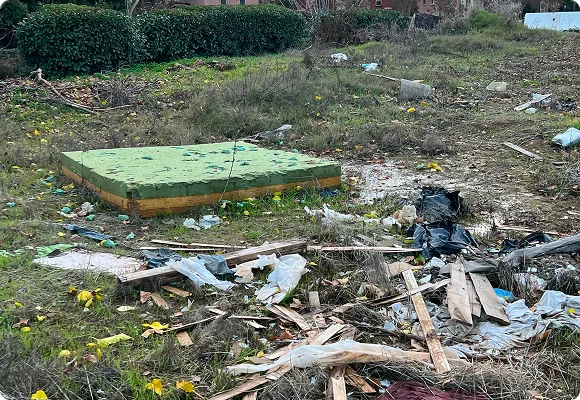
A mattress in a vacant lot, a microwave in a ditch, a sofa behind a shopping center. All illegal, all with significant fines.
Leaving items curbside without approval
An appliance on the curb with a "free" sign is still illegal furniture dumping in most cities if nobody takes it. The item is your responsibility until it is legally removed, so book the pickup before you set it out.
Using non-approved containers
Appliance parts and broken furniture do not go in your trash or recycling cart. Those count as bulky waste violations and can get your regular service suspended.
Transporting items to unapproved facilities
Dropping an old AC unit at a scrap yard that is not certified for refrigerants is a violation for you and for the yard. Use approved, licensed facilities only.
Municipal Pickup and Recycling Programs
Most cities run programs for exactly these items. They are funded through your utility bill, and when you can work within their limits they are the cheapest option there is.
Scheduled bulky item collection
Many cities let you schedule a pickup of a limited number of large items a few times a year. That is the standard path for furniture and other non-hazardous bulky goods.
On-demand pickup options
The City of Sacramento and nearby jurisdictions use an appointment model: you book a date online or by phone. The city furniture pickup is convenient, but the next open date can be weeks away.
Designated drop-off locations
For e-waste and mattresses, some municipalities run designated drop-off points or special collection events during the year.
Recycling initiatives
When you book an appliance pickup with the city, the unit is usually routed to a certified recycler for refrigerant capture and metal recovery. Those appliance recycling centers are the backbone of the system. Contractors, investors and businesses clearing offices use commercial junk removal services when the volume is past what a city program will take.
How Disposal Rules Can Vary by Location
There is no single rulebook. Disposal laws by city differ even between neighbors in the Sacramento area, which is why a crew doing junk removal in Sacramento every day knows which rules apply at which address.
Program availability
Roseville's pickup schedule and frequency differ from Elk Grove's, and so does what the free service includes.
Accepted item lists
One city takes a television in a bulk pickup; the next sends you to an e-waste event. Local bulky waste rules are specific to your address.
Collection frequency
Most cities cap free pickups per year. Use them up and you pay for extra service or wait for the next calendar year.
Regional environmental policies
Local diversion and recycling goals shape the rules. A city with a strong zero-waste policy may require you to separate recyclables from the bulk pile.
Explore More Disposal Guidelines
Appliances, mattresses and furniture are one slice of the rules. These guides cover the rest.
- Recycling Rules for Junk Removal Items: our recycling guidelines for every material type.
- Bulk Item Disposal Rules by City: the bulk disposal rules for your specific city.
- Illegal Dumping Laws in Sacramento County: the dumping regulations and penalties in our region.
- Junk Removal Rules, Laws & Disposal: the hub for all local junk disposal laws and compliance information.
Why Understanding Disposal Laws Helps Prevent Costly Mistakes
A few minutes with the rules saves fines, neighbor complaints and a sofa that sits on the curb for a month.
Avoid unexpected fines
Knowing the rules is the surest way to avoid dumping fines. Book the pickup, follow the placement guidelines, and there is nothing to cite.
Support responsible disposal
Following the law means your old appliances and mattresses actually get recycled, and the hazardous parts get handled instead of buried.
Reduce environmental impact
Proper disposal keeps toxic chemicals out of the soil and water and takes pressure off landfill space that is running out.
Prevent compliance issues
For landlords and property managers, a move-out handled by the rules keeps the property clear of blight violations and cleanup orders. Many owners book residential junk removal in Sacramento to clear appliances, mattresses and furniture the day after turnover.
Working With Experienced Professionals Simplifies Compliance
Three categories, three sets of rules, and a different answer in every city. That is why many homeowners hand it to a Sacramento junk hauling crew and let the compliance ride on the truck.
Familiarity with disposal requirements
We know which items need special handling and which facilities take them.
Responsible hauling practices
Our crew has the equipment and the practice to get a heavy item out of a house without hurting anyone or the door frame.
Proper material routing
Each load goes to the right place. We donate what is usable and recycle what we can: appliances to a recycler, and the rest to a licensed transfer station.
Reduced risk of violations
Once we load it, compliant disposal is our responsibility, and no future violation traces back to you.
Need Help Disposing of Large Household Items Responsibly?
If the rules are unclear or the next city appointment is too far out, we can take the old appliances, mattresses and furniture the right way, usually the same day. Contact our team today to request a quote or schedule a pickup.
Appliance, Mattress & Furniture Disposal. FAQs
Can appliances be thrown away legally?
Not in your regular trash. Appliances must go to a facility that can remove hazardous components like refrigerants. An appliance disposal near me search usually leads to a certified recycler or a junk removal service.
Do mattresses need to be recycled?
Yes. In California it is the law. Mattresses are taken apart for steel, wood and foam, and landfills charge high fees to discourage dumping them, so recycling is both the correct and the cheaper option.
Are couches considered bulky waste?
Yes. Couches and other large furniture are bulky waste, too big for standard collection, and go out through a municipal bulk pickup or a private hauler.
What items require special disposal?
Anything with hazardous components: refrigerators, freezers and AC units (refrigerants), and electronics like TVs and computers (heavy metals).
Do cities offer pickup programs?
Most cities in the Sacramento region offer some free bulk pickup for residents, usually by appointment, with limits on volume, frequency and accepted items.
Can improper disposal lead to fines?
Yes. An appliance or mattress on the curb without a scheduled pickup is illegal dumping and can bring significant fines. Following furniture disposal laws is how you avoid them.


