

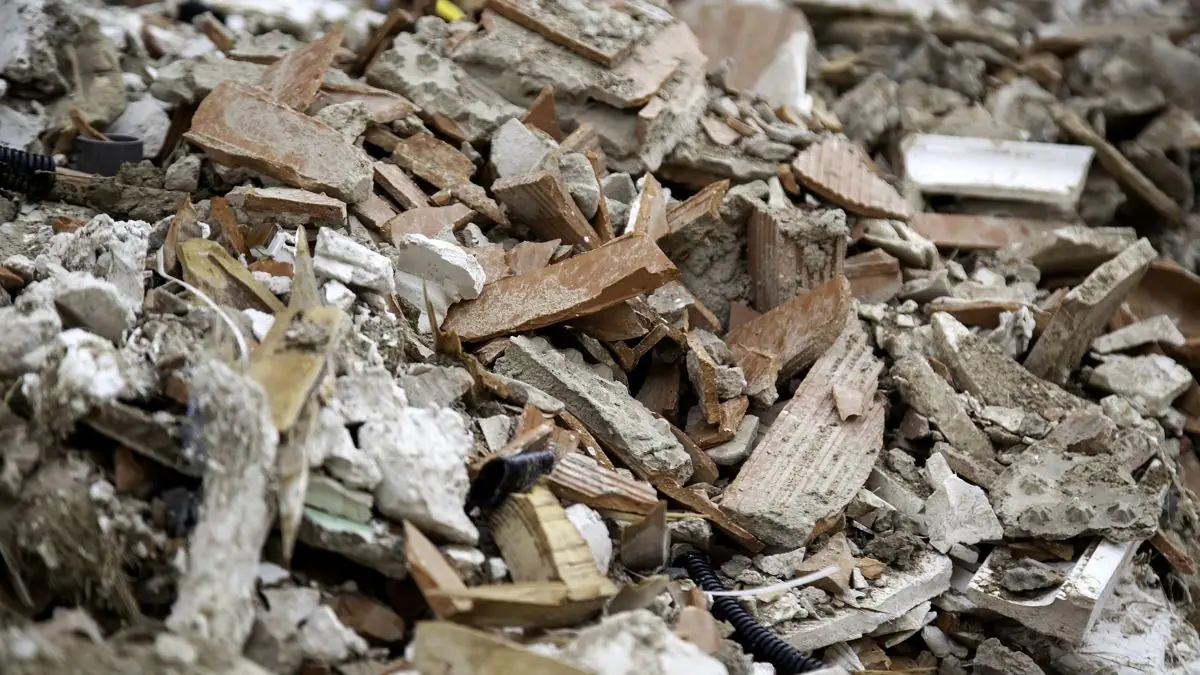
The tear-out wrapped at 3 p.m., and the driveway of a Rancho Cordova remodel is now a pile: two sheets of wet drywall, a run of old cabinets, a toilet, broken tile and forty feet of baseboard. The homeowner asks where it all goes. The honest Sacramento answer is “it depends on what it is,” and getting that wrong costs more than any dump fee.
This is the rules side of junk removal for contractors, remodelers and homeowners: what counts as C&D debris, which facilities take it, what has to be separated, what gets you fined, and what a hauler like us will and will not touch. One thing up front: we are not a C&D hauler. We don’t take mixed construction or demolition debris or do job-site cleanup. We take single-material loads and the household pieces a remodel turns up; construction debris: what we take has that list.
Understanding Construction Waste Regulations in Sacramento
A clean site keeps subs moving and inspectors calm. A sloppy one earns stop-work orders, fines and a liability that follows the contractor, not the laborer who dumped the load. Knowing the local rules is project management, not red tape, and it protects timelines, budgets and your company’s name.
Why Proper Construction Debris Disposal Matters
Helps prevent project delays
A debris pile in the path blocks the electrician, trips the drywall crew and gives a code enforcement officer a reason to stop the job on the spot.
Supports jobsite safety
Lumber with the nails still up, sharp metal offcuts and loose chunks of concrete are a leading cause of jobsite injuries. Sorted piles and clear paths are the fix, and inspectors notice them.
Reduces liability exposure
You own every pound your project generates until it is legally disposed of. If a sub dumps it on a county road, the citation comes to you. Developers, property managers and commercial builders contract a licensed C&D hauler for this reason. Our commercial junk removal services cover furniture, appliances and fixtures, not job-site debris.
Aligns with local requirements
Cities across Sacramento County have their own jobsite waste regulations, written to protect public health and the environment. They are not optional.
What Qualifies as Construction Debris?
What is construction debris? Anything generated by building, renovating or demolishing a structure. Each material has its own disposal path, which is why sorting matters.
Drywall and plaster
Gypsum board is the most common renovation waste. Wet in a landfill it produces hydrogen sulfide gas, so facilities have specific handling rules for it.
Lumber and framing materials
Clean, unpainted framing and sheathing is often recyclable. Pressure-treated, painted or glued wood (particleboard, for example) usually goes to landfill.
Concrete and masonry
Broken concrete, brick, asphalt and cinder block are “aggregate.” Kept clean and separate from trash, aggregate gets crushed into road base and recycled at a high rate.
Roofing materials
Asphalt shingles, clay tile, wood shakes and tar paper. Shingles in particular can be recycled at specialized facilities.
Flooring
Carpet, padding, vinyl and broken tile. The mix of materials and adhesives means most flooring is landfill-bound.
Packaging and jobsite waste
Cardboard, plastic wrap, pallets and food containers pile up on any active site, and managing this building material disposal is most of keeping a site clean. For a small remodel, homeowners can use residential junk removal for the old cabinets, appliances, fixtures and rolled carpet. Mixed debris and drywall go in a debris dumpster or to a licensed C&D hauler.
Approved Disposal Facilities in the Sacramento Area
You cannot take C&D waste to just any dump. These are the licensed destinations in the Sacramento region.
Designated transfer stations
The North Area Recovery Station and similar transfer stations have designated C&D areas and sort loads for recycling or final landfilling.
Construction-approved landfills
Kiefer Landfill takes most of the region’s waste and has its own sections and procedures for construction materials. Not every landfill is permitted for C&D; drive to the wrong one and you are turned around at the gate with a full truck.
Specialized recycling facilities
Clean, sorted concrete or metal is often cheaper to take straight to a recycler. These are the construction waste facilities Sacramento builders use when the goal is recovery rather than burial.
Material recovery centers
Some facilities sort mixed C&D loads with machinery and hand-picking. More expensive per ton than a landfill, and the right call for a mixed, unsorted load.
Restricted Dumping Practices Contractors Should Avoid
Violations of contractor dumping laws almost always start as an attempt to save an hour or a fee.
Unauthorized dumping locations
Vacant lots, rural roads, public alleys. Illegal construction dumping brings heavy fines, possible misdemeanor charges and a reputation hit when the company name is on the citation. One load handled wrong can cost more than a debris dumpster or a licensed C&D hauler for the whole job.
Mixing restricted materials
Paint, solvents, asbestos-containing material and certain chemicals go to a designated household hazardous waste (HHW) facility. Burying them in a load of debris is illegal and dangerous.
Using non-approved containers
Residential trash and recycling bins are off limits for C&D. The material is too heavy and abrasive for the collection system. Use a designated dumpster, a dump truck or a licensed C&D hauler.
Improper transport
Secure and tarp every load. Debris that leaves the truck bed on Highway 50 earns a citation for a road hazard and littering on top of any disposal violation.
Material Separation Requirements on Many Jobsites
Many municipalities in the Sacramento area encourage or require sorting on site. It is also the easiest way to cut disposal fees.
Concrete and aggregate separation
Concrete, brick and asphalt in their own pile stay recyclable and can lower the tipping fee.
Metal recovery
Steel studs, copper pipe, aluminum siding and wiring have real scrap value. A separate metal bin can put money back into the job.
Wood sorting
Clean, untreated lumber becomes mulch or biomass fuel. Painted, treated or glued wood goes to landfill. Our construction recycling guidelines help a crew tell the two apart.
Cardboard and packaging
Flat, dry and in its own pile, cardboard recycles easily and stops filling the expensive general dumpster.
Hazard-sensitive materials
Fluorescent tubes (mercury) and old thermostats are handled separately. That is what construction material separation is for: keeping toxins out of the general stream.
Permit Considerations for Construction Waste
Small jobs do not need a “disposal permit.” Bigger ones have paperwork attached.
Projects requiring disposal documentation
Large commercial and public works projects may need a formal waste management plan as part of the building permit, documenting how every material will be handled, sorted and disposed of.
Municipal oversight
Inspectors may check disposal practices. Staged, sorted material makes that part of the inspection a non-event.
Container placement considerations
A roll-off on a public street usually needs an encroachment permit from the city or county. Skip it and you get a fine plus an order to move the container today.
Debris transport expectations
Hauling your own project’s waste generally needs no permit. Hauling someone else’s for a fee requires registration as a waste hauler, which is one reason to hire a licensed service rather than a guy with a trailer.
Environmental Considerations in Construction Disposal
California clients ask where the debris went. Sustainable construction disposal is a selling point as much as a rule.
Reducing landfill dependency
Every ton recycled is a ton not buried at Kiefer.
Supporting material recovery
Crushed concrete becomes road base, so less rock is quarried. Scrap steel is remelted, so less ore is mined.
Preventing site contamination
Paint and solvents handled correctly keep soil and runoff clean on the lot and next door.
Encouraging responsible hauling
Ask the C&D hauler where each load goes and keep the facility receipts; they are how you show a client or an agency what happened to the debris. We do not provide diversion reports.
How Compliance Helps Keep Projects on Schedule
A compliant waste plan is the cheapest way to avoid construction delays disposal problems cause.
Fewer unexpected interruptions
A tidy site attracts less attention from code enforcement and OSHA. No surprise visits, no stop-work orders.
Reduced regulatory risk
When a licensed professional takes the load, a dumping complaint cannot be traced back to your site. For mixed job-site debris that professional is a C&D hauler or a dumpster company; our junk removal covers single-material loads and household items only.
Smoother inspections
An inspector who walks onto a clean site starts in a better mood, and the mood lasts through the checklist.
Predictable project flow
Put pickups on the schedule like any other trade. Debris never piles up and the subs always have room to work.
Related Construction and Disposal Resources
- Construction Debris Removal: which single-material loads and remodel leftovers we take, and what goes to a C&D hauler.
- Recycling Rules for Junk Removal Items: the broader recycling requirements for each material.
- Illegal Dumping Laws in Sacramento County: the dumping regulations and penalties.
- Junk Removal Rules, Laws & Disposal: our pillar page on local disposal laws.
Working With Experienced Haulers Supports Compliance
You build; a licensed C&D hauler handles the disposal logistics and the paperwork. We are not that hauler, so here is what to expect from one.
Familiarity with facility requirements
They know which gate takes which material and what each scale charges.
Responsible transport practices
Loads tied down and covered to the letter.
Material routing awareness
Sorted material goes to the recycler or disposal facility it belongs at.
Reduced disposal risk
Your compliance risk goes down and the debris is handled correctly.
Why Contractors Benefit From Understanding Local Disposal Rules
Knowing the construction waste rules Sacramento enforces helps you bid tighter and run cleaner.
Helps prevent costly mistakes
No fines, no re-hauls, no days lost to a stop-work order.
Improves jobsite efficiency
Sorting planned from day one fits the workflow instead of fighting it.
Supports professional standards
Clients notice a clean site. So do inspectors, and the next sub walking in.
Protects project timelines
Contractor disposal compliance is schedule protection. Remove the waste risk and the end date holds.
What Take Care Junk Can Haul From a Remodel
When debris outgrows the site, a licensed C&D hauler or a debris dumpster keeps the project moving. The parts that are not mixed debris are ours: a single-material load (metal only, concrete only or clean wood only), or the old cabinets, appliances and fixtures a remodel turns up. Typical examples:
| Load | Typical price |
|---|---|
| A few old cabinets, a vanity and a toilet | Minimum, $99 to $150 |
| A kitchen’s worth of cabinets and appliances | Quarter truck, $180 to $280 |
| Broken-up patio, concrete only | Quoted by weight; text a photo |
See construction debris: what we take, or contact us with a photo of the pile. A concrete-only job looks like this from the customer’s side:
“We sent a picture of the mountain of broken concrete we needed removed and they sent a quote. They came on the agreed date and time, worked quickly and professionally, and were all wrapped up in less than 2 hours. I would 100% use them again and recommend them to anyone looking to make a pile of something disappear.”
Alexander H., YelpConstruction Debris Disposal. FAQs
What counts as construction debris in Sacramento?
Material from building, renovation or demolition: drywall, lumber, concrete, brick, roofing, flooring and insulation. It is handled separately from household trash.
Where can contractors dispose of renovation waste?
Licensed facilities only: designated transfer stations, C&D-approved landfills like Kiefer Landfill, or specialized recyclers that take clean concrete or metal.
Do materials need to be separated before disposal?
Strongly recommended and sometimes required. Clean wood, metal and concrete sorted away from general trash cost less to dispose of and can be recycled. Following contractor disposal rules for sorting is standard practice.
Are permits sometimes required for debris removal?
Hauling your own waste usually needs no permit. Putting a large dumpster on a public street usually needs an encroachment permit from the local municipality.
What materials cannot go to standard landfills?
Hazardous materials: paint, solvents, asbestos, chemicals and certain electronic components. They go to a designated hazardous waste collection facility.
How can contractors avoid disposal violations?
Have a waste management plan. Use a licensed hauling service, place dumpsters legally, never mix hazardous waste with C&D debris, and keep the site organized so it never draws code enforcement in the first place.


