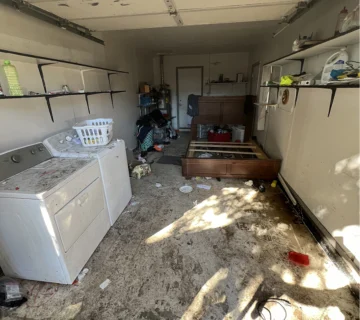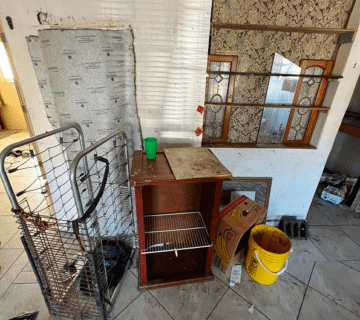

You just finished a weekend garage cleanout, and you’re staring at a pile of old paint cans, a dead TV, and a stained mattress. The easiest move? Drag it all to the curb and forget about it. But that one decision could cost you anywhere from $250 to $10,000 in fines — and Sacramento code enforcement is actively looking for violators.
Most Sacramento homeowners have no idea they’re breaking the law when they toss certain items in the trash. California has some of the strictest waste disposal regulations in the country, and Sacramento County enforces them more aggressively than you might think. In fact, the City of Sacramento even runs a reward program paying $500–$1,000 to residents who report illegal dumping that leads to a citation or conviction.
In this guide, we’ll walk you through the 11 Sacramento junk disposal laws homeowners break most often — what each law says, how much the fines actually are, and exactly how to dispose of each item the right way. Whether you’re cleaning out your Natomas garage or renovating a bungalow in East Sacramento, this list could save you serious money and legal headaches.
🔑 Key Takeaways
- California classifies many common household items — electronics, paint, batteries, motor oil — as hazardous waste that’s illegal to throw in regular trash
- Sacramento junk disposal laws carry fines ranging from $250 to $70,000 per day depending on the violation
- The City of Sacramento pays rewards up to $1,000 for reporting illegal dumping
- Most violations are easily avoided by using Sacramento’s free household hazardous waste (HHW) drop-off facilities
- When in doubt, a licensed junk removal company like Take Care Junk handles sorting, hauling, and proper disposal for you
1. Putting Old Electronics in the Trash
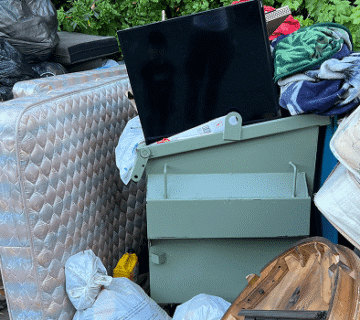
That ancient tube TV collecting dust in your Arden-Arcade garage? You can’t just toss it in the garbage. Under California’s Electronic Waste Recycling Act (SB 20), it’s illegal to dispose of electronic waste — also known as e-waste — in your regular trash or recycling bin.
This law covers a surprising range of items most Sacramento homeowners don’t think twice about throwing away:
- Televisions (CRT, LCD, LED, plasma — all of them)
- Computer monitors and laptops
- Tablets and smartphones
- Printers, scanners, and fax machines
- DVD players and gaming consoles
The fine: The California Department of Toxic Substances Control (DTSC) can impose penalties of up to $70,000 per violation, per day for improper e-waste disposal. While individual homeowners typically face the lower end, even a single citation can run into the hundreds or thousands of dollars.
How to comply: Sacramento makes this easy. Drop off e-waste for free at the North Area Recovery Station (NARS) at 4450 Roseville Road in North Highlands, or at the Sacramento Recycling & Transfer Station at 8491 Fruitridge Road. Many retailers like Best Buy and Staples also accept e-waste at no charge. [INTERNAL LINK: /e-waste-disposal-sacramento/]
💡 Did You Know? California charges an “electronic waste recycling fee” of $5–$10 when you buy new electronics. That fee funds the free drop-off programs — so you’ve already paid for proper disposal.
2. Tossing Leftover Paint in the Garbage
Here’s one that catches almost every homeowner after a DIY project. Latex and oil-based paints are classified as hazardous waste in California, which means dumping them in your trash can, pouring them down the drain, or leaving them in the alley behind your Midtown bungalow is against the law.
Oil-based paints contain volatile organic compounds (VOCs) and toxic heavy metals. Even latex paint — which many people assume is “safe” — can contaminate soil and groundwater when improperly disposed of.
- Oil-based paint: Always classified as hazardous waste
- Latex paint: Must be dried and solidified before disposal, or taken to a collection site
- Spray paint cans: Considered hazardous if not completely empty
The fine: Improper hazardous waste disposal in California carries penalties up to $70,000 per day per violation under DTSC enforcement. For residential violations, expect fines starting in the hundreds of dollars.
How to comply: Take unused paint to Sacramento County’s Household Hazardous Waste (HHW) facilities — it’s completely free for residents. You can also use PaintCare drop-off sites across Sacramento, which accept up to 5 gallons per visit at participating retailers. Call Sacramento County HHW at (916) 875-5555 for locations and hours. [INTERNAL LINK: /hazardous-waste-disposal/]
3. Illegal Dumping on Vacant Lots and Roadsides
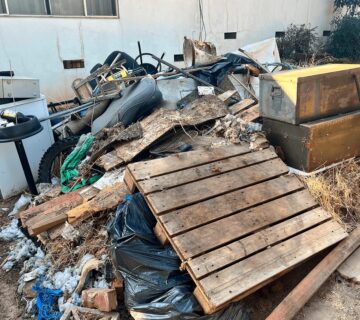
This one’s the big one. Sacramento has a massive illegal dumping problem, and the city is cracking down hard. Under California Penal Code § 374.3, it’s illegal to dump waste matter on any public or private property without authorization — and that includes vacant lots, alleyways, roadsides, and highway shoulders.
We see it constantly along Power Inn Road, in South Sacramento neighborhoods, and near construction sites off Stockton Boulevard. Mattresses, furniture, bags of trash, old appliances — they pile up fast, and someone always pays the price.
The fines (PC 374.3):
| Offense | Fine Range |
| 1st offense | $250 – $1,000 |
| 2nd offense | $500 – $1,500 |
| 3rd offense | $750 – $3,000+ |
| Commercial quantities (1+ cubic yard) | $1,000 – $10,000 + up to 6 months in jail |
Important: A separate violation occurs for every day the waste remains dumped. So a pile left for a week could mean seven separate fines.
How to comply: Use Sacramento’s bulky-item pickup service through your waste hauler, take items to the Florin Perkins Public Disposal Site or Elder Creek Transfer Station, or call a licensed junk removal company to handle it legally. [INTERNAL LINK: /residential-junk-removal/]
⚠️ Pro Tip: The City of Sacramento pays $500–$1,000 rewards to anyone who reports illegal dumping that leads to a citation or arrest. Your neighbors are watching — and they could literally get paid for reporting you. Report dumping at 311 or (916) 264-5011.
4. Not Sorting Your Organic Waste (SB 1383)
Since January 2022, every California household has been required to separate organic waste from regular trash. Under SB 1383, food scraps, yard waste, food-soiled paper, and other organics must go into your green organics bin — not the black garbage can.
Sacramento is enforcing this. The city’s waste collection program requires residents to use the green bin for:
- Food scraps (fruit, vegetables, meat, dairy, bread)
- Yard waste (grass clippings, leaves, small branches)
- Food-soiled paper (pizza boxes, paper towels, napkins)
- Compostable materials
The fine: Jurisdictions can impose penalties for contamination found in residential containers. While Sacramento has focused on education first, CalRecycle is pushing cities to enforce, and fines of $50–$500 per violation are on the table for non-compliant households.
How to comply: It’s simple — use the green bin Sacramento already provides. Line it with newspaper or a compostable bag if you’re worried about mess. For large amounts of yard waste from a landscaping project, schedule an extra pickup or [INTERNAL LINK: /yard-waste-removal/] let a junk removal team handle the overflow.
Need help clearing out a mountain of yard waste or debris? Take Care Junk hauls it all and makes sure organics are composted, not landfilled. [INTERNAL LINK: /contact/] Get a free estimate today.
5. Dumping Used Motor Oil
If you change your own oil — and plenty of Sacramento homeowners do — you cannot dump the used oil on the ground, into a storm drain, or toss the oil-soaked containers in the trash. Under California Health & Safety Code § 25189, improper disposal of used motor oil is a criminal offense.
Just one gallon of used motor oil can contaminate a million gallons of water. In a city that sits at the confluence of the Sacramento and American Rivers, that’s not just a legal issue — it’s an environmental disaster waiting to happen.
The fine: Illegal disposal of used oil can result in fines up to $10,000 and up to six months in jail under California Health & Safety Code § 117555. For larger quantities, DTSC penalties can escalate to $70,000 per day.
How to comply: Nearly every auto parts store in Sacramento — AutoZone, O’Reilly, NAPA — accepts used motor oil for free recycling. Sacramento County’s HHW facilities also take used oil, oil filters, and antifreeze at no cost. Store used oil in a clean, sealed container with a tight lid for transport. [INTERNAL LINK: /what-items-we-take/]
💡 Did You Know? Used motor oil never wears out — it just gets dirty. The oil you recycle at your local Elk Grove or Roseville auto shop gets re-refined and used again. California recycles over 100 million gallons of used oil annually.
6. Mattress Dumping
Sacramento sees thousands of illegally dumped mattresses every year — along roads, in empty lots, and behind strip malls from Rancho Cordova to West Sacramento. It’s one of the most common forms of illegal dumping in the region, and it’s absolutely against the law.
Under California’s Used Mattress Recovery and Recycling Act (SB 254, amended by AB 187), mattress retailers are required to offer free pickup of old mattresses when delivering a new one. There’s also a statewide recycling program funded by a small fee included in the purchase price of every new mattress.
The fine: Dumping a mattress on public or private property falls under PC 374.3 — fines of $250–$3,000 for residential quantities, up to $10,000 plus jail time for commercial quantities. The City of Sacramento actively investigates mattress dumping with its code enforcement team.
How to comply: When buying a new mattress, ask the retailer to take your old one — they’re legally required to offer this. You can also use the Bye Bye Mattress program (byebyemattress.com) to find free drop-off locations across Sacramento. Or schedule a [INTERNAL LINK: /furniture-removal/] mattress pickup with Take Care Junk — we’ll make sure it gets recycled, not dumped.
7. Mixing Construction Debris with Household Trash
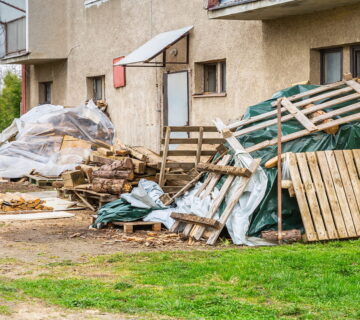
Doing a bathroom remodel in your Carmichael home? Tearing down a backyard shed in Fair Oaks? You cannot mix construction and demolition (C&D) debris with your regular household garbage. Sacramento has specific rules about this — and they’re stricter than most people realize.
Under the California Green Building Standards Code (CALGreen) and Sacramento City Code Chapter 8.124, a minimum of 65% of all construction and demolition debris must be recycled or salvaged. This applies to:
- Drywall and plaster
- Lumber and wood scraps
- Concrete, brick, and asphalt
- Metal framing and fixtures
- Roofing materials
- Carpet and flooring
The fine: Non-compliance with Sacramento’s C&D ordinance can result in fines of up to $1,000 per day the violation continues. Building permits can also be withheld or revoked for projects that don’t submit proper waste diversion documentation.
How to comply: Rent a dedicated C&D debris dumpster or take materials to a certified C&D recycling facility like the GreenWaste Florin Perkins Resource Recovery Facility or the Sierra Waste Recycling and Transfer Station. For smaller renovation projects, [INTERNAL LINK: /construction-debris-removal/] Take Care Junk is a junk removal service rather than a C&D hauler, so mixed construction loads and the diversion paperwork that comes with them are a job for a licensed C&D company. [INTERNAL LINK: /blog/construction-debris-disposal-rules/]
⚠️ Pro Tip: Never mix hazardous materials like paint, solvents, or asbestos-containing items with general C&D debris. These require separate handling and can turn a simple code violation into a serious environmental penalty.
Overwhelmed by renovation debris? Take Care Junk specializes in construction cleanouts across Sacramento. [INTERNAL LINK: /contact/] Call us for a free, no-obligation estimate — we’ll handle the heavy lifting and the proper disposal.
8. Throwing Batteries in the Regular Trash
This is one California disposal regulation that changed dramatically in 2026. Under the Responsible Battery Recycling Act (AB 2440), which took full effect on January 1, 2026, it is illegal to throw any type of battery in your household trash or recycling bin in California. This includes:
- Alkaline batteries (AA, AAA, C, D, 9V)
- Lithium-ion batteries (from phones, laptops, power tools)
- Button cell batteries (watches, hearing aids)
- Rechargeable battery packs
- Battery-embedded products (vapes, electric toothbrushes, etc.)
The fine: Penalties under AB 2440 for producers and handlers can reach up to $50,000 per day. Homeowners tossing batteries in the trash may face hazardous waste violations with fines starting at several hundred dollars per incident.
How to comply: Sacramento County HHW facilities accept all battery types for free. Many retailers — including Home Depot, Lowe’s, and Batteries Plus — have free battery drop-off bins near their entrances. Under the new law, battery producers are required to fund convenient collection programs, so expect even more drop-off locations throughout 2026. [INTERNAL LINK: /e-waste-disposal-sacramento/]
💡 Did You Know? Lithium-ion batteries are one of the leading causes of fires at waste facilities across California. When crushed in a garbage truck or compacted at a landfill, they can spark fires that burn for days. Proper disposal isn’t just about fines — it’s about safety.
9. Putting Fluorescent Bulbs in the Trash
If your Pocket-area home or Land Park duplex still has fluorescent tube lights or compact fluorescent lamps (CFLs), you need to know: throwing them in the trash is illegal in California. Fluorescent bulbs contain mercury, a toxic heavy metal that classifies them as hazardous waste under California’s Universal Waste Rule.
This applies to:
- Fluorescent tubes (the long ones common in garages and kitchens)
- Compact fluorescent lamps (CFLs) — the spiral-shaped energy savers
- High-intensity discharge (HID) lamps
- Neon tubes
- Any lamp containing mercury
The fine: Because mercury-containing lamps are classified as hazardous waste, improper disposal can trigger DTSC penalties of up to $70,000 per day per violation. Even for homeowners, a single citation typically starts at several hundred dollars.
How to comply: Bring fluorescent bulbs to Sacramento County’s HHW facilities at NARS (North Highlands) or drop them at participating retailers like Home Depot and IKEA, which accept them for free recycling. Handle carefully — if a bulb breaks, ventilate the room and clean up with damp paper towels (never vacuum). [INTERNAL LINK: /hazardous-waste-disposal/]
Fun fact: California banned the sale of CFLs starting January 1, 2024 (AB 2208), and linear fluorescent tubes as of January 1, 2025. But millions of these bulbs are still in Sacramento homes. You can keep using them — just dispose of them properly when they burn out.
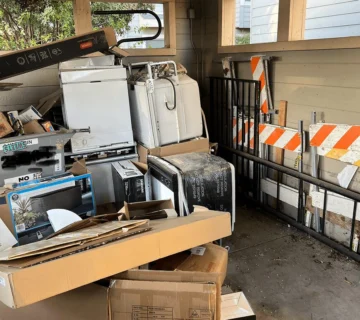
10. Abandoning Appliances Without Removing the Door
This is one of the most serious — and least known — Sacramento junk disposal laws. Under California Penal Code § 402b, it is a misdemeanor to abandon or discard any appliance with an airtight door in a place accessible to children without first removing the door or lid.
This law was enacted specifically to prevent child suffocation deaths. Abandoned refrigerators, freezers, and other appliances with latching doors can trap children who climb inside while playing. It applies to:
- Refrigerators and freezers
- Clothes dryers and washing machines
- Deep-freeze lockers and chest freezers
- Any airtight container large enough for a child to enter
The fine: Violating PC 402b is a misdemeanor, punishable by up to six months in county jail and/or a fine of up to $1,000. This isn’t just a ticket — it creates a criminal record.
How to comply: Before placing any large appliance at the curb or in storage, remove the doors entirely or secure them so they cannot be opened by a child. Better yet, have a licensed junk removal company haul them away properly. Take Care Junk removes refrigerators, freezers, washers, and dryers throughout Sacramento and handles safe, compliant disposal — including Freon recovery for refrigerant-containing appliances. [INTERNAL LINK: /appliance-removal/]
⚠️ Pro Tip: Even if you’re putting an old fridge in your own backyard or garage temporarily, PC 402b applies if children could access the area. Take the door off immediately — don’t wait for pickup day.
11. Dumping Waste Near the American River and Sacramento Waterways
Sacramento is a river city — the American River Parkway is one of our greatest natural treasures, and the Sacramento and American Rivers provide drinking water, recreation, and critical wildlife habitat. Dumping any waste in or near these waterways is a serious state and federal crime.
Under California Fish & Game Code § 5650, it’s unlawful to deposit or permit any substance harmful to fish, plant life, or bird life to pass into California waters. Sacramento City Code § 13.10.130 specifically prohibits dumping refuse in any waterway or upon levees and banks adjacent to them.
Cleanup crews pull hundreds of thousands of pounds of trash from the American River and its tributaries every year. Couches, tires, appliances, construction debris — all of it is illegal, and all of it damages Sacramento’s waterways.
The fine: Dumping in waterways can trigger multiple overlapping penalties:
| Enforcement Body | Potential Penalty |
| Sacramento City Code (§ 13.10.130) | Misdemeanor + fines |
| CA Fish & Game Code (§ 5650) | Up to $25,000 per violation |
| Porter-Cologne Water Quality Act | Up to $10,000/day per violation |
| Federal Clean Water Act | Up to $50,000/day per violation |
How to comply: Never dump anything near rivers, creeks, or storm drains — Sacramento’s storm drains flow directly to the American and Sacramento Rivers without treatment. Use proper disposal channels for all waste types, and if you’re cleaning up a property near a waterway, work with a licensed hauler who understands environmental compliance. [INTERNAL LINK: /residential-junk-removal/]
Don’t Risk the Fines — Dispose of Junk the Right Way
Here’s the reality: most Sacramento homeowners who break these disposal laws don’t even know they’re doing it. You’re not trying to be a criminal — you just want the junk out of your house. But California’s waste disposal regulations are strict, and Sacramento enforces them.
The good news? Compliance is usually free or cheap. Sacramento County’s Household Hazardous Waste facilities accept electronics, paint, batteries, oil, fluorescent bulbs, and more at absolutely no cost. Mattress recycling programs are funded by fees you’ve already paid. And for everything else — from construction debris to full estate cleanouts — a licensed junk removal company can handle the sorting, hauling, and proper disposal so you don’t have to worry about any of it.
Ready to clear out your junk without risking a fine? Call Take Care Junk today at (916) 912-3021 for a free, no-obligation estimate. We offer same-day service across Sacramento, Elk Grove, Folsom, Roseville, West Sacramento, Rancho Cordova, and surrounding areas. We’re locally owned, licensed, and insured — and we donate or recycle a good share of what we haul, so you can feel good about where your stuff ends up.
[INTERNAL LINK: /contact/] Schedule your free estimate now — and leave the disposal regulations to us.
Frequently Asked Questions About Sacramento Junk Disposal Laws
What are the fines for illegal dumping in Sacramento?
Under California Penal Code § 374.3, fines for illegal dumping range from $250 to $1,000 for a first offense and up to $3,000+ for a third offense. If you dump “commercial quantities” (one cubic yard or more), it becomes a misdemeanor with fines up to $10,000 and up to six months in jail. Sacramento’s City Code adds additional enforcement authority, and a new violation is counted for every day the waste remains. [INTERNAL LINK: /blog/illegal-dumping-sacramento/]
Can I throw electronics in the trash in Sacramento?
No. Under California’s Electronic Waste Recycling Act (SB 20), it’s illegal to dispose of e-waste in regular trash. This includes TVs, monitors, computers, tablets, and phones. Sacramento County offers free e-waste drop-off at the North Area Recovery Station and the Sacramento Recycling & Transfer Station on Fruitridge Road.
What happens if I don’t sort my organic waste in Sacramento?
California’s SB 1383 requires all residents to separate food scraps and yard waste into the green organics bin. While Sacramento has focused on education and outreach, CalRecycle is pushing jurisdictions toward enforcement with fines of $50–$500 per violation for non-compliant households. Your best bet: use the green bin.
Where can I dispose of household hazardous waste in Sacramento?
Sacramento County operates free Household Hazardous Waste (HHW) drop-off facilities that accept paint, batteries, motor oil, fluorescent bulbs, pesticides, cleaning chemicals, and more. The main location is the NARS HHW Facility at 4450 Roseville Road, North Highlands. Elk Grove residents can also use the Special Waste Collection Center at 9255 Disposal Lane. Call (916) 875-5555 for hours and details.
Is it really illegal to leave an old fridge at the curb with the door on?
Yes. Under California Penal Code § 402b, abandoning an appliance with an airtight door in any place accessible to children is a misdemeanor punishable by up to six months in jail and a $1,000 fine. Always remove doors from refrigerators, freezers, and other appliances before placing them at the curb or in storage.
Can Take Care Junk help me dispose of items legally?
Absolutely. Take Care Junk is a licensed and insured junk removal company serving Sacramento and surrounding areas. We handle the hauling and proper disposal of household junk, furniture, yard waste and old appliances. We donate or recycle a good share of what we collect, and we know Sacramento’s disposal regulations inside and out. [INTERNAL LINK: /about/] Call us at (916) 912-3021 for a free estimate.