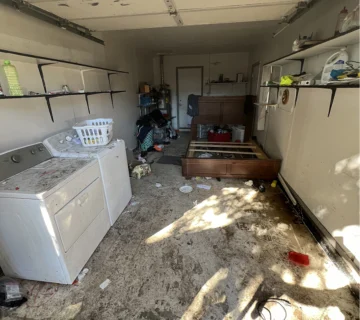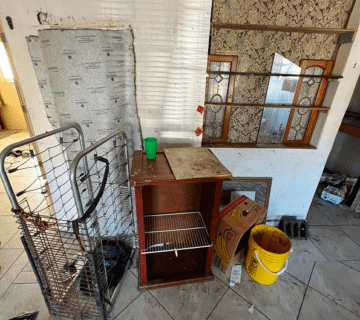
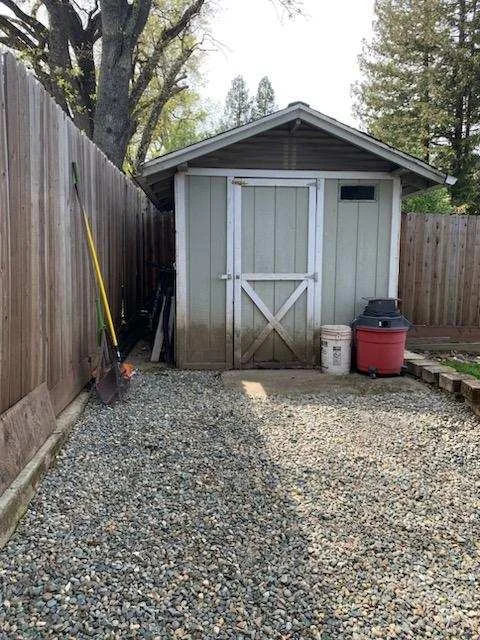
You walk into the backyard, coffee in hand, and there it is — the same sagging, sun-bleached shed that’s been slowly falling apart for the last decade. The door doesn’t close anymore, the roof leaks, and at this point it’s less “storage solution” and more “home for spiders.” Sound familiar? You’re not alone. Thousands of Sacramento homeowners deal with old, unusable sheds taking up prime backyard real estate every year.
Whether you’ve got a rusted-out metal storage unit from the ’90s, a crumbling Tuff Shed that’s seen better days, or a custom-built wood shed that’s finally giving up the ghost, this guide walks you through everything you need to know about shed removal in Sacramento — from the first assessment to the final rake of dirt. We’ll cover permits, demolition approaches, costs, and when it makes sense to call in the pros instead of sweating it out yourself.
📋 Key Takeaways
- Always check Sacramento County permit requirements before starting demolition — sheds over 120 sq ft typically need a demolition permit.
- Disconnect all utilities (electrical, water, gas) before touching anything — this is non-negotiable for safety.
- Shed removal costs in Sacramento typically range from $200–$1,200 depending on size, material, and foundation type.
- Professional removal saves time and hassle — most pros can knock out the entire job in a single day.
- Eco-friendly disposal matters — wood, metal, and other shed materials can often be recycled or donated rather than landfilled.
Step 1: Assess Your Shed (Size, Material, and Foundation Type)
Before you grab a sledgehammer and start swinging, you need to take stock of exactly what you’re dealing with. Not all sheds are created equal, and the type of shed in your Sacramento backyard will dictate everything — from the tools you need to the cost of removal.
Start by identifying these three things:
- Size: Measure the footprint (length × width). A compact 8×8 shed is a very different project than a 12×16 workshop. Jot down the height too, especially if it’s a barn-style or gambrel roof design.
- Material: Sacramento backyards tend to feature three common types:
- Tuff Sheds (the pre-built, T1-11 panel sheds you see everywhere in Elk Grove, Natomas, and Rancho Cordova) — relatively easy to disassemble
- Metal/aluminum storage sheds — lightweight but can have sharp edges during teardown
- Custom-built wood sheds — often the heaviest and most labor-intensive, especially if built with 2×6 framing or real plywood
- Foundation type: Is it sitting on a concrete slab, cinder blocks, gravel, or just bare dirt? A concrete foundation adds significant cost and effort to the removal process.
💡 Pro Tip: Snap photos from all four sides and one of the foundation. If you call a pro for an estimate — like Take Care Junk’s free estimate service [INTERNAL LINK: /contact/] — these photos help them quote you accurately over the phone before even visiting.
Take a close look at the overall structural condition too. A shed that’s heavily rotted or leaning may be a safety risk during demolition. If the structure looks like it could collapse, that’s a strong signal to hire professionals rather than risk a DIY teardown.
Step 2: Check If You Need a Demolition Permit (Sacramento County Rules)
Here’s the step most people skip — and the one that can come back to bite you. Sacramento County and the City of Sacramento have specific rules about demolishing structures, including sheds.
General guidelines for Sacramento area permits:
- Sheds under 120 square feet that sit on a non-permanent foundation (blocks, skids, gravel) typically do not require a demolition permit in unincorporated Sacramento County.
- Sheds over 120 square feet, or those with a permanent concrete foundation, plumbing, or electrical connections, usually do require a permit.
- If your shed is in a historic district (like parts of Midtown or East Sacramento), additional review may apply.
- HOA rules in communities throughout Folsom, Roseville, and Elk Grove may have their own requirements — check your CC&Rs.
You can verify requirements through the Sacramento County Department of Community Development or, within city limits, the City of Sacramento Community Development Department. Permit fees for residential demolition are typically modest — often between $50 and $150 — but skipping the process can result in fines.
📌 Did You Know? Under California law, if your shed contains any materials built before 1978, there’s a chance it may contain lead-based paint or asbestos in roofing materials. Sacramento County requires proper handling and disposal of hazardous materials. If you suspect either, get a test before demolishing. [INTERNAL LINK: /services/junk-removal/]
Step 3: Clear Out the Contents First
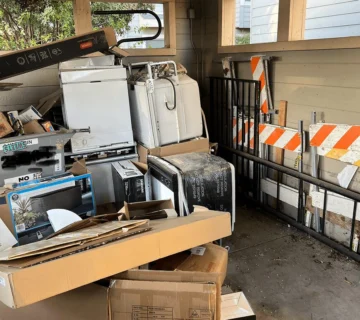
This sounds obvious, but you’d be amazed how many people try to demolish a shed that’s still packed floor-to-ceiling with stuff. Empty it completely before you start any teardown work.
This is actually a great opportunity to declutter and downsize. Here’s a quick sorting system:
- Keep: Items you’ll store elsewhere or actually use
- Donate: Working tools, sports equipment, garden supplies — places like the Sacramento Habitat for Humanity ReStore on Arden Way accept these
- Recycle: Scrap metal, old electronics, and e-waste can go to Sacramento County’s household hazardous waste facilities or SMUD’s recycling programs
- Trash/Junk removal: Broken items, old paint cans (dried out), rotted wood, etc.
If you’ve got a massive cleanout situation — think decades of accumulated stuff — that’s actually one of Take Care Junk’s specialties. We handle full [INTERNAL LINK: /services/estate-cleanouts/] estate cleanouts and shed cleanouts as part of the removal process, so you don’t have to spend a full weekend sorting before the demolition even starts.
Don’t forget to check for: – Chemicals and pesticides (require hazardous waste disposal — CalRecycle has drop-off events in Sacramento County regularly) – Propane tanks – Old gasoline or oil – Nails, screws, and sharp objects scattered on the floor
Step 4: Disconnect Any Utilities (Power, Water, Gas)
This is the most critical safety step in the entire shed removal process. Many Sacramento sheds — especially larger workshops and she-sheds — have been wired for electricity, plumbed for water, or even connected to natural gas for heating.
Before any demolition begins:
- Electricity: Have a licensed electrician disconnect and cap any wiring running from your main panel to the shed. In Sacramento, SMUD is the electricity provider — if there’s a separate meter, contact SMUD to disconnect service. Never cut wires yourself without confirming they’re de-energized.
- Water: Shut off the supply valve and drain the line. If the line runs underground, note its location so you don’t puncture it during demolition.
- Gas: Contact PG&E or your provider to shut off and cap any gas line running to the shed. This is absolutely not a DIY task.
⚠️ Pro Tip: Even if you don’t think your shed has utilities, double-check. Previous homeowners may have run a buried line that you’re unaware of. A quick look at your electrical panel for a “shed” or “outbuilding” breaker can save you from a dangerous surprise. If you’re in Carmichael, Fair Oaks, or other areas with older properties, buried utility runs to outbuildings are especially common.
Need help with the full shed removal process — from disconnection coordination to debris hauling? Take Care Junk handles it all. [INTERNAL LINK: /contact/] Get a free estimate and we’ll walk you through every detail.
Step 5: Choose Your Demolition Approach (Panel-by-Panel vs. Whole Structure)
Now for the part everyone’s been waiting for — the actual teardown. Your approach depends on the shed type, your tools, and your comfort level.
Option A: Panel-by-Panel Disassembly (Best for most sheds)
This is the safest and most controlled method, and it’s how most professionals — including our crew at Take Care Junk — approach shed demolition in Sacramento.
The general sequence:
- Remove the door(s) and windows first
- Strip the roofing material — shingles, metal panels, or rolled roofing
- Remove the roof sheathing and rafters/trusses
- Take down wall panels one at a time, working from the top down
- Disassemble or pull up the floor and any substructure
- Address the foundation last (more on this in Step 6)
Tools typically needed: Reciprocating saw (Sawzall), pry bar, hammer, drill/driver, work gloves, safety glasses, and a sturdy ladder.
Option B: Knock-Down / Push-Over (For small, lightweight sheds only)
For a small metal shed or a flimsy prefab that’s already half-collapsed, some folks opt to simply push it over and cut it apart on the ground. This is faster but messier and riskier. Only consider this for sheds that are:
- Under 8×8 feet
- Lightweight material (thin metal or plastic)
- On a non-permanent base
- In an open area with no fences, trees, or structures nearby
💡 Pro Tip: If you’re disassembling a Tuff Shed (extremely common in Sacramento subdivisions from Natomas to Elk Grove), these are usually built with screws and panels that can be reversed — essentially un-built in the reverse order of assembly. It’s one of the more DIY-friendly shed types to remove.
Step 6: Haul Away the Debris
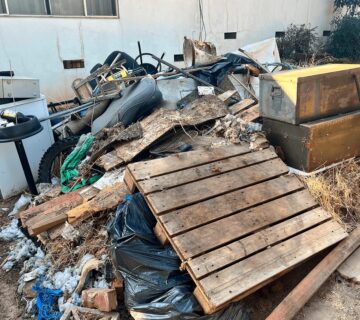
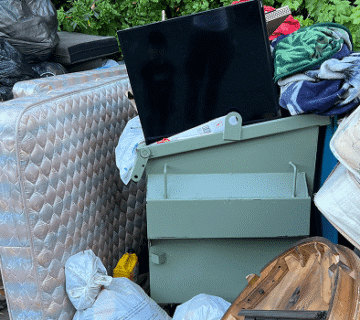
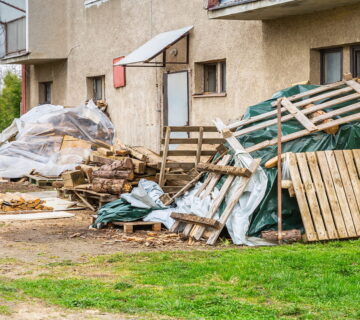
The shed is down — now you’ve got a mountain of debris in your backyard. This is the step where many DIYers hit a wall (no pun intended). Shed debris is bulky, heavy, and doesn’t fit in your green waste bin.
Your debris disposal options in Sacramento:
| Option | Cost Estimate | Pros | Cons |
| Rent a dumpster | $300–$500 for a 10-yard bin | You load at your pace | Multi-day rental; you do all the lifting; potential overage fees |
| Haul it yourself | $50–$150 in dump fees + truck rental | Cheapest option | Multiple trips likely; Sacramento County Transfer Station hours are limited; physically exhausting |
| Hire a junk removal company | $200–$700+ (depends on volume) | They load and haul everything; done in hours | Higher cost than pure DIY |
Sacramento-area disposal facilities:
- Sacramento County Kiefer Landfill (12701 Kiefer Blvd, Sloughhouse) — accepts construction debris; fees by weight
- North Area Recovery Station (4450 Roseville Rd) — closer option for Citrus Heights, Roseville, and Carmichael residents
- L&D Landfill (7900 Fruitridge Rd) — convenient for South Sacramento and Elk Grove
Important note about California regulations: Under AB 1383 (California’s organic waste diversion law), clean wood waste should be diverted from landfills where possible. At Take Care Junk, we make sure to recycle and donate a good share of the materials we haul — including scrap metal, reusable lumber, and other shed components. [INTERNAL LINK: /about/]
Step 7: Restore the Site
Your shed is gone, the debris is hauled away, and now you’re staring at a bare patch of dirt (or an old concrete slab). Don’t skip this final step — proper site restoration protects your property value and prevents future headaches.
If you have a concrete slab or foundation:
- You can leave it in place and repurpose it as a patio pad, hot tub base, or foundation for a new structure
- To remove it: concrete slab breakup and removal typically costs an additional $200–$500 depending on thickness and size
- A jackhammer rental runs about $50–$75/day from Sacramento-area rental shops
If the ground is bare dirt:
- Grade and level the area to prevent water pooling — this matters a lot in Sacramento’s rainy season (November through March)
- Fill any holes left by footings or posts
- Add topsoil and seed for grass, lay sod, or spread gravel
- Consider what you want the space to become: garden bed, extended patio, kids’ play area, or maybe a new and improved shed
📌 Did You Know? A cleared shed footprint can add usable square footage to your backyard and boost your property’s perceived value. Sacramento real estate agents report that a clean, open backyard layout is a major selling point — especially in neighborhoods like Land Park, Curtis Park, and East Sacramento where lot sizes are modest.
Ready to reclaim your backyard? Take Care Junk handles the entire shed removal process from start to finish — emptying the contents, demolishing the structure, hauling every last piece of debris, and leaving you with a clean, level site. Call us today for a free, no-obligation estimate. We offer same-day service across Sacramento, Elk Grove, Folsom, Roseville, West Sacramento, and all surrounding areas. [INTERNAL LINK: /contact/]
DIY vs. Professional Shed Removal: Which Makes Sense?
Still deciding whether to tackle this yourself? Here’s an honest side-by-side comparison:
| Factor | DIY Shed Removal | Professional Removal (Take Care Junk) |
| Cost (small 8×8 shed) | $100–$250 (tools, dump fees, truck rental) | $200–$400 |
| Cost (medium 10×12 shed) | $200–$400 | $400–$700 |
| Cost (large shed / concrete foundation) | $400–$700+ | $700–$1,200 |
| Time required | 1–3 full days (plus dump runs) | 2–6 hours, single visit |
| Tools needed | Sawzall, pry bars, ladder, truck/trailer | All provided |
| Physical difficulty | High — heavy lifting, overhead work, sharp debris | They do the work |
| Debris disposal | You handle multiple dump trips | Included in price |
| Permit coordination | You research and file | Most pros advise or handle |
| Safety risk | Moderate to high (roof collapse, nails, utilities) | Low — experienced crews with proper gear |
| Site cleanup | Up to you | Often included or available as add-on |
The bottom line: If you’ve got a small, simple shed on blocks, basic tools, and a free weekend, DIY can save you money. But for medium to large sheds, concrete foundations, or any shed with utilities, hiring a professional shed removal service in Sacramento is typically worth every penny in time saved and hassle avoided.
[INTERNAL LINK: /services/shed-removal/]
Shed Removal Cost Breakdown for Sacramento (2026)
Here’s a more detailed look at what shed removal in Sacramento typically costs in 2026:
| Shed Size | Material | Foundation | Estimated Pro Cost |
| Small (8×8 or under) | Metal or plastic | Blocks/gravel | $200–$400 |
| Small (8×8 or under) | Wood | Concrete slab | $350–$550 |
| Medium (10×12) | Wood (Tuff Shed style) | Blocks/skids | $400–$700 |
| Medium (10×12) | Wood, custom-built | Concrete slab | $600–$900 |
| Large (12×16+) | Wood, heavy framing | Concrete slab | $700–$1,200 |
| Any size | Any material | + Concrete slab removal | Add $200–$500 |
Costs vary based on accessibility (narrow side yards cost more), contents removal, and current disposal fees at Sacramento County facilities.
FAQ: Shed Removal in Sacramento
How long does it take to remove a shed?
For a professional crew like Take Care Junk, most shed removals take 2 to 6 hours from start to finish, including debris hauling. A DIY project typically takes 1 to 3 full days, not counting dump runs. Larger sheds with concrete foundations can extend the timeline.
Do I need a permit to tear down a shed in Sacramento?
It depends on the size and features. In most cases, sheds under 120 square feet on a non-permanent foundation don’t require a demolition permit in Sacramento County. Larger sheds, or those with electrical/plumbing connections, typically do. Always check with the Sacramento County Department of Community Development or your city’s building department to be sure.
Can I burn my old shed instead of demolishing it?
No. Open burning of construction debris is illegal in Sacramento County and throughout the Sacramento Metropolitan Air Quality Management District (SMAQMD). Violations carry significant fines. The only legal options are demolition and proper disposal, recycling, or repurposing.
What happens to the shed materials after removal?
At Take Care Junk, we’re committed to eco-friendly disposal. We sort materials on-site or at our facility — scrap metal goes to Sacramento-area recyclers, reusable lumber and hardware is donated where possible, and only non-recyclable waste goes to the landfill. On average, we divert a good share of shed materials from landfills. [INTERNAL LINK: /about/]
Should I remove the concrete slab too?
Not necessarily. If the slab is in good condition and level, it can serve as a ready-made patio, a base for a new shed or gazebo, or a spot for outdoor furniture. Removing concrete adds cost ($200–$500 typically) and isn’t always worth it unless you need the ground clear for landscaping or gardening.
Can Take Care Junk handle the entire process — cleanout, demolition, and hauling?
Absolutely. That’s actually our specialty. We’ll empty the shed contents (sorting donations and recyclables from trash), demolish the structure safely, load all debris into our trucks, and leave your yard clean. It’s a true one-call, full-service shed removal experience. [INTERNAL LINK: /services/junk-removal/] Give us a call or request your free estimate online — we offer same-day service across the greater Sacramento area.
Take Care Junk is Sacramento’s locally owned, eco-friendly junk removal company. From shed demolition to estate cleanouts, we handle it all — responsibly. Serving Sacramento, Elk Grove, Folsom, Roseville, West Sacramento, Rancho Cordova, Citrus Heights, Carmichael, Davis, Woodland, Natomas, Rocklin, and surrounding communities.