

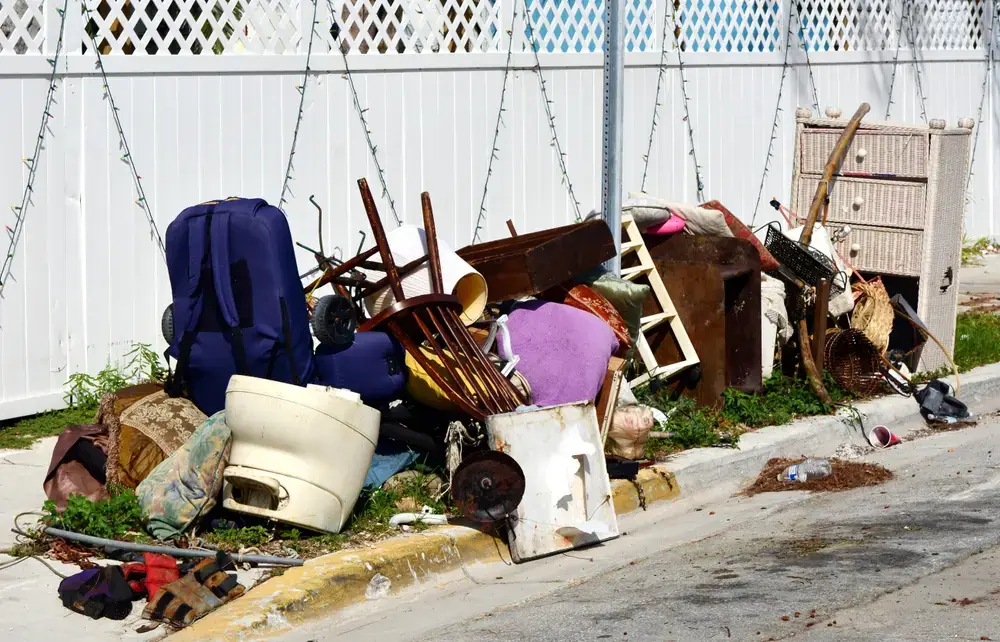
It is Sunday night in Rancho Cordova and the black cart is full, the blue cart has a pizza box in it that probably should not be there, and there is a dead dryer in the garage that has been waiting since spring. This guide sorts all three problems: what goes in which cart, how the two free bulky pickups work, where paint and batteries go, and what the city does about dumping. For big cleanouts and items that will not fit in any bin, many residents use professional junk removal services, and we cover when that makes sense too.
Understanding Your Curbside Collection Service
Weekly collection in Rancho Cordova is a three-cart system run by Republic Services: one cart for trash, one for recycling, one for organics. Sorting correctly is what keeps material out of the landfill. When a household is clearing a garage or a whole house, the carts are not enough, and that is where residential junk removal services come in.
The Three-Cart System Explained
The wrong item in the wrong cart contaminates the load, and a contaminated load of recycling or compost goes to the landfill anyway. Here is what belongs where.
The Black Cart: Landfill/Trash
The black cart is for what cannot be recycled or composted. It is the last resort, and the goal is to keep it light.
What Belongs in the Black Cart:
- Plastic bags, films and wrappers (chip bags, plastic wrap)
- Foam products (Styrofoam cups, plates, packing peanuts)
- Broken glass, ceramics and dishes
- Diapers and wipes
- Pet waste and kitty litter
- Palm fronds and yucca plants (they do not compost well)
- Treated or painted wood
- Juice pouches and similar mixed-material packaging
Hazardous waste, electronics, batteries and fluorescent bulbs never go in the black cart. Those have their own drop-off, covered below.
The Blue Cart: Recycling
The blue cart is for clean, dry recyclables. The program only works if the cart holds what the sorting facility can actually use.
What Belongs in the Blue Cart:
- Paper and Cardboard: flattened boxes, newspapers, magazines, mail, office paper and paperboard like cereal boxes. Do not shred it; small pieces jam the sorting machinery.
- Plastics: bottles, jugs and containers marked #1 through #7. Empty them and give them a light rinse. Lids can stay on.
- Metal: aluminum, steel and tin cans, emptied and rinsed.
- Glass: clean bottles and jars, any color.
Common Recycling Mistakes to Avoid:
- "Wishcycling": tossing something in the blue cart because it might be recyclable. Plastic bags, food-soiled containers and electronics contaminate the whole load.
- Bagging Recyclables: never bag them. The bag is not recyclable curbside and it fouls the sorting line. Put items in loose.
- Food Contamination: one greasy pizza box or half-full peanut butter jar can ruin a batch. Clean out food containers first.
The same rules hold in nearby Citrus Heights and most of the county: clean, loose, and only what the list says.
The Green Cart: Organics/Yard Waste
The green cart feeds a commercial compost operation, which cuts landfill methane and turns your scraps into soil amendment.
What Belongs in the Green Cart:
- Yard Trimmings: grass clippings, leaves, weeds, small branches (under 4 inches in diameter) and general yard waste.
- Food Scraps: all food waste, including fruit, vegetables, meat, poultry, fish, dairy, bread and eggshells.
- Food-Soiled Paper: uncoated paper with food on it: greasy pizza boxes, paper towels, napkins, coffee filters.
Important Notes for Your Green Cart:
- No plastic bags of any kind, including ones labeled "compostable" or "biodegradable." They do not break down at the commercial facility. Put scraps in loose or in a paper bag.
- No pet waste, palm fronds or treated wood.
Using the green cart properly is Rancho Cordova's share of California's statewide push to keep organic waste out of landfills.
Collection Schedule and Guidelines
To make sure the truck actually empties your carts:
- Carts at the curb by 6 a.m. on your collection day.
- Wheels facing the house, lid opening toward the street.
- At least two feet between carts and three feet from parked cars, mailboxes or trees.
- Lids fully closed. An overfilled cart may be skipped.
If you occasionally have more trash than the cart holds, Republic Services sells extra trash bags that will be collected with it.
Managing Bulky Waste and Large Items
Every house eventually has something that will not fit in a cart: a couch, a dryer, a mattress. Rancho Cordova has a program for those, and when the program is not enough, homeowners book professional junk hauling services to get the items out the same week.
The Bulky Waste Pickup Program
Residents with an active Republic Services account get two free bulky waste pickups per calendar year for large household items.
How to Schedule a Bulky Waste Pickup:
- Contact Republic Services: schedule in advance by phone or through their online portal.
- Specify Your Items: list what you plan to set out so the crew knows what is coming.
- Follow Placement Instructions: on the day, stack the items in a neat pile at the curb, apart from your carts and clear of obstructions.
Acceptable Items for Bulky Pickup:
- Furniture (sofas, chairs, tables, bed frames)
- Mattresses and box springs
- Appliances (refrigerators, stoves, washers, dryers)
- Water heaters
- Rugs and carpets (rolled and tied)
- General household junk too large for your cart
The pile is capped at about 5 cubic yards, roughly a standard pickup truck bed. Construction debris and hazardous waste are not accepted.
When Professional Junk Removal is the Better Option
The free program is a good deal with three limits: two pickups a year, a 5-yard pile, and you carry everything to the curb yourself. When the job is bigger than that, or the dryer has to go this week, a hauling crew does the loading, hauling and disposal in one visit, and same-day junk removal skips the wait for a city date entirely. The jobs where that matters most:
- Estate Cleanouts: clearing a relative's home is hard physically and emotionally. A crew handles it efficiently and respectfully.
- Garage or Shed Cleanouts: getting the space back from years of accumulation.
- Construction & Remodeling Debris: city pickups will not take construction waste. Take Care Junk takes single-material loads (metal only, concrete only, or clean wood only); mixed remodel debris such as drywall goes to a licensed C&D hauler or a debris dumpster.
- Appliance and E-Waste Recycling: refrigerators and other appliances go to a recycler, and a few electronics alongside a pickup get dropped at an e-waste recycler.
What that looks like from the customer side, for the pile that never fit in a cart:
“We called TCJ Hauling to pick up some old stuff we’d had on the side of the house for a while. He arrived within the time frame he said he would, same day, and even got a few neighbors to give him more business. I will definitely seek out his services again.”
Jaime S., YelpSpecial Waste Disposal: Hazardous and Electronic Waste
The strictest disposal rules cover toxic and hazardous items. Paint, chemicals, batteries and electronics never go in any curbside cart, because they contaminate soil and groundwater when they are landfilled.
Household Hazardous Waste (HHW)
HHW is any product whose label says "toxic," "danger," "poison," "corrosive" or "flammable."
Common HHW Items:
- Paints, stains and varnishes
- Cleaning supplies (bleach, ammonia, drain cleaners)
- Pesticides, herbicides and fertilizers
- Automotive fluids (motor oil, antifreeze, brake fluid)
- Pool chemicals
- Propane tanks and barbecue cylinders
Rancho Cordova residents can drop HHW for free at designated collection facilities. The primary location is the Sacramento County North Area Recovery Station, and proof of residency is typically required. Trained staff handle the material from there.
Universal Waste (U-Waste) and Electronic Waste (E-Waste)
U-Waste is the hazardous category that covers common household items, and E-Waste is its biggest part.
Common U-Waste and E-Waste Items:
- Batteries (all types: AA, AAA, lithium-ion, car batteries)
- Fluorescent bulbs and tubes
- Thermostats and other mercury-containing devices
- Electronics (computers, TVs, monitors, printers, cell phones)
These carry lead, mercury and cadmium, and like HHW they go to a designated collection facility or a certified recycler. Many retail stores take back batteries and cell phones. For a large volume of E-Waste, such as an office cleanout or an equipment upgrade, go to an e-waste recycler directly. A junk removal service can carry a few electronics with a regular pickup and drop them at an e-waste recycler, and our commercial junk removal services handle the furniture and other non-hazardous items from the same office.
Illegal Dumping: A Costly Problem for Everyone
Illegal dumping is leaving waste anywhere unauthorized: a public street, a vacant lot, a commercial dumpster you do not pay for. It is a crime with real fines, not just an eyesore.
Why Illegal Dumping is Harmful
- Environmental Damage: dumped waste pollutes waterways and soil and harms local wildlife.
- Public Health Risks: piles draw rodents and insects and create unsanitary conditions.
- Economic Costs: the city and its taxpayers pay for every cleanup, money that would otherwise go to parks, roads and services.
- Reduced Property Values: neighborhoods with chronic dumping lose value and quality of life.
The city of Rancho Cordova takes it seriously and asks residents to report what they see.
How to Report Illegal Dumping
If you see dumping in progress, do not confront anyone. From a safe spot, note the license plate, a description of the vehicle and person, the location and what was dumped. Report it to the Rancho Cordova Code Enforcement division or through the city's mobile app.
The best defense is using the legal options, which exist for every kind of item: weekly collection, a scheduled bulky pickup, a county facility drop-off or a junk removal service. Neighboring communities fight the same problem and rely on the same thing: residents who notice.
Tips for Reducing Waste in Rancho Cordova
Proper disposal matters, but the cheapest waste is the kind you never make. Three habits do most of the work.
Practice the "Three Rs"
- Reduce: ask whether you need it before you buy it. Pick products with less packaging, buy in bulk, and switch to reusable water bottles, coffee cups and shopping bags.
- Reuse: before anything goes out, ask whether it has a second life. Jars become storage, clothes get repaired or donated, furniture gets refinished. Hold a garage sale, sell online, or donate usable goods to local thrift stores and charities.
- Recycle: after reducing and reusing, recycle, and follow the blue cart rules above so it actually counts.
Composting at Home
The green cart takes food scraps, but a backyard pile or a worm bin turns them into compost for your own garden, cuts your need for fertilizer, and closes the loop at home.
Responsible Shopping
- Choose Durability: buy things that last instead of things you will replace.
- Avoid Single-Use Plastics: skip plastic straws, disposable cutlery and plastic shopping bags.
- Support Sustainable Brands: favor companies that use recycled content and stand behind sustainable practices.
Your Guide to a Cleaner Rancho Cordova
Sort into the three carts, use the two free bulky pickups for the big items, and take hazardous materials to the county facility. That handles most of what a household produces in a year.
For the rest, the garage that has not been parked in since 2019 or the house that needs to be empty by Friday, professional junk removal services do the lifting, hauling and disposal in one visit. Text us a photo and we will tell you what it costs. Either way, the goal is the same: less in the landfill and a cleaner Rancho Cordova.


