

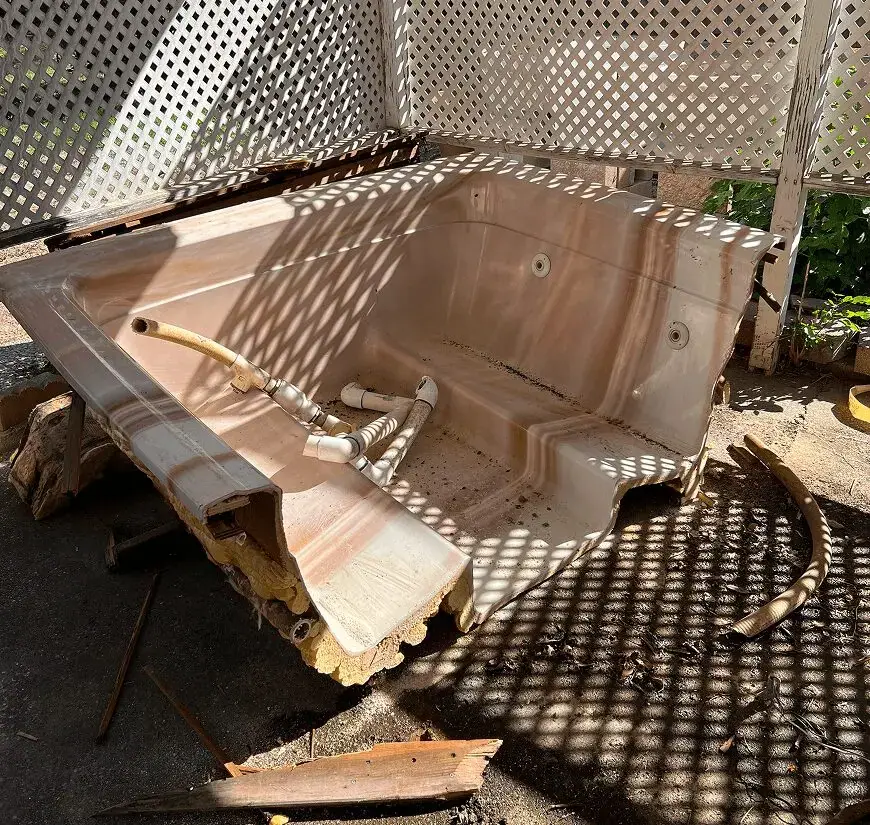
The truck comes Saturday. The boxes are the easy part. The hard part is everything that does not go in a box: the sectional that only came in through the patio door, the upright piano nobody has played in years, the garage fridge that hums too loud, the hot tub out back. Each one has to be measured, taken apart, wrapped and carried, or let go before you hand over the keys.
This checklist covers moving the biggest, heaviest things in a house, item by item, and which ones are worth the trip at all. For the pieces that stay behind, a junk removal crew can clear them in one visit anywhere in the greater Sacramento area.
The Foundation: Planning and Measurement
Winging it with a 300-pound piece of furniture is how door frames get gouged and fingers get pinched. Plan before anyone lifts anything.
Create a Master Inventory
Walk the house and list everything that will not fit in a standard moving box. It is not just furniture:
- Living room: sofas, sectionals, loveseats, large armchairs, entertainment centers, big coffee tables, bookcases.
- Dining room: table and chairs, buffets, sideboards, china cabinets.
- Bedroom: bed frames (headboards and footboards especially), dressers, chests, armoires.
- Kitchen and appliances: refrigerator, range, dishwasher, washer, dryer.
- Specialty items: pianos, pool tables, hot tubs, large safes, grandfather clocks, treadmills and ellipticals.
- Outdoor: patio furniture sets, grills, large planters, play structures.
Next to each item, write one decision: Keep, Sell/Donate, or Junk.
The “Is It Worth Moving?” Calculation
Movers charge by weight and volume, so every heavy piece carries its own price on moving day. Run each one through four checks:
- Cost: ask your mover to price the heavy items one by one. Is a new refrigerator in the new city cheaper than moving the old one? For particleboard furniture from big-box stores, replacing it almost always wins.
- Physical fit: measure the item (width, depth, height), then the room it is headed for. Measure the doorways, hallways and stairwells at both houses too. A beautiful armoire that cannot get into the bedroom is useless.
- Lifestyle fit: downsizing? The formal dining set may not have a room anymore. Moving somewhere warm? The ski gear storage unit can stay behind.
- Condition: moving is hard on furniture. A wobbly bookcase or a stained, sagging couch may not survive the trip, and paying to move something that breaks on arrival is the worst outcome.
Good pieces that miss the cut can be sold or donated. The broken-down appliances, the damaged furniture and the old hot tub need a different exit, which is the last section of this checklist.
Preparing Your Large Items for the Move
Prep protects the piece, both houses and the people carrying it.
Gather the Right Tools and Supplies
- Measuring tape: the most important tool on this list.
- Furniture sliders: heavy pieces glide across floors without scratching them.
- Moving blankets or pads: the first line of defense against scratches and dings.
- Stretch wrap: holds the blankets on and keeps drawers and doors shut.
- Bubble wrap: for delicate parts and finishes.
- Basic toolkit: screwdrivers, wrenches and pliers for disassembly.
- Ziplock bags: screws, bolts and small parts, labeled by piece.
- Heavy-duty dolly or hand truck: not optional for appliances and other heavy, boxy items.
The Art of Disassembly
Most large furniture was never meant to move in one piece. Taken apart, it is lighter, smaller and far easier to get around a tight turn.
- Tables: take the legs off. Wrap the legs together and the top separately in a moving blanket.
- Beds: break the frame down completely. Every screw, bolt and washer goes in a labeled bag taped to the headboard.
- Bookcases and shelving: pull every shelf and pack them separately. The frame gets much lighter and less rigid.
- Desks and entertainment centers: remove drawers, shelves and any section that detaches. Take photos as you go so reassembly is not guesswork.
Label everything. A bag marked “top left hinge screws, china cabinet” beats a pile of mystery screws on the floor of the new house.
Checklist for Specific Large Items
Each big item has its own way of going wrong. Here is how to handle the usual suspects.
Moving Large Furniture: Sofas and Sectionals
- Measure everything: length, depth and height, plus the diagonal height, from the top of the back frame to the bottom of the front frame. That number decides whether the sofa can be angled through a doorway. Then measure every doorway, hallway and stairwell on the route.
- Strip it down: cushions and pillows come off and get packed separately. Unscrew the legs if you can; that alone can buy a few crucial inches.
- Protect it: wrap the whole piece in moving blankets or stretch wrap, with extra padding on the corners, which take most of the hits.
- Clear the path: rugs, side tables and anything else between the room and the truck come out first.
- Pivot and angle: stand the sofa on its end to get around tight corners, or tilt it diagonally through a narrow doorway. It takes two or three strong people.
If the tape measure says the sectional will never fit the new living room, you want that answer before moving day, not on the new porch.
Moving Major Appliances
Appliances like refrigerators, washers and dryers are heavy and full of parts that do not like being tipped. If they are coming with you, do it right. If they are old and staying behind, that is a junk removal job, not a moving job.
Refrigerator:
- Empty and clean: start eating down the food a week out. The day before, empty it, turn it off and disconnect the water line if it has an ice maker.
- Defrost and dry: let the freezer defrost fully, then clean and dry the inside so it does not grow mildew in the truck.
- Secure loose parts: remove the shelves and drawers, or tape them firmly in place.
- Close the doors: tape or tie them shut. Painter’s tape will not damage the finish.
- Keep it upright: move it on a heavy-duty appliance dolly, as upright as possible, to protect the compressor. At the new house, let it stand upright for several hours before plugging it in.
Washer and Dryer:
- Disconnect: unplug both, disconnect the washer’s water inlet hoses and the dryer’s exhaust vent, and drain the leftover water from the washer hoses into a bucket.
- Lock the drum: a front-loading washer needs its shipping bolts put back in so the drum cannot swing and get damaged. Lost the originals? The manufacturer sells a new set.
- Clean and dry: empty the dryer’s lint trap and make sure both machines are dry inside.
- Protect and roll: wrap them in moving blankets and move them on a dolly.
Moving Specialty and High-Value Items
These often need professional help. Without the right equipment, a do-it-yourself move can mean costly damage or a serious injury.
Pianos:
An upright piano weighs between 300 and 800 pounds. A grand can easily pass 1,000.
- Hire piano movers: this is our first recommendation. They bring piano boards, skid boards and locking straps, and the experience to use them.
- If you must do it yourself (spinets and small uprights only):
- Build a team: at least four strong people.
- Protect it: close and lock the keyboard lid, then wrap the whole piano in several layers of moving blankets, with extra on the corners and legs.
- Dolly it: secure it to a four-wheel dolly built for heavy loads.
- Go slowly: call out every step to the team. Never lift by the legs.
If nobody has played it in years, it may not be worth moving at all. Hauling an old piano out of a house is a normal day for us.
“They took my mini grand piano out of my house with no problem! Quick, easy and without any problems!”
Ciara Rose, GooglePool Tables:
A pool table is heavy, but it is also a precision piece of equipment. The playing surface is slate: very heavy, and brittle enough to crack.
- Professional disassembly: we strongly advise hiring a pool table pro to take it down, move it and set it up again. They remove the felt, take off the rails and crate each slate piece separately, then reassemble and level the table in the new house.
- The DIY risk: a bad move means a warped frame, torn felt or cracked slate, and a ruined table. The pro costs far less than a new one.
Hot Tubs and Spas:
Moving a hot tub is a major undertaking: very heavy and very awkward.
- Disconnect and drain: the power has to be disconnected first, by a licensed electrician. Drain it through the drain valve and get the last of the water out with a shop-vac.
- Bring a crowd: four to six people and several dollies, or a specialized spa dolly.
- Tip and roll: turn it on its side onto the dollies and work it to the truck. It is slow, difficult and risky.
- The better option for an old tub: let it go. Professional junk removal crews take old hot tubs apart and haul them off, which saves you the labor and the risk. We do not do electrical work, so a licensed electrician disconnects the power first; after that, removal typically runs $300 to $600+.
The Final Step: Clearing Out What’s Left Behind
Every move leaves a pile. The old couch that will not fit, the refrigerator on its last legs, the particleboard bookcase that was not worth the effort. It cannot stay for the buyer or the landlord. Hauling it yourself means solving three problems:
- Transportation: a sofa or a fridge needs a truck, not a hatchback.
- Labor: someone has to help you lift and load it safely.
- Disposal fees and rules: landfills and transfer stations have their own rules and fees, especially for appliances and electronics.
City bulky pickup works for a few items if you can wait for the appointment. A move-out pile is usually bigger than that: oversized furniture, old appliances, mattresses, sometimes a hot tub. That is a job for a crew with a truck, and it takes the repeat dump runs off a week that is already full.
The Professional Junk Removal Solution
Instead of spending your last days in the house hauling junk, make one call:
- One appointment: a crew clears the leftover large items in a single visit, often in a couple of hours, while you finish packing and cleaning.
- Safe lifting: our crews are trained and insured, with the equipment to take out a heavy dresser or an old washer without anyone getting hurt on moving week.
- Point and it goes: we do all the lifting, loading and hauling, in downtown Sacramento or out in Rocklin.
- Sorted loads: not everything goes to the landfill. We donate what’s usable and recycle what we can, the rest goes to the right facility, and a few electronics on the load go to an e-waste recycler.
The price depends on how much of the truck the leftovers fill:
| Load | Typical price | What that looks like |
|---|---|---|
| Minimum | $99 to $150 | One old couch, a broken dresser or the garage fridge |
| Quarter truck | $180 to $280 | A couch, an old refrigerator and a mattress set |
| Half truck | $320 to $480 | A full living room or a whole bedroom set |
| Full truck | $850 to $1,000 | Every piece of furniture you are not taking |
Weight and long carries can move the number, and we confirm it before we load anything. No dump fee gets added later, and booking online saves $20.
The big pieces are the hardest part of any move. Measure early, take apart what comes apart, hire specialists for the piano and the pool table, and be honest about what is worth the trip. For everything that is not, contact us for a free estimate and check one more major item off your moving checklist before you hand over the keys.


