
Decluttering your home is a fantastic way to refresh your living space, but it inevitably leaves you with piles of items you no longer need. Whether you are clearing out your closet, updating your kitchenware, or simply simplifying your life, you face a common dilemma. What should you do with all those gently used clothes, books, and household goods? Tossing them in the trash contributes to overflowing landfills and wastes perfectly good resources.
Donating your household items offers a meaningful alternative. It allows you to clear your space while providing essential goods to people who truly need them. The Sacramento area features numerous incredible charitable organizations and local shelters that rely on community donations to fund their programs and help vulnerable populations.
Choosing where to donate your household items helps you clear your space while supporting organizations that rely on community contributions.
The Real Impact of Your Household Donations
Choosing to box up your unwanted items and drive them to a local donation center requires a little extra effort. However, that effort pays off immensely for both your local community and the environment. Understanding the impact of your actions makes the decluttering process incredibly rewarding.
Protecting the Environment
Every single day, thousands of tons of usable household goods end up in local landfills. Items like clothing, plastic toys, and electronic goods take decades or even centuries to decompose. Furthermore, manufacturing brand-new items requires massive amounts of water, electricity, and raw materials.
When you donate your gently used household items, you actively participate in the circular economy. You give a pair of jeans or a set of dishes a second life. This reduces the demand for new manufacturing, lowers greenhouse gas emissions associated with shipping new goods, and keeps perfectly usable materials out of the waste stream. It is a simple, effective way to reduce your personal carbon footprint.
Strengthening the Sacramento Community
Many families throughout the Sacramento area operate on tight budgets. Purchasing brand-new clothing for growing children or outfitting a kitchen with new appliances is simply out of reach for a significant portion of our community.
Thrift stores run by charitable organizations sell donated items at deeply discounted prices. This allows lower-income households to access the things they need without sacrificing their budget for rent or groceries. Additionally, many shelters provide these items directly to individuals transitioning out of homelessness or fleeing dangerous domestic situations. Your old winter coat could quite literally keep a neighbor warm this season.
Funding Crucial Support Programs
When you drop off a box of books or a bag of clothing, charities process and sell those items in their retail stores. The revenue generated from these sales does not go into the pockets of shareholders. Instead, it funds vital community programs.
Depending on the charity you choose, your donations could help fund substance abuse rehabilitation centers, youth mentorship programs, job training initiatives, or animal welfare services. Your unwanted household items transform directly into financial support for causes that elevate the entire region.
Charities That Accept Household Donations
Sacramento is home to a diverse array of nonprofit organizations that accept household goods. Each charity has a unique mission and operates different support programs. Here are some of the best places to bring your donations.
The Salvation Army
The Salvation Army is one of the most well-known charitable organizations in the world, and they maintain a strong presence in the Sacramento area. They operate several Family Stores throughout the region. The proceeds generated from the sale of donated goods entirely fund their Adult Rehabilitation Centers. These centers provide housing, food, counseling, and spiritual support to individuals working to overcome addiction and re-enter society successfully.
They accept a vast array of household donations. You can drop off clothing, shoes, accessories, books, kitchenware, home decor, and small working appliances. They make the donation process easy with multiple drop-off locations and a free pickup service for larger, bulkier donations.
Goodwill Sacramento Valley & Northern Nevada
Goodwill focuses heavily on empowering individuals through employment. Their mission is to provide job training, career counseling, and job placement services for people facing barriers to employment, such as individuals with disabilities or those lacking work experience.
You can find Goodwill donation centers and retail stores conveniently located across almost every neighborhood in Sacramento. They are highly efficient at processing donations. You can pull your car up to a donation door, and an attendant will help you unload bags of clothing, toys, electronics, and general household items. They accept almost everything, provided it is clean and in usable condition.
WEAVE (Women Escaping A Violent Environment)
WEAVE is the primary provider of crisis intervention services for survivors of domestic violence and sexual assault in Sacramento County. They provide a safe haven, legal assistance, and counseling for individuals and families fleeing abusive situations.
To help fund these critical services, WEAVE operates specialized retail thrift stores. They accept donations of high-quality women’s, men’s, and children’s clothing, as well as jewelry, shoes, and pristine home decor. Because their retail space is smaller than massive warehouse stores, they prefer items that are in excellent, ready-to-sell condition. Donating here ensures your items directly support the safety and healing of local survivors.
Sacramento SPCA Thrift Store
If you are passionate about animal welfare, the Sacramento SPCA Thrift Store is an excellent destination for your household goods. Every single purchase made at their thrift store supports the thousands of homeless, injured, and abandoned animals that enter the SPCA shelter each year. The funds help pay for veterinary care, food, shelter, and adoption programs.
They gladly accept gently used clothing, books, kitchen items, small appliances, and home accessories. They also often accept clean, gently used pet supplies like crates or leashes. Dropping your unwanted items off at their location means you are directly contributing to the well-being of animals in your community.
Deseret Industries Thrift Store
Deseret Industries, commonly known as DI, operates as a vocational rehabilitation facility. They provide job training and employment opportunities for individuals looking to build new skills. Their massive retail stores feature a huge selection of affordable household goods.
They accept clothing, toys, books, kitchenware, and sporting goods. They have a very organized, drive-through drop-off system at the back of their stores, making it incredibly fast and easy to unload multiple boxes of donations at once.
Local Shelters and Community Centers
Beyond the large retail thrift operations, Sacramento has numerous smaller shelters, transitional housing programs, and community centers that accept direct donations. Organizations assisting refugees, unhoused populations, or foster youth often need specific items.
Because storage space at these facilities is usually highly restricted, you must call them directly before arriving with a box of goods. They frequently put out specific requests for items like winter coats, new socks and underwear, or basic toiletries. Donating directly to these centers puts items immediately into the hands of those who need them most.
How to Sort and Prepare Your Donations
To ensure your donations actually help the charity rather than creating more work for their staff, you need to sort and prepare your items properly. Thrift stores spend millions of dollars every year sorting through trash and disposing of unusable items. A little preparation goes a long way.
Create Clear Sorting Categories
As you declutter your home, set up three distinct staging areas: Keep, Donate, and Trash. Be ruthlessly honest with yourself. If you have not worn a shirt in two years, place it in the donate pile. If a plastic food container is missing its lid, it belongs in the recycling or trash pile.
Group similar items together. Keep all clothing in one set of bags, kitchenware in another box, and books in a separate container. This simple organization drastically speeds up the intake process for the charity workers who have to sort through your drop-off.
Clean and Test Your Items
Charities do not have laundry facilities or appliance repair technicians on staff. They rely on you to provide items that are clean and functional.
Wash all clothing and fold it neatly before placing it in bags. Wipe down dusty home decor and wash any donated kitchenware. If you are donating a blender or a toaster, plug it in to verify it still works. If an item is stained, torn, or broken, do not donate it. Passing your trash onto a charity forces them to pay the disposal fees.
Package Items Securely
Use sturdy boxes or heavy-duty trash bags for your donations. Cardboard boxes are ideal for heavy items like books, plates, and small appliances. Use newspaper or bubble wrap to protect fragile glass or ceramic items so they do not shatter in transit.
Use heavy-duty plastic bags for clothing, blankets, and towels. Do not overfill bags or boxes to the point where they tear or become too heavy for a single person to lift safely. Labeling boxes with general categories, like “Men’s Clothing” or “Kitchen Appliances,” is a thoughtful touch that charity staff highly appreciate.
What Charities Will (and Will Not) Accept
Understanding the rules of donation saves you a wasted trip and helps charities operate efficiently. While policies vary slightly from organization to organization, certain general rules apply across the board.
Highly Requested Household Items
Thrift stores are always looking for inventory that sells quickly. These items are in constant demand:
- Clothing and Shoes: All sizes, styles, and seasons, provided they are clean and lack tears or stains.
- Kitchenware: Complete sets of dishes, silverware, pots, pans, and baking sheets.
- Small Appliances: Working coffee makers, blenders, toasters, and microwaves.
- Home Decor: Lamps, framed artwork, vases, and decorative pillows.
- Books and Media: Novels, children’s books, DVDs, and vinyl records.
- Linens: Clean sheets, blankets, and towels free of holes or heavy wear.
Commonly Rejected Items
Safety liabilities, health codes, and high disposal costs force charities to reject certain items. You will need to find alternative disposal methods for the following:
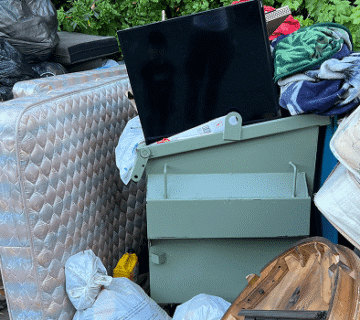
- Used Mattresses and Pillows: Bedbug risks and health codes prevent most charities from taking these.
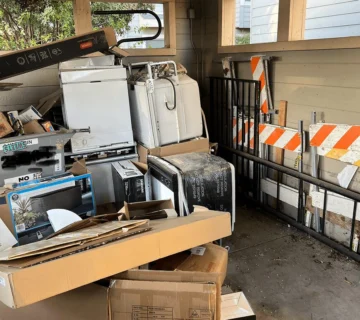
- Broken Electronics: If a television does not turn on or a lamp has a frayed cord, it cannot be sold.
- Cribs and Car Seats: Ever-changing safety recalls make it legally risky for charities to sell baby equipment.
- Hazardous Materials: Paint, cleaning chemicals, batteries, and old motor oil are strictly prohibited.
- Personal Care Items: Opened cosmetics, half-used shampoo, or used hairbrushes belong in the trash.
What to Do With Non-Donatable Items
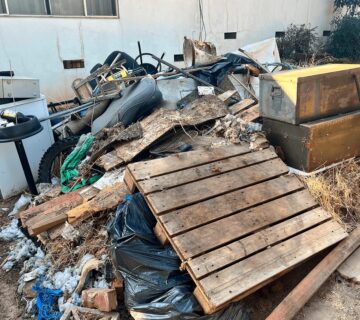
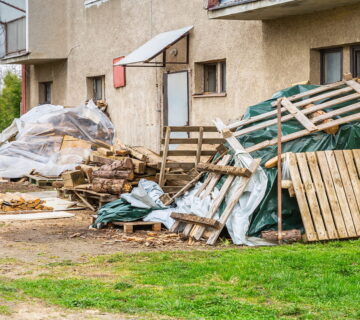
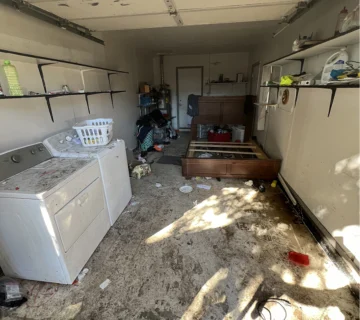
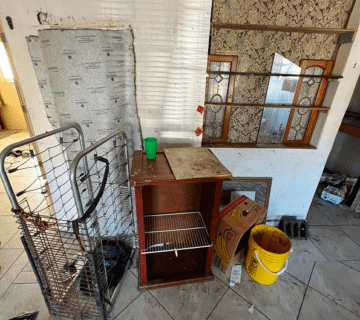
As you sort through your household items, you will inevitably end up with a pile of things that cannot be donated. A torn pair of jeans, a broken microwave, a rusty bicycle, and a collection of outdated VHS tapes cannot go to Goodwill. So, what do you do with the leftover junk?
Stuffing it all into your standard municipal garbage bin is often impossible, and leaving piles of broken items on your curb violates local ordinances. You need a fast, responsible way to dispose of the clutter that charities leave behind.
Why Proper Disposal Matters
Even if an item cannot be sold at a thrift store, it does not necessarily belong in a landfill. Electronics contain heavy metals that contaminate soil and water. Textiles can be broken down and spun into new fibers. Metals can be melted down and reused. Disposing of your non-donatable junk responsibly protects the local environment and adheres to California’s strict recycling laws.
Getting Help With Leftover Items
When the donation boxes are gone and you are left staring at a pile of unsalvageable household clutter, it is time to call in the professionals. Professional junk hauling services take the stress and heavy lifting out of the decluttering process.
Our team specializes in fast, eco-friendly cleanouts. We evaluate your leftover items and determine the most environmentally responsible way to dispose of them. We partner with local recycling centers to ensure that broken electronics, scrap metal, and degraded textiles are processed correctly, keeping as much waste out of the landfill as possible.
When you are left with items that cannot be donated, professional junk removal services can help handle heavy lifting and ensure materials are sorted for proper recycling or disposal. This allows you to finish your cleanout without sending unnecessary waste to the landfill.
Reclaim Your Space Today
Donating your gently used household items is a powerful way to give back to the Sacramento community. By supporting organizations like the Salvation Army, Goodwill, WEAVE, and local animal shelters, you provide crucial funding for programs that change lives. Taking the time to sort, clean, and properly package your donations ensures that these charities can operate efficiently and maximize the impact of your generosity.
However, decluttering is rarely a perfect process. You will always uncover items that have reached the end of their lifespan and simply cannot be donated. When that happens, you do not have to handle the heavy lifting or navigate the county dump on your own.
Our professional removal team is standing by to help you cross the finish line of your home organization project. We will swiftly and responsibly haul away the broken, torn, and unusable items, leaving you with a clean, peaceful, and fully reclaimed living space.
Are you ready to clear out the leftover clutter for good? If you have items that cannot be donated, professional junk removal can help handle the remaining materials safely and responsibly.