

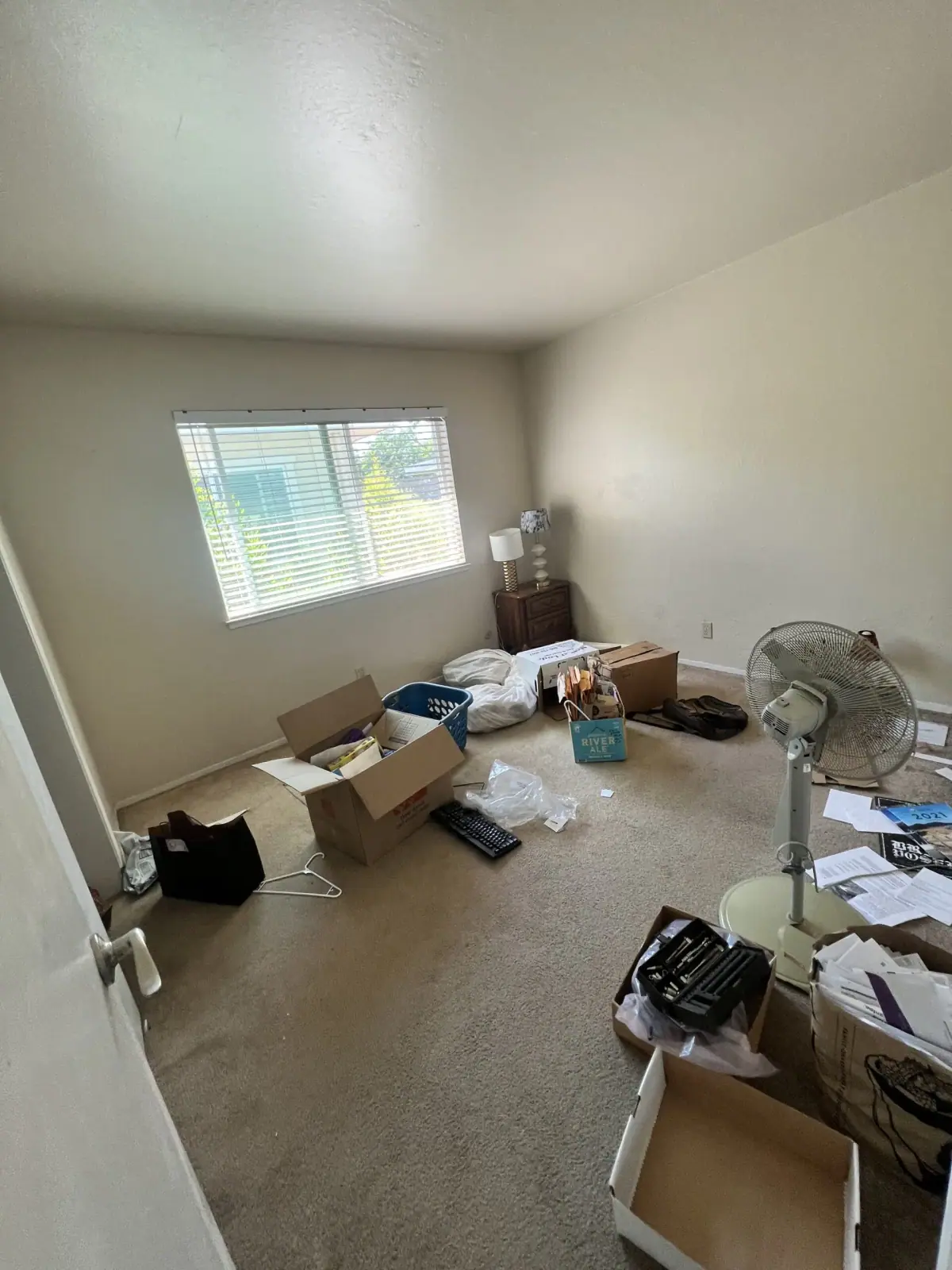
The installers come Thursday, and the old carpet has to be out before they arrive. Pull it up yourself and the room turns into heavy rolls of carpet and padding, plus a bucket of tack strips with the nails pointing up. None of it can be dragged to the curb with the regular trash. It is heavy, awkward to handle and hard on the environment.
Across the country, millions of tons of carpet are torn out of homes and businesses every year, and the vast majority ends up in landfills. This guide covers the whole job: taking it up safely yourself, then every way to get rid of it, from recycling and the landfill to hiring a junk removal service.
Preparing for Carpet Removal
A little preparation before you rip up your old flooring makes the job easier and safer. It protects your home and your lungs, and it makes the disposal process simpler at the end.
Safety First: Gear and Precautions
Old carpets hold years of dust, dirt, allergens and mold spores. Pulling them up puts all of it in the air.
- Dust mask or respirator: the most important piece of gear. A good one keeps you from breathing in dust, mold and other irritants.
- Safety glasses: against flying debris, dust and staples.
- Heavy-duty work gloves: tack strips are lined with extremely sharp tacks, and the old staples are often rusty.
- Knee pads: you will spend hours on your knees, and they save you a lot of bruising.
- Long sleeves and pants: covered skin avoids irritation from the dust and the rough materials.
Empty the room completely first: furniture, decorations, everything, so you have a clear and safe workspace. For the rest of what a remodel leaves behind, see our guide to home renovation debris.
Essential Tools for the Job
- Utility knife with extra blades: carpet is thick and abrasive, and you will dull blades quickly.
- Pliers (locking pliers or channel locks): to grab a corner and start the pull.
- Pry bar or crowbar: for the tack strips that hold the carpet around the edge of the room.
- Hammer: for tack strips and stubborn staples.
- Duct tape or heavy-duty strapping: to keep each roll from unraveling.
Lay out the tools and gear before you start, and the job runs straight through.
Step-by-Step Guide to Removing Old Carpet
With the room empty and the tools ready, work in this order.
Step 1: Cut the Carpet into Strips
A whole room of carpet is far too heavy and awkward for one person to move in one piece. Cutting it into strips is what makes DIY removal work.
- Start in a corner. Grab the edge with your pliers and pull it up and away from the wall until you can get a grip with your hands. You will hear it come off the tack strip.
- Pull back a section. Peel back a few feet to expose the padding and subfloor.
- Cut from the back. The backing slices far more easily than the fiber side. Make the strips three to four feet wide, a width that is easy to roll and carry.
- Work across the room. Pull up a section, cut a strip, repeat until all the carpet is cut.
Step 2: Roll and Secure the Carpet Strips
Roll each strip as tightly as you can, fiber side in, to hold in some of the dust and debris. Tape or strap every roll in at least two places so it does not unroll while you carry it. Move each roll out as you finish it, to the garage, the driveway or another spot, to keep the workspace clear.
Step 3: Remove the Carpet Padding
The padding underneath is much lighter and usually easier. It is typically stapled to the subfloor: start at a corner and pull, and it tears away from the staples easily. Cut it into strips, roll it tightly and tape it. Padding is far less dense than carpet, so the rolls can be larger.
Step 4: Deal with Staples and Tack Strips
This is the slowest, most tedious part.
- Remove the staples left from the padding, with a pry bar, the claw of a hammer or a staple remover. Be thorough if hard flooring goes in next: any staple left behind can cause imperfections.
- Pry up the tack strips. These wooden strips are nailed or glued to the subfloor around the edge of the room, with sharp tacks pointing up. Work the pry bar under them and use the hammer. The nails are extremely sharp.
- Clean the subfloor. Sweep and vacuum the whole floor to get the last dust and debris up and leave a clean slate for the new flooring.
That leaves a pile of carpet rolls, padding and tack strips, and the real question: where does it all go?
Disposal Options for Old Carpet and Padding
The right choice depends on your budget, your access to a truck, and how much recycling matters to you.
Option 1: Renting a Dumpster
For large projects or whole-house removals, a roll-off dumpster can be a convenient choice. The company drops a container in your driveway, you fill it with the carpet and other renovation debris, and they haul it away when you are done. It lets you get rid of a large volume of waste at your own pace, with the mess in one spot.
The catch: you do all the loading of heavy carpet rolls, and rentals are expensive. A dumpster on the street may need a city permit. You usually pay for the whole container even if you do not fill it, and heavy carpet can push you over the weight limit and into overage fees.
Option 2: Hauling to the Landfill Yourself
With a truck or a large trailer, you can take the carpet to a landfill or transfer station yourself. If you already have the vehicle and are willing to do the work, it can be the cheapest route.
It is also the most labor. Carpet rolls are heavy, dirty and awkward, and you load, tie down, drive and unload every one. Landfills charge “tipping fees,” usually by weight: the Sacramento Recycling and Transfer Station, Kiefer Landfill and the North Area Recovery Station all weigh your truck and charge by the ton. A full house of carpet is surprisingly heavy and can take more than one trip, which is where a hauler saves the most.
Option 3: Carpet Recycling
Recycling is by far the most responsible way out. Carpet is bulky and does not biodegrade, so in a landfill it takes up space for centuries. The Carpet America Recovery Effort (CARE) estimates that over 3.5 billion pounds of carpet are discarded in the U.S. each year, most of it landfilled, even though carpet is made from valuable polymers: nylon, polyester and polypropylene.
Specialized recyclers shear the fibers off the backing. High-value fibers like Nylon 6 can be broken down chemically and reformed into new nylon pellets, which become new carpet fiber, automotive parts and engineering plastics. The backing can be recycled into construction products.
California has a carpet stewardship program (AB 2398) that supports carpet recycling, so look for a designated carpet recycling drop-off. The hurdles are practical: the network is growing but recyclers are not in every area, you haul the carpet there yourself, and it has to be relatively clean and dry to be accepted. If recycling options are limited, a junk hauler takes the rolled carpet and padding off your hands in one trip.
Option 4: Hiring a Professional Junk Removal Service
For most homeowners this is the simplest and safest option, and it still ends in responsible disposal. We carry the heavy rolls out from wherever they are and load them onto the truck. You do not lift anything, and instead of a weekend of loading and driving, the job takes minutes on site. A room’s worth of rolled carpet fills about a quarter to a third of our truck, and we price by how much of the truck the load takes:
| Load | Typical price |
|---|---|
| Minimum | $99 to $150 |
| Quarter truck | $180 to $280 |
| Half truck | $320 to $480 |
| Full truck | $850 to $1,000 |
You get the price before we lift anything, and booking online takes $20 off.
Carpet recycling is not available everywhere, so we recycle carpet and padding when we can and take the rest to a licensed transfer station. The same trip can take the tack strips, the padding and any old furniture or appliances you are replacing. Mixed remodel debris like drywall and tile is a job for a licensed C&D hauler or a debris dumpster; our construction debris page lists what we can take. Clearing more than floors? See How to Dispose of Old Fencing and our shed removal service.
The upfront cost can look higher than one landfill run, but it includes all the labor, transport and disposal fees. Count your time and the physical effort, and it is often the better value.
Why Take Care Junk is the Smart Choice for Carpet Disposal
A flooring project should end with you enjoying the new floor, not stepping around the old one in the driveway. From your side, the whole junk removal process is short: you pick a time, our crew shows up ready to work, you point at the pile, and it goes. We do all the loading and clean up the area before we leave.
“Serge and his crew were hard-working and efficient from the time of the call.”
Greg Blom, GoogleYou can do every step of this yourself. It is physically demanding, though, and the hauling is the part most people would rather hand off. We know the local disposal requirements, and we donate what’s usable and recycle what we can. The old carpet and padding go to the right facility without you working out where that is. One room or a whole house, anywhere in Sacramento and the surrounding area: schedule your pickup and get a free, no-obligation estimate.


