

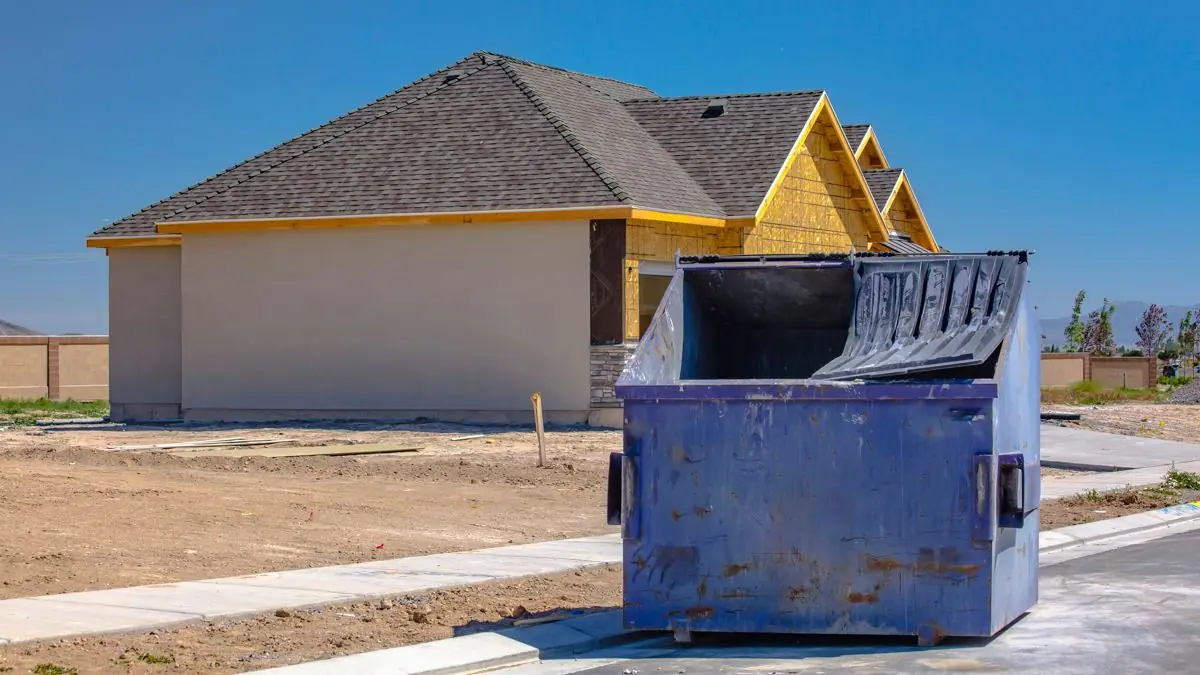
The wall between the kitchen and the dining room came down on Saturday. By Sunday night the side yard holds everything that came out of it: broken drywall, a stack of studs with the nails still in them, the old cabinets and a dishwasher nobody wants back. The new room looks great. The pile is going to sit there until someone has a plan for it.
The garbage cart is not the plan. Putting construction waste in your standard garbage bin is often illegal, and it is far too heavy and bulky anyway. This guide covers what each material is, what it weighs and how to get rid of it in an eco-friendly process. It also draws the honest line between what a junk removal crew takes from a remodel pile and what belongs with a debris hauler.
The Impact of Home Renovation Debris
Construction and demolition waste makes up a significant share of what goes to local landfills every year. That is why the disposal rules exist.
The Environmental Cost of Construction Waste
Landfills are running out of space, and remodel debris takes up a lot of it. Treated wood, synthetic flooring and chemical-laden drywall can take centuries to break down. As they degrade, they can release greenhouse gases like methane and leach toxic chemicals into the soil and groundwater.
The Benefits of Sustainable Disposal
Eco-friendly disposal means fewer raw resources harvested, and less energy and carbon spent manufacturing new products. Many recycling centers also turn construction waste into material for public projects: roads, foundations and new building supplies. That is a circular economy in the most literal sense. Your old patio can end up under someone else’s new road.
Common Types of Renovation Debris
Every project makes its own mix, and you cannot treat it all the same way. Knowing which materials you have is the first step.
Drywall and Gypsum Board
Tear out a wall or patch a ceiling and you get a pile of dusty, broken drywall: gypsum rock pressed between thick sheets of paper. Gypsum is a natural mineral. But drywall that gets wet in a landfill environment produces hydrogen sulfide gas, which smells terrible and poses real health risks. Specialized recycling centers crush old drywall and recover the gypsum, either for new drywall panels or as an agricultural soil amendment.
Scrap Wood and Timber
Old hardwood floors, framing, outdated kitchen cabinets: almost every remodel produces scrap wood, and it is heavy and bulky. Split it into two piles, treated and untreated. Untreated, unpainted wood is very recyclable. Facilities chip it into mulch, use it to make particleboard or process it into biomass fuel. Treated or painted wood can carry chemicals and lead-based paint that contaminate the recycling stream, so it has to go to specialized hazardous waste facilities.
Scrap Metal and Wiring
Plumbing upgrades, electrical rewiring and HVAC replacements turn up copper pipe, aluminum siding, steel ductwork and brass fixtures. Metal is one of the most easily recycled materials there is. It melts down and reforms indefinitely without losing its strength. Recycling it keeps a valuable resource out of the landfill and cuts the damage done by metal mining.
Masonry, Concrete, and Brick
Breaking up an old patio, a brick fireplace or a section of old foundation produces thousands of pounds of rubble. Concrete and brick are so dense they overwhelm any standard bin. They are also very recyclable. Industrial crushing facilities turn them into coarse aggregate, the stable base layer under new roads, driveways and building foundations.
Nine Types of Renovation Waste, and CALGreen
Renovation debris is heavier than it looks. What a typical project produces:
| What comes out | How much, or what to know |
|---|---|
| Drywall | 500 to 1,000 pounds from a single-room remodel |
| Lumber scraps | 300 to 800 pounds from a kitchen or bath remodel |
| Concrete | About 150 pounds per cubic foot, so even a small patio demolition is a ton or more |
| Carpet and pad | 200 to 300 pounds from a 12 by 15 room (see carpet and padding disposal and old flooring) |
| Roofing | Two to four tons of shingles and underlayment from a single-layer tear-off on a 2,000-square-foot home. A roofer or C&D hauler must handle it. |
| Tile | Comes out with its mortar bed attached |
| Toilets, sinks and faucets | Working ones can be donated |
| Single-pane windows | A mix of glass, wood and metal. SMUD has offered rebates for qualifying window upgrades. |
| Cabinets | A kitchen’s worth of old cabinets fills a truck bed on its own |
Deck boards have their own rules; see what to do with old deck wood.
If the work is permitted, CALGreen, California’s green building code, applies. At least 65 percent of construction and demolition waste must be diverted from the landfill through recycling, reuse or salvage, and Sacramento may require documentation when you pull permits. That is one more reason to keep materials separated from the first day of demolition.
DIY Debris Disposal Methods
On a small project you can handle the cleanup yourself. There are three responsible ways to do it.
Donating Usable Materials
Not everything that comes out of a remodel belongs in a recycling bin. Remove working items carefully during demolition and you can donate them. Habitat for Humanity ReStore accepts gently used building supplies: unpainted interior doors, complete sets of kitchen cabinets, working light fixtures and leftover boxes of tile. They stay out of the landfill and become affordable home improvement supplies for local families. Call the donation center first to confirm it accepts your specific items.
Using Local Recycling Centers
What cannot be donated can go to a recycling center, but sort your debris before you go: wood, metal and masonry in separate piles. Load the sorted piles into a heavy-duty truck or trailer, and check which county facilities accept each type of construction debris. Expect a drop-off fee based on the weight and type of material.
Renting a Dumpster
On a multi-week project, a roll-off dumpster gives the debris somewhere to go as it comes out. The company delivers a large metal bin to your driveway, you fill it at your own pace, and they haul it away when you finish. Dumpsters come with strict rules. You cannot mix certain materials, and going over the weight limit brings hefty fines. Some companies also take the entire load straight to the landfill without sorting it for recycling. If that matters to you, ask about their disposal practices before you book.
The Challenges of Handling Debris Yourself
DIY disposal looks cheap at the start. What most homeowners underestimate is the effort.
Hidden Costs and Fees
Truck rental, gas and landfill drop-off fees add up quickly. Misjudge the amount of debris and you make a second or third trip across town, and the cheap plan stops being cheap. Improper disposal costs more still. Prohibited construction materials in your municipal trash bin, or dumped illegally, draw heavy fines.
Physical Strain and Safety Risks
Construction debris is dangerous to handle. Broken glass, rusty nails and splintered wood cut. Chunks of concrete and solid wood doors strain muscles and backs. Without safety gear and the right equipment, you put your health at risk. Carrying heavy debris through the house can also damage the floors and walls you just paid to redo.
Where Junk Removal Fits in a Renovation Cleanup
Junk removal does not cover the whole pile, and we would rather say so here than at your curb. We do not haul mixed demolition or remodel debris, and we do not take drywall or roof tear-off from a house. What we do take is the bulky household side of a remodel, plus single-material loads. See construction debris: what we take for the full list.
What We Take From a Remodel
Old furniture, appliances, cabinets, fixtures such as toilets, sinks and tubs, rolled carpet and household items. Also single-material loads: metal only, concrete only, or clean wood only. We can clear the house before the renovation starts, too. What would take you a weekend of hauling, our crew can often load in a single afternoon, so the bulky items are gone and the project keeps moving. Rates are in our pricing guide.
“Quick, very well priced, polite, on time and cleaned up after the job was completed. I will definitely tell others about Serge and will call when the next project is ready.”
Lisa G., YelpWhat We Don’t Take, and Who Does
Mixed piles of drywall, tile, lumber scraps and other demolition debris belong with a licensed C&D hauler or in a debris dumpster. We load and haul; we do not sort mixed debris for recycling.
What we do take goes to the right facility. Metal goes to a scrap recycler, and we donate what’s usable and recycle what we can. If you want your mixed debris recycled, ask the hauler or dumpster company where the load goes.
Getting Help With Renovation Cleanup
Handling renovation debris is often more work than the remodel itself. Once it is sorted, each part of the pile has a clear place to go:
- Cabinets, appliances, fixtures and furniture, plus single-material loads of metal, concrete or clean wood: our crew, across the Sacramento area. We do the loading and hauling, so you skip the heavy lifting and the dump runs.
- Mixed remodel debris such as drywall, tile and lumber scraps: a licensed C&D hauler or a debris dumpster.
- Roof tear-off: a roofer or a C&D hauler.
- Unpainted doors, complete cabinet sets, working light fixtures and leftover tile: the ReStore, after a phone call.
Reclaim Your Newly Renovated Space
You finished the remodel. The pile in the side yard should not be what you look at for the next month. Sort the debris by type and send each material where it belongs.
For the cabinets, appliances, fixtures and single-material loads, contact us to schedule a pickup. We handle the heavy lifting so you can focus on the finishing touches, and we will tell you which kind of hauler to call for the rest.


